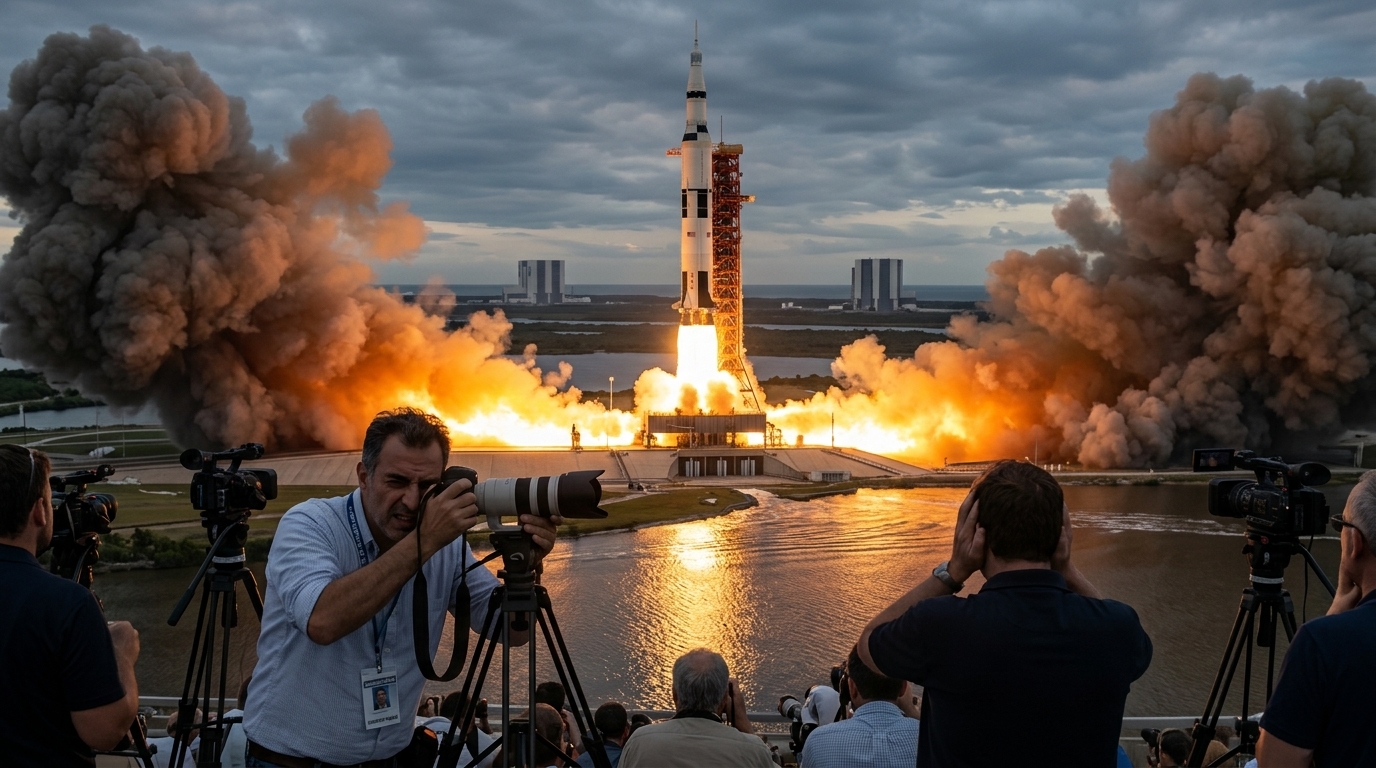
In a display of raw power and engineering audacity, Elon Musk’s SpaceX executed the latest test flight of Starship V3, the largest and most powerful rocket system ever constructed. The flight, carrying a 45-ton mass simulator, concluded in a planned yet spectacular explosion during atmospheric reentry over the Indian Ocean. Despite the vehicle's destruction, the company hailed the mission as a categorical success, as it yielded critical data regarding the craft's survival under extreme conditions.
The Engineering of a Giant: What Makes Starship V3 Unique?
Starship V3 is not merely a rocket; it is the culmination of a decade of relentless experimentation. Standing over 120 meters tall and producing twice the thrust of the legendary Saturn V from the Apollo era, this system is designed to be fully and rapidly reusable. This specific test focused on managing a massive 45-ton payload at orbital velocities. The capability to transport such weight is essential for establishing lunar bases and, eventually, transporting humans to Mars.
The Raptor 3 engines, powering the vehicle, demonstrated improved reliability during the liftoff from the Starbase facility in Texas. The first stage, the Super Heavy booster, completed its burn with precision, allowing the Starship upper stage to enter a sub-orbital trajectory that carried it halfway across the globe in less than an hour.
The Critical Reentry and Fiery Demise
The most hazardous phase of any space mission is the return to Earth's atmosphere. For Starship, which is shielded by thousands of hexagonal ceramic heat tiles, the challenge is to maintain structural integrity while atmospheric friction creates plasma reaching thousands of degrees Celsius. During the descent over the Indian Ocean, Starlink-enabled cameras broadcasted live footage of the ship being enveloped in a brilliant purple hue of ionized gas.
At an altitude of approximately 65 kilometers, telemetry indicated a sudden loss of attitude control. Moments later, the vehicle disintegrated in a ball of fire. Analysts suggest the explosion was caused by a failure in the steering flaps, which buckled under extreme aerodynamic pressure. However, SpaceX had stated beforehand that recovery was not the primary goal for this iteration. The objective was to push the materials to their breaking point, and Starship V3 did so in a most dramatic fashion.
Geopolitical and Economic Implications
The success (or 'successful failure') of SpaceX transcends mere technology. NASA is watching closely, as Starship is the centerpiece of the Artemis program, intended to return American astronauts to the lunar surface. Without a functional Starship, the timeline for a 2027 moon landing risks collapse, potentially ceding the lead to China, which is aggressively developing its own heavy-lift rocket, the Long March 9.
Furthermore, the ability to launch 45 tons in a single mission fundamentally alters space economics. The cost per kilogram of payload is expected to drop to levels that would allow private enterprises to build orbital factories or deploy satellite constellations that are currently cost-prohibitive. SpaceX is not just building a rocket; it is laying the tracks for a celestial railroad.
The Future of Exploration
Following the explosion in the Indian Ocean, SpaceX teams are already readying the next prototype. The company’s strategy, known as "rapid iterative development," relies on learning from failures rather than avoiding them at all costs. Every piece of metal that fell into the ocean carries data that will make the next flight safer and more efficient.
The road to Mars is paved with debris, but for the visionaries at Starbase, this is the necessary price of progress. Humanity is at a turning point where space ceases to be a distant destination for a select few and becomes an extension of our economic and cultural sphere. The moment of the explosion over the Indian Ocean was not an end, but the beginning of a new chapter in aerospace history.