In an era where Silicon Valley moves at the speed of light, one of the world's oldest institutions, the Catholic Church, is attempting to apply the brakes of moral conscience. Pope Francis, who has already made history as the first pontiff to participate in a G7 summit to discuss Artificial Intelligence (AI), is now preparing a document of paramount importance: a papal encyclical dedicated to the challenges and opportunities of digital intelligence.
The Birth of 'Algorethics'
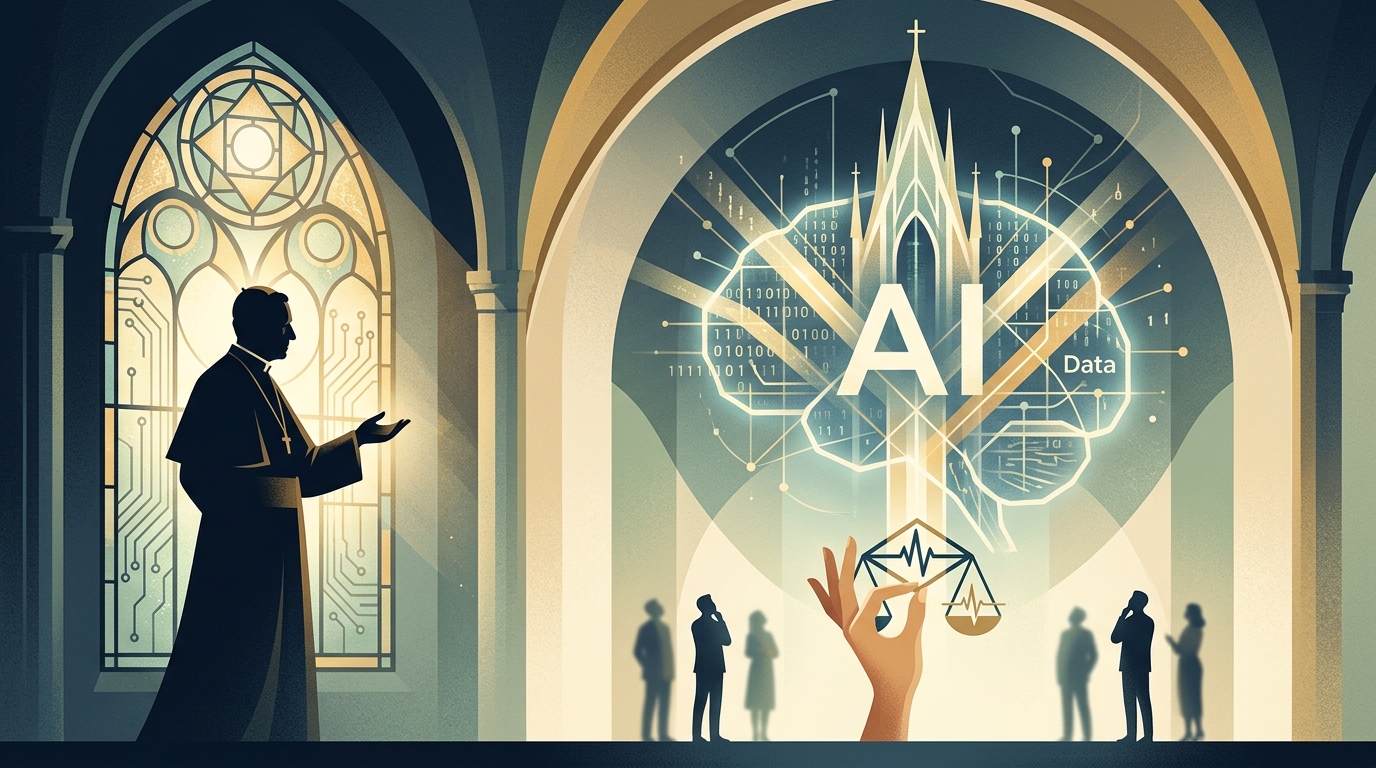
The Vatican does not approach Artificial Intelligence as a mere technical advancement, but as an ontological challenge. The term "Algorethics," introduced by the Vatican's Pontifical Academy for Life, forms the foundation of the Pope's position. The central idea is simple yet profound: ethical values must be embedded in the very design of algorithms, rather than being added as an afterthought.
For the Vatican, AI is not neutral. Every line of code carries the biases, priorities, and worldviews of its creators. "Algorethics" seeks to ensure that technology remains at the service of humanity and not the other way around, protecting the sanctity of human life from automated judgment.
The Threat of the 'Technocratic Paradigm'
Pope Francis has repeatedly warned against what he calls the "technocratic paradigm" — a mindset that assumes every problem can be solved through technology and that progress is identified exclusively with technical efficiency. In the upcoming encyclical, he is expected to analyze how AI could exacerbate social inequalities.
- The Digital Divide: The concern that AI will concentrate wealth and knowledge in the hands of a few nations and corporations, leaving the "Global South" marginalized.
- The Erosion of Truth: The use of deepfakes and misinformation that undermines social trust and democracy.
- The Future of Work: The need for a new social contract to protect workers whose positions are threatened by automation.
War Machines and the 'Rome Call'
One of the most critical points of papal intervention concerns Lethal Autonomous Weapons Systems (LAWS). The Vatican is leading the international effort for a total ban on "killer robots," arguing that a machine should never have the right to decide on the life or death of a human being. Ethical responsibility, according to the Church, is unchangeably human and cannot be transferred to an algorithm.
"We cannot allow an algorithm to determine our destiny. Human judgment must remain at the heart of every critical decision," Francis has stated.
The "Rome Call for AI Ethics," signed in 2020 by giants like Microsoft and IBM, was the first step. The new encyclical will expand this framework, turning it into a global call for action that transcends religious boundaries, addressing "all people of good will."
Conclusion: A Moral Compass in the Data Ocean
The Vatican's intervention comes at a time when governments worldwide are struggling to regulate AI. While the EU has its AI Act and the US has White House executive orders, the Vatican offers something different: a moral compass. The Pope's encyclical will not be a legal text, but a spiritual and philosophical appeal not to lose our humanity amidst the digital noise. In a world fascinated by artificial intelligence, Francis reminds us that the greatest challenge is not making machines smarter, but remaining wise ourselves.