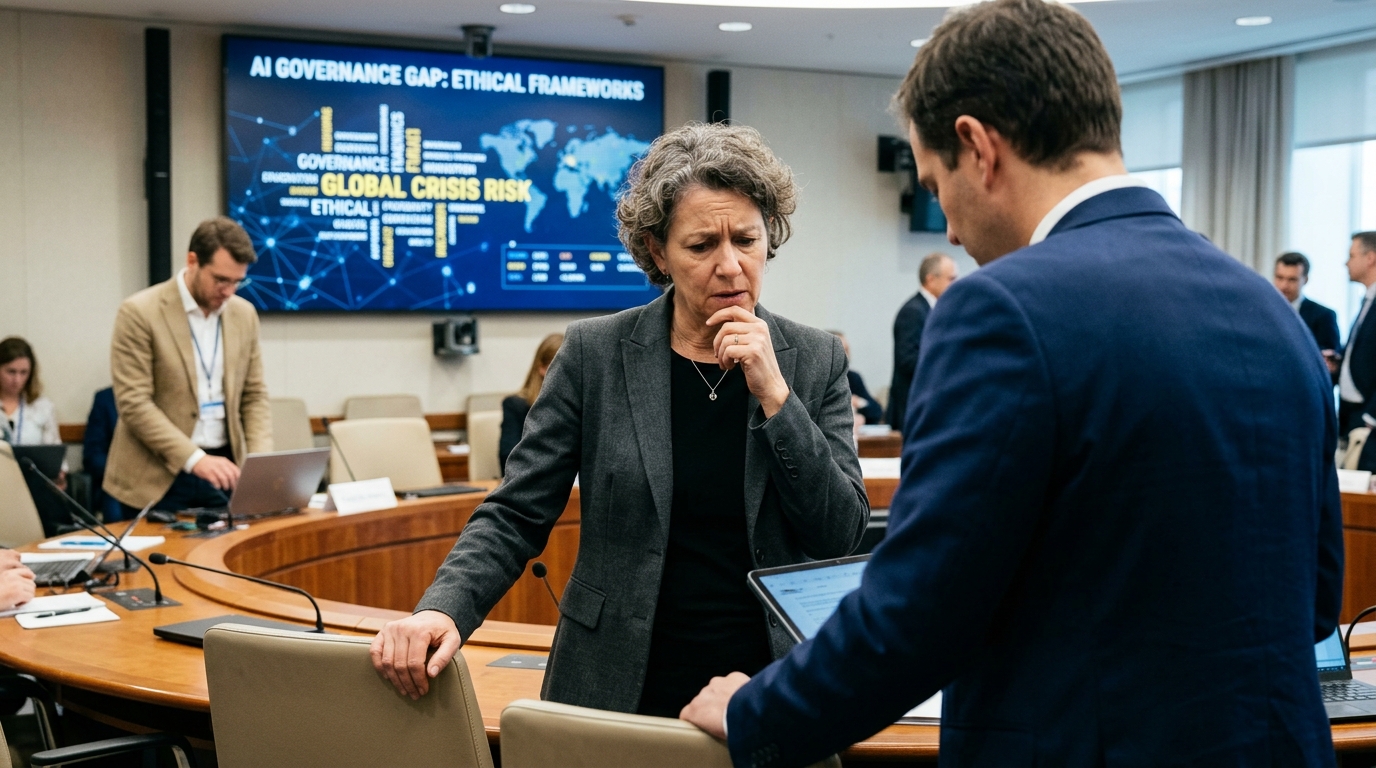
The age of innocence for Artificial Intelligence (AI) is coming to a close in the most official and dramatic fashion. In a comprehensive report published by the United Nations High-Level Advisory Body on AI, the international community is urged to confront a harsh reality: the development of AI is advancing at a pace that far outstrips the capacity of existing institutions to govern it. The report, described by many as a "shock report," focuses not just on sci-fi scenarios of a "robot uprising," but primarily on the immediate, tangible threats to global stability, economic equality, and human rights.
The Governance Deficit in a Digital World
According to the UN, AI is currently being developed in a "regulatory vacuum." While Big Tech companies possess resources exceeding the budgets of many nations, international rules remain fragmented and often ineffective. The report emphasizes that the lack of a unified global governance framework allows for the unchecked use of algorithms that can influence everything from electoral processes to financial markets.
The problem is not merely technical, but deeply political. The UN points out that AI decision-making is concentrated in very few hands — primarily a handful of corporations in the US and China. This concentration of power leaves the majority of the global population, particularly the Global South, on the sidelines, turning less developed nations into mere consumers of technology they neither understand nor control.
Risks to Democracy and Social Cohesion
One of the most concerning aspects of the report involves the erosion of truth. The mass production of disinformation through deepfakes and sophisticated language models threatens to make it impossible to distinguish between reality and fabricated content. In an environment where "truth" is constantly under fire, democratic institutions are destabilized.
- The use of AI in election campaigns without transparency.
- The automated creation of hate speech targeting minorities.
- Mass citizen surveillance through biometric data without a legal basis.
"We cannot leave the future of humanity solely in the hands of market forces," the report states, highlighting the need for a "human-centric" approach that prioritizes ethics over profit.
Toward an "IPCC" for Artificial Intelligence
The solution proposed by the UN is the creation of an international scientific body, modeled after the Intergovernmental Panel on Climate Change (IPCC). This body would aim to provide objective data and analysis on the impacts of AI, helping governments make informed decisions. Furthermore, the report suggests establishing a Global Fund for AI to finance the development of ethical AI applications in developing countries, ensuring its benefits are not limited to the privileged few.
In conclusion, the UN report serves as a wake-up call. Artificial Intelligence is not just a productivity tool; it is a force reshaping the very essence of our social and political lives. Unless we act now to enforce rules of transparency, accountability, and inclusivity, we risk finding ourselves in a world where algorithms decide for us, without us.