In the twilight of 2026, as digital companions and AI avatars become integral to our social equilibrium, looking back at cinematic history reveals a disturbing truth: our fears and desires regarding the "almost human" are not new. Two films, Brian De Palma's atmospheric Obsession (1976) and Steven Spielberg and Stanley Kubrick's epic A.I. Artificial Intelligence (2001), though separated by decades, essentially tell the same story. It is the story of human obsession with replacing loss through artificial representation—a theme that today, in the era of sophisticated LLMs, feels more relevant than ever.
The Architecture of Replacement
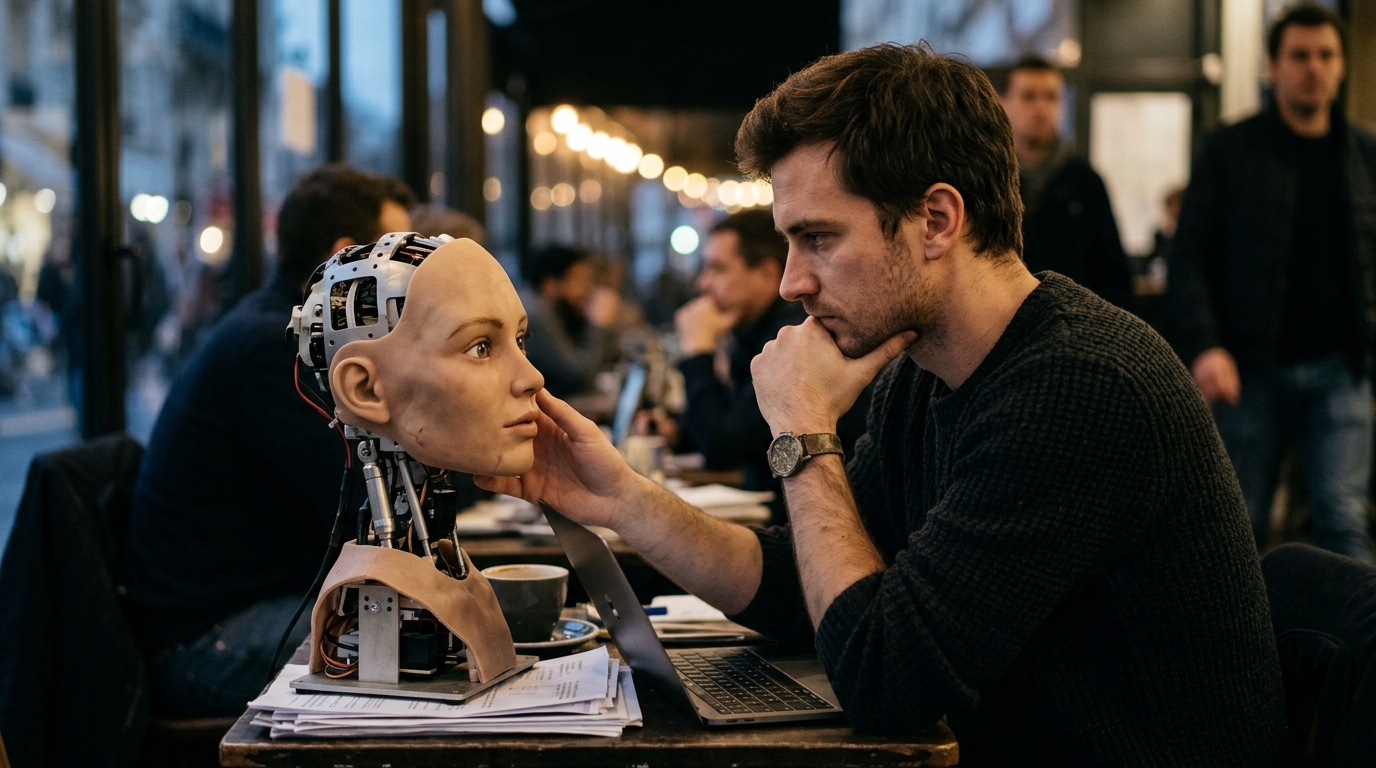
In Obsession, a man attempts to recreate his dead wife through a woman who bears a striking resemblance to her, turning her into a living effigy. In A.I., Monica replaces her dying son with David, a robot programmed to love unconditionally. In both cases, the central question is not about the technology itself, but the ethics of using an "other" as a vessel for our own grief. The "Uncanny Valley" is not just about the aesthetics of robots; it’s about the psychological revulsion we feel when we realize that the love we receive is the result of programming or staging.
Obsession, as defined by De Palma, is a form of spiritual blindness. The protagonist does not see the real woman, but the image he wishes to resurrect. Similarly, in the vision of Kubrick and Spielberg, David is the perfect product of an industry that trades in solace. Today, in 2026, we see this trend manifesting through "Ghostbots"—AI systems trained on the data of the deceased to provide an illusion of continuity for the bereaved. The ethical conflict remains identical: Is love valid if its object lacks free will?
Trauma as a Driver of Innovation
Analyzing both films reveals that artificial intelligence is often treated as a "corrective" tool for human destiny. In A.I., humanity has created Mechas (robots) to serve in a world collapsing from climate change, but their real function is emotional. David is not just a tool; he is an attempt to defeat death and abandonment. This pattern is repeated in Obsession through the obsessive reenactment of the past.
- The denial of loss as a source of creating artificial life.
- The objectification of the "other" (whether a robot or a human duplicate).
- The failure of simulation to satisfy the existential void.
In the modern era, tech companies promise "eternal presence." However, as shown by David's tragic finale in A.I., the simulation of love leads to an endless loneliness. David waits two thousand years for a moment of "true" connection, which is ultimately another simulation constructed by alien beings. The irony is clear: AI can replicate the symptoms of love, but not the essence of reciprocity.
The Ethics of "Almost" Human Contact
Why are we fascinated by these stories? Perhaps because they mirror our own narcissism. We want love to be predictable, controllable, and eternal—qualities that only a machine or an obsessive construct can offer. In Obsession, resolution comes through the revelation of the deception, while in A.I., the resolution is total immersion in the dream. In 2026, we stand at the threshold of these two choices.
"The danger is not that robots will start to resemble us, but that we will start to prefer their controlled companionship over the unpredictable nature of humans."
As algorithms become more capable of mapping our emotional needs, the distance between Obsession and reality shrinks. The "Uncanny Valley" is transforming from a technical problem into an ethical labyrinth. If we can construct the perfect love, does it matter if it’s "real"? The answer provided by De Palma and Spielberg is cautionary: obsession with the copy ultimately destroys the original—our very capacity to connect with the imperfect, the mortal, and the real.