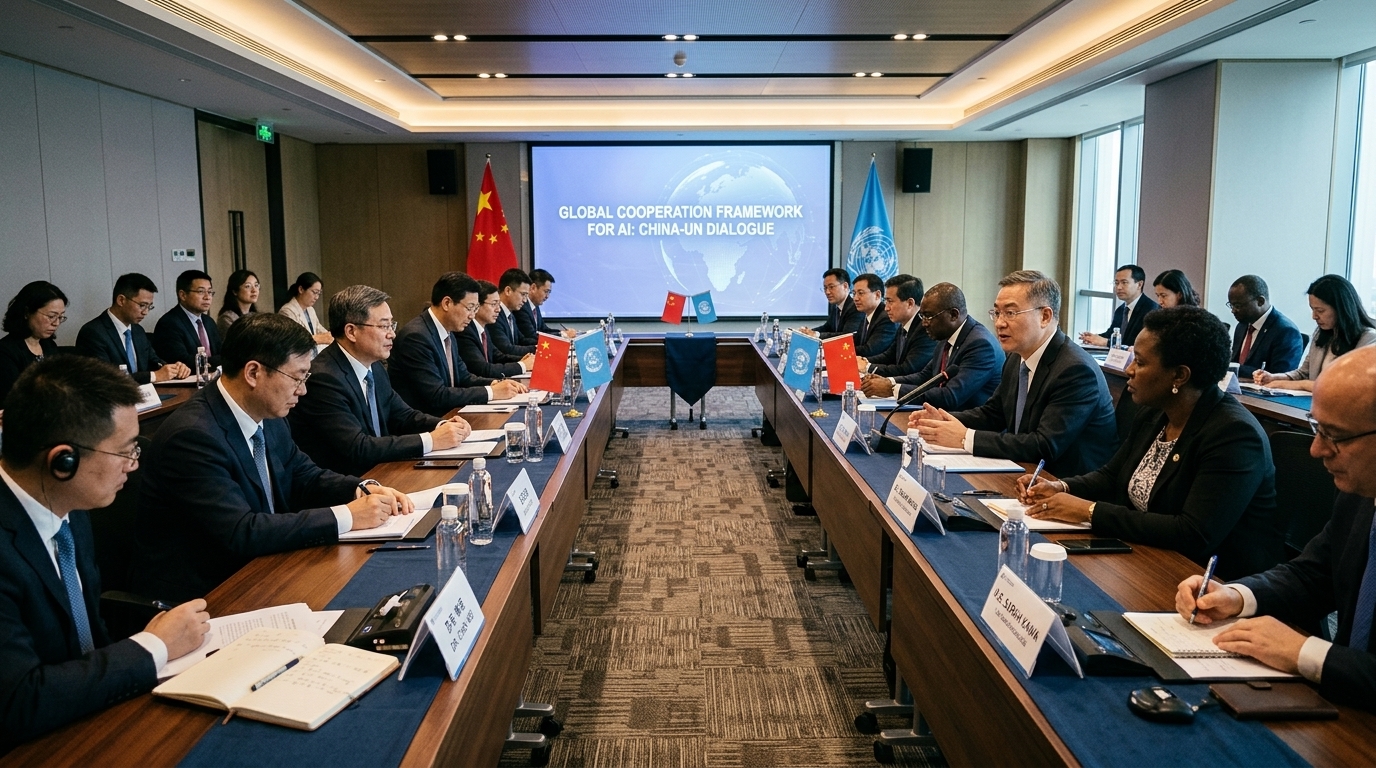
Artificial Intelligence (AI) is emerging as a central pillar in the transformation of the global economy, with China and the United Nations seeking to establish a framework that treats AI as a "global public good." During the recent Zhongguancun Cooperation Dialogue in Beijing, participants emphasized the need for a practical, inclusive cooperation mechanism aimed at sustainable development and reducing inequalities.
The Convergence of Chinese Innovation and the UN
Siddharth Chatterjee, the UN Coordinator in China, highlighted that while AI offers immense opportunities, it requires a rigorous framework of safety and transparency. The collaboration focuses on leveraging the technological ecosystem of Zhongguancun to achieve Sustainable Development Goals (SDGs), particularly in areas such as climate change and public health.
- Food Security: The World Food Programme (WFP) is working with China to apply AI in agricultural production, early warning systems, and precision farming.
- Public Health: The World Health Organization (WHO) is already implementing projects in China, such as using AI for tuberculosis diagnosis and optimizing healthcare resource allocation.
The Haidian Ecosystem
The Haidian district in Beijing serves as the heart of this endeavor, hosting over 12,300 AI experts and more than 2,000 companies. This industrial ecosystem is not limited to the domestic market; it extends through the "Belt and Road" Initiative and the Shanghai Cooperation Organization (SCO), aiming to support the development needs of the Global South.