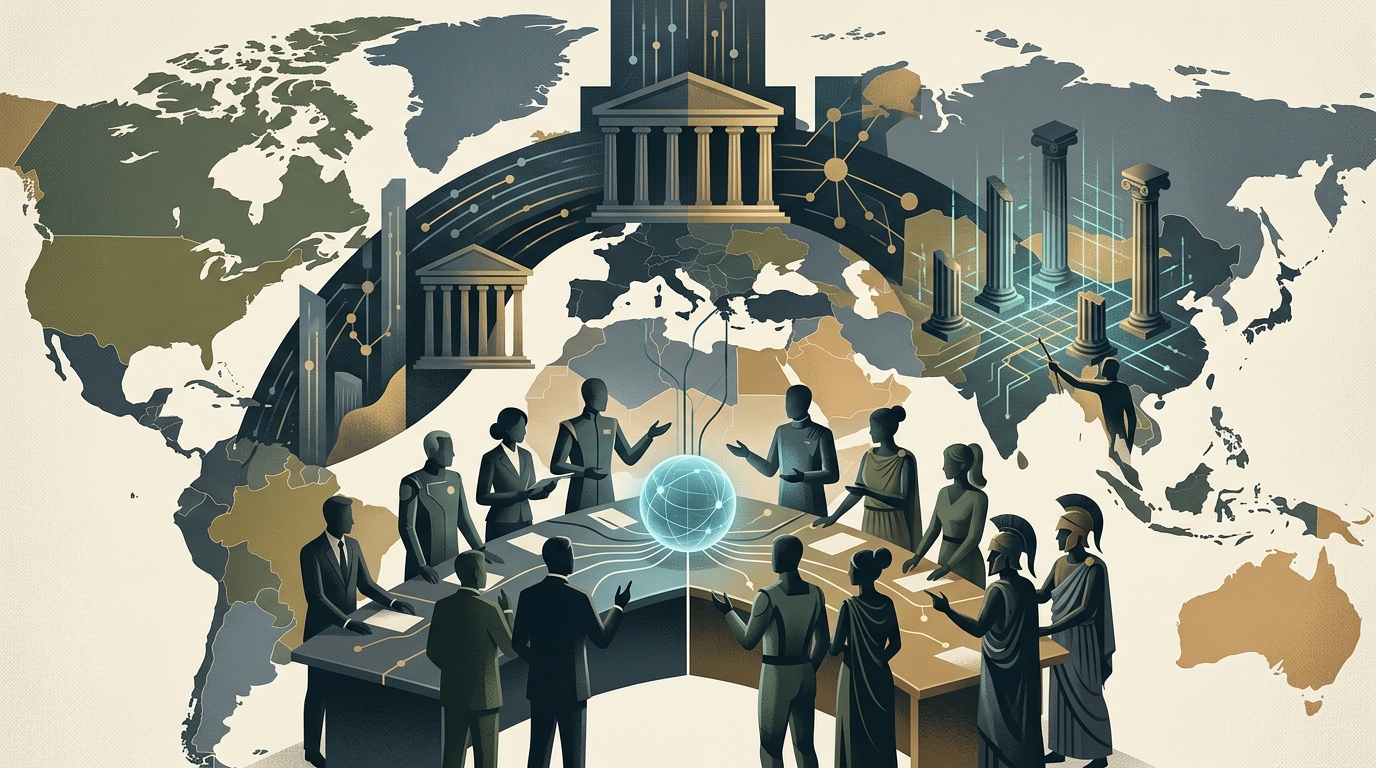
As we move into the second half of 2026, the global discourse on Artificial Intelligence governance is entering a critical phase of maturity. A recent report from the Brookings Institution has stirred the waters, arguing that the era of "gentle persuasion" and voluntary codes of conduct must give way to a rigorous, enforceable framework within the G7. This proposal is not merely a technical recommendation but a geopolitical necessity in a world where AI is reshaping the power of nations.
From the Hiroshima Process to Real Enforcement
The so-called "Hiroshima AI Process," initiated in 2023, was the first serious step toward creating international standards. However, as Brookings points out, the voluntary commitments made by tech giants have reached their limits. Without enforcement mechanisms, these rules remain a "dead letter" in the face of market pressures and the race for dominance in the market for large language models (LLMs) and autonomous systems.
The report suggests that G7 countries should integrate AI standards into their trade agreements and public procurement rules. In this way, compliance would no longer be optional but a prerequisite for access to the world's largest markets. This "market-access" approach is seen as the most effective way to force companies to invest in safety and transparency, despite the high costs involved.
The Geopolitical Chessboard and Competition with China
The proposal for enforceable standards within the G7 bears the strong mark of geopolitical competition. While the European Union has already moved forward with the EU AI Act, the United States and Japan had until recently followed a more flexible approach. The convergence of these economies into a single, binding framework would create a "democratic bloc" against China's alternative model, which uses AI for state control and surveillance.
According to analysts, if the G7 fails to establish common, mandatory rules, the result will be the fragmentation of the global market. This would favor players who are not bound by ethical constraints, allowing them to develop dangerous technologies faster and cheaper. "Enforcement," therefore, is not just about protecting citizens, but also about maintaining the competitiveness of Western economies under terms of fair competition.
Challenges and the Question of Sovereignty
Implementing such a proposal is not without obstacles. The main question remains: who will watch the watchers? Creating an international AI inspection body or delegating this role to national authorities requires a degree of coordination rarely achieved at the international level. Furthermore, there is a risk that "enforceable standards" could act as barriers to entry for startups, consolidating the dominance of Big Tech companies that have the resources to comply.
"Artificial Intelligence is too powerful to be left to self-regulation. The G7 must choose whether to be the architect of the future or a mere observer of developments," the report states emphatically.
In conclusion, the Brookings report serves as a warning. In today's environment, where AI influences everything from electoral processes to national defense, the transition from "soft law" to "hard law" seems inevitable. G7 leaders are now called upon to show the political will to turn declarations into actions, ensuring that technology remains at the service of humanity and democratic values.