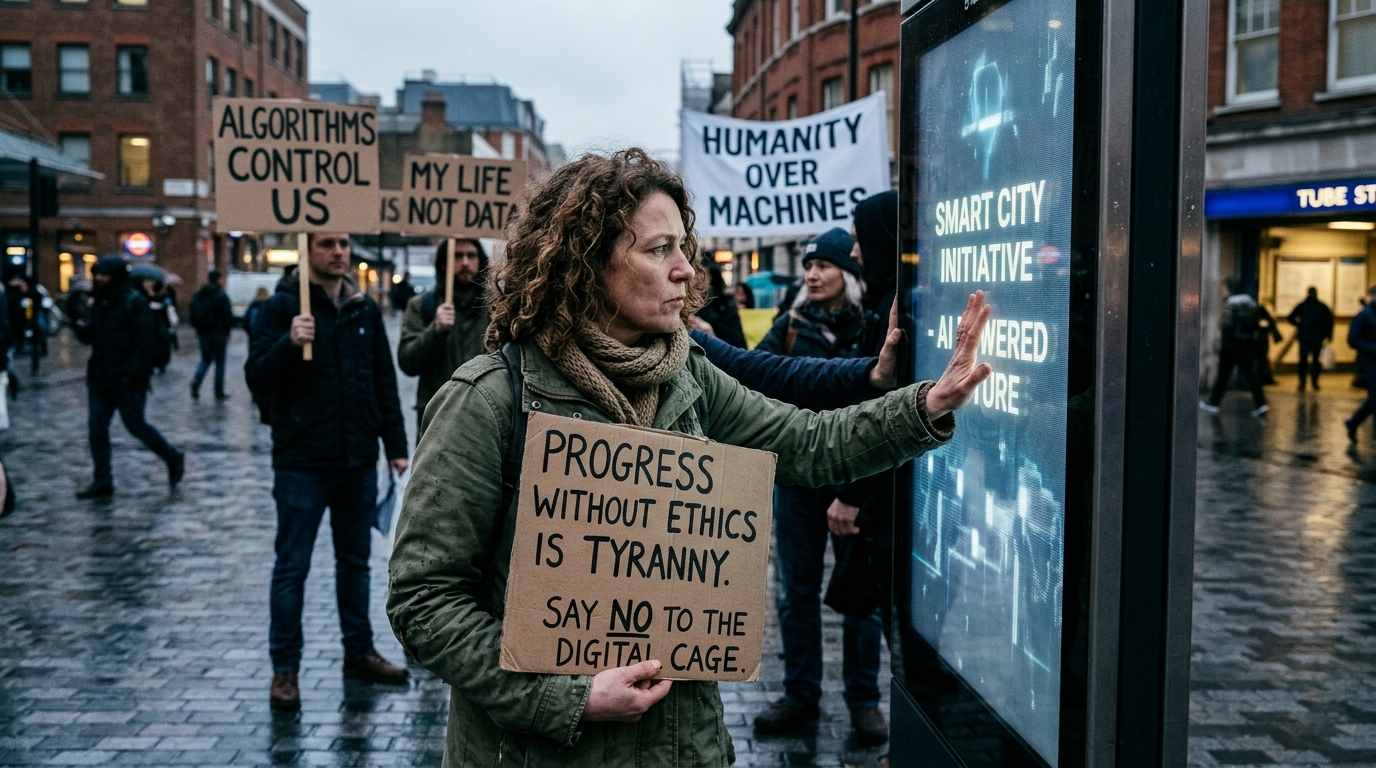
In the twilight of the first decade of generative artificial intelligence, the central question is no longer whether machines can think, but whether they can truly understand us. The recent ArXiv publication (2605.12682) titled "Learning Transferable Latent User Preferences for Human-Aligned Decision Making" marks a critical turning point in the quest for the ethical alignment of Large Language Models (LLMs). As these models evolve from simple search tools into autonomous decision-making agents, the need for them to "sense" the subtle nuances of human values has become imperative.
The Problem of Static Alignment
To date, AI alignment has primarily relied on Reinforcement Learning from Human Feedback (RLHF). While effective in creating "polite" and "safe" systems, this approach suffers from a fundamental flaw: staticity. Models are trained on an average of human preferences, creating a "lowest common denominator" of ethics that often fails to satisfy the specific, nuanced needs of the individual. The new research argues that true alignment requires understanding *latent* preferences—those subconscious values that guide our choices but are rarely explicitly stated.
The challenge is twofold. First, how can a model extract these preferences from limited data? Second, and perhaps more importantly, how can this knowledge be transferred from one context to another? If an AI learns that a user values brevity and precision in programming, can it transfer that preference to managing their finances or drafting a legal document? Transferable learning in the realm of preferences is the "Holy Grail" of personalized AI.
Latent Variables and the Architecture of Understanding
The research team proposes a framework where user preferences are not treated as static data points, but as a dynamic "latent space." Using probabilistic models, the AI can observe a series of a user's decisions and infer the underlying principles governing them. This resembles how an experienced butler learns the habits of their employer: they don't need to be told every time how the employer likes their coffee; they observe, generalize, and adapt.
- Inferential Learning: The model analyzes past interactions to build a psychographic profile of values.
- Transferable Knowledge: Preferences extracted in one scenario (e.g., time management) are encoded in a way that makes them applicable to entirely different domains (e.g., medical advice).
- Dynamic Adaptation: The system does not remain static but updates the latent user profile in real-time, avoiding the trap of outdated data.
Ethical Implications and the Illusion of Control
Here, however, we enter uncharted waters. The ability of a machine to "guess" our latent preferences raises serious questions about autonomy and privacy. If an AI knows our preferences better than we do, is it manipulating us rather than serving us? Human alignment can easily slide into reinforcing our biases (echo chambers) or exploiting our psychological vulnerabilities.
"Ethical alignment is not a technical parameter, but a constant negotiation between human will and algorithmic efficiency," the analysis notes.
Furthermore, there is the risk of "ethical error transfer." If a model misinterprets a preference in a low-stakes environment, transferring that misinterpretation to a critical domain, such as healthcare or justice, could be catastrophic. The study proposes safeguards, but the history of technology teaches us that safeguards often yield to the allure of convenience.
Conclusion: Toward a Symbiotic Intelligence
Paper 2605.12682 represents a significant step toward AI that is not just "smart," but "emotionally and ethically intelligent." The transfer of latent preferences promises a frictionless user experience where technology becomes an extension of our own intent. However, the success of this endeavor will depend on the transparency of the models and the human's ability to remain the ultimate arbiter. In the world of 2026, alignment is no longer a luxury; it is the prerequisite for our coexistence with silicon.