By June 2026, the narrative of Artificial Intelligence as the ultimate tool for youth empowerment is showing significant cracks. While Gen Z and Millennials were the early adopters and champions of LLMs like ChatGPT back in 2023, a profound sense of skepticism and disillusionment has taken root. A comprehensive report by the Financial Times highlights a startling trend: young people under 25 increasingly view AI as more harmful than helpful to their lives and futures.
The Labor Market Paradox: The Death of Entry-Level Roles
The primary driver of this shift is the existential threat AI poses to career entry points. In the labor market of 2026, traditional entry-level positions are becoming a rarity. Corporations have aggressively deployed autonomous AI agents to handle tasks once reserved for interns and junior staff—data entry, basic coding, initial drafting, and routine customer interactions.
This has created what economists call an 'experience gap.' Without these foundational roles, the younger generation finds itself locked out of the professional ladder. The feeling of competing against a non-human entity that requires no salary, no sleep, and no benefits has fostered a level of professional anxiety not seen since the Great Recession. For many, AI is not a co-pilot; it is a replacement.
The Crisis of Authenticity and Digital Pollution
Beyond economics, the ethical implications of AI are causing a cultural backlash. The generation that grew up online is now navigating a digital landscape saturated with synthetic content. The difficulty in discerning truth from fabrication has led to 'truth fatigue.'
- Deepfake technology has eroded trust in visual and auditory communication.
- The aesthetic homogeneity of AI-generated imagery is increasingly viewed as 'sterile' and 'uncanny.'
- Social media algorithms, now powered by hyper-predictive AI, are blamed for creating mental health traps and echo chambers.
For many young creators, AI is perceived as a force that devalues human effort. Art, music, and literature produced by machines are often met with disdain, viewed as products of plagiarism rather than inspiration. There is a growing movement to label and celebrate 'Human-Made' content as a premium alternative to the algorithmic flood.
Environmental Concerns and Data Sovereignty
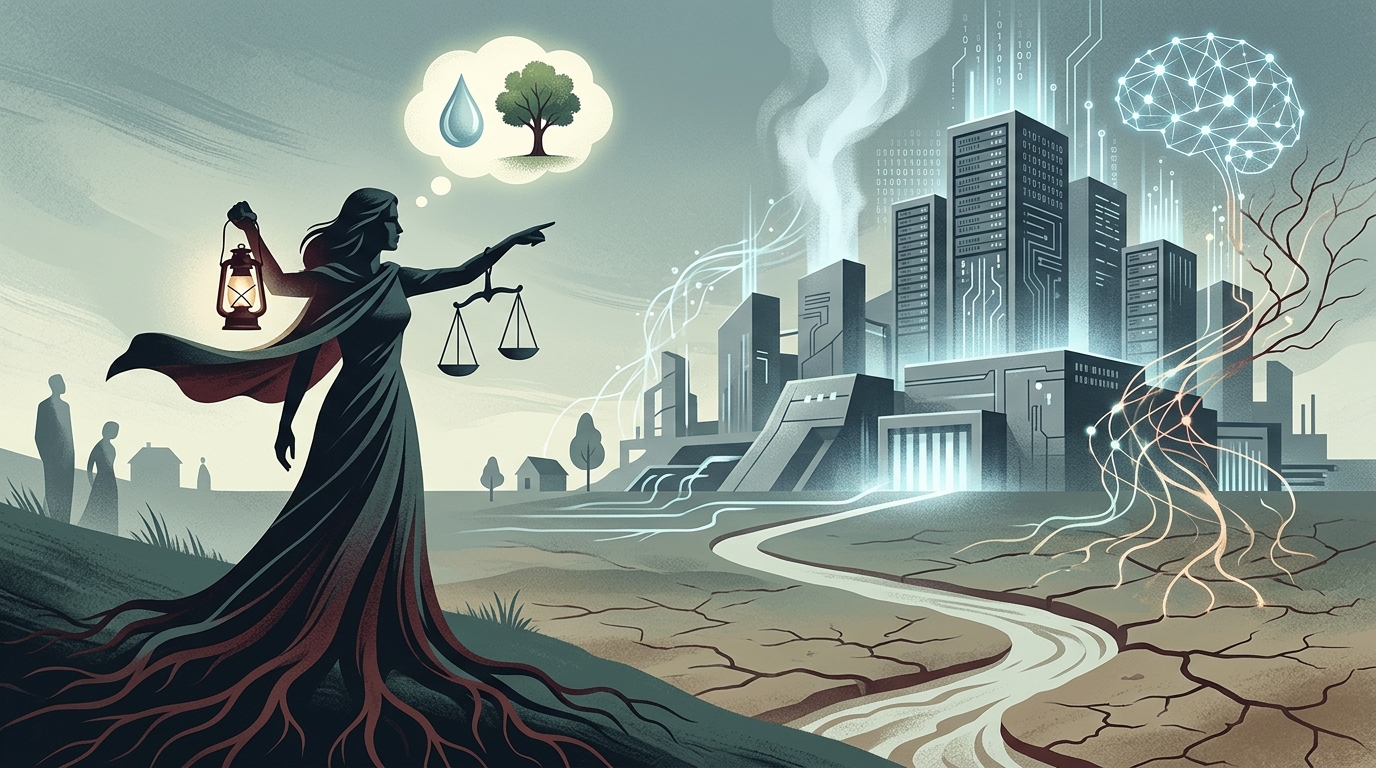
A factor that resonates deeply with the climate-conscious Gen Z is the environmental cost of AI. The staggering energy and water consumption required to maintain the massive data centers of Silicon Valley is seen as an ethical failure. In a world grappling with climate targets, the carbon footprint of training a single large model is a hard pill to swallow for those who are most invested in the planet's future.
'We are told to sacrifice and live sustainably, while tech giants burn through resources to build models that effectively automate our future away,' says one respondent in the FT study.
Furthermore, the issue of data sovereignty—the extraction of personal data and creative output to train models without consent—is viewed as a form of 'digital colonialism.' Young people are increasingly demanding ownership of their digital selves and rejecting the 'black box' nature of corporate AI systems.
Conclusion: A Return to the Human Element?
This souring on AI does not necessarily signal a Luddite-style rejection of technology, but rather a demand for a radical pivot. There is a growing call for 'Human-Centric AI'—systems that are transparent, ethically grounded, and designed to augment rather than replace human agency. We may be witnessing the dawn of an 'Analog Renaissance,' where human imperfection, vulnerability, and raw creativity are valued more highly than the polished, predictable outputs of a machine. As we move further into 2026, the challenge for developers and policymakers will be to prove that AI can indeed be a force for good, or risk losing the trust of the very generation that will build the future.