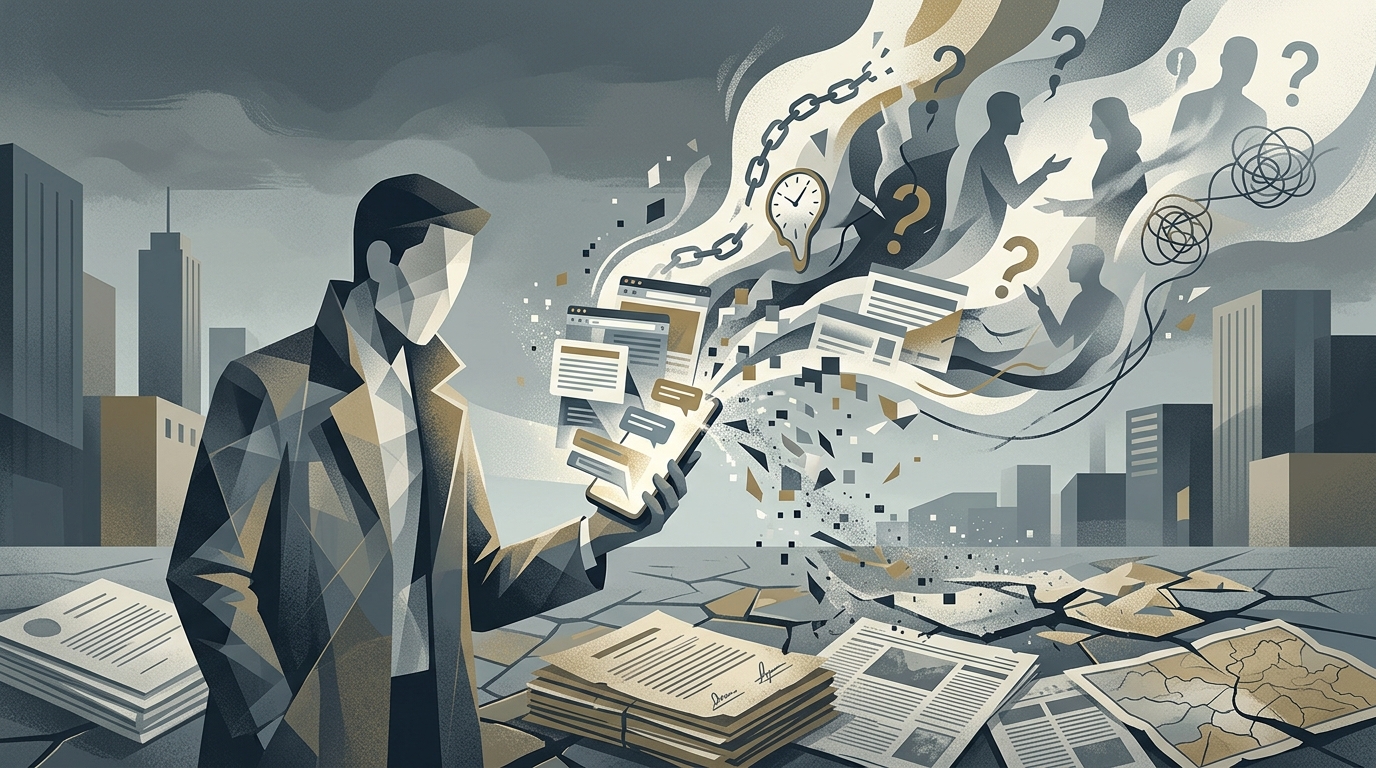
For decades, the screenshot was the ultimate 'receipt' of the digital world. It was the proof of a WhatsApp conversation, the confirmation of a bank transfer, the evidence of a controversial social media post that its creator hurried to delete. Today, April 25, 2026, this era of innocence is officially over. The rapid evolution of Generative AI has made creating fake, yet visually perfect, screenshots a matter of seconds, accessible to anyone.
The Anatomy of a Digital Illusion
The crisis of trust no longer concerns just deepfake videos or edited facial photos. It concerns the very user interface (UI) of our devices. Modern AI models have been precisely trained on UIs, system fonts, and the dynamics of shadows in operating systems like iOS, Android, and Windows. The result is the ability to produce images that are indistinguishable from a real screenshot.
Previously, an experienced observer could spot a fake screenshot by a wrong font, poor alignment, or an inconsistency in status bar icons (like the time or Wi-Fi signal). Today, specialized AI tools can replicate even the metadata of an image, making it appear as if it were taken by a specific iPhone model at a specific location. This creates a massive risk for misinformation and character assassination through fabricated evidence.
Legal and Social Implications
The erosion of screenshot credibility has immediate effects on our legal system. For years, screenshots were accepted as evidence in divorce cases, labor disputes, and even criminal prosecutions. Legal circles are now warning that the 'chain of custody' for digital evidence must change radically. A simple .jpg or .png file is no longer sufficient to establish a charge.
- Judicial Uncertainty: Courts will now require access to the application databases themselves or cryptographically signed logs.
- Workplace Bullying: Creating fake conversations to incriminate colleagues becomes a weapon in the hands of malicious users.
- Financial Fraud: Fake receipts for instant payments or bank transfers are already being used to defraud merchants and individuals.
On a social level, the loss of trust in 'visual evidence' leads to a state of permanent skepticism. While skepticism is healthy, the complete deconstruction of truth allows actual perpetrators to claim that real evidence against them is 'AI-generated.' This is the so-called 'liar’s dividend,' where the existence of deepfakes makes the truth just as questionable as the lie.
Technological Resistance: C2PA and Digital Signatures
The tech industry is not sitting idle. The solution seems to lie in the C2PA (Coalition for Content Provenance and Authenticity) standard, supported by giants like Adobe, Microsoft, and Google. The idea is to embed a 'digital identity' into every image at the moment of its creation. When you take a screenshot, the operating system could cryptographically sign it, certifying that the content you see indeed comes from the device's screen and has not been altered.
"We are no longer in an era where a picture is worth a thousand words. We are in an era where a picture requires a thousand signatures to be considered true," a cybersecurity analyst notes.
However, the adoption of such standards is slow. Until the use of cryptographic proof becomes universal, expert advice is clear: If something in a screenshot looks too shocking to be true, it probably is. Verification through multiple sources and direct access to the source of information are the only defenses we have left.
The Future of Digital Testimony
As we move deeper into 2026, the concept of 'digital testimony' will shift from the visual to the computational. We will learn not to trust our eyes, but mathematics. Communication platforms will be forced to integrate 'verified history' features, where every message will carry a unique stamp of authenticity that cannot be replicated in a simple image. Until then, the screenshot remains an easy tool for creativity, but a dangerous tool for proof.