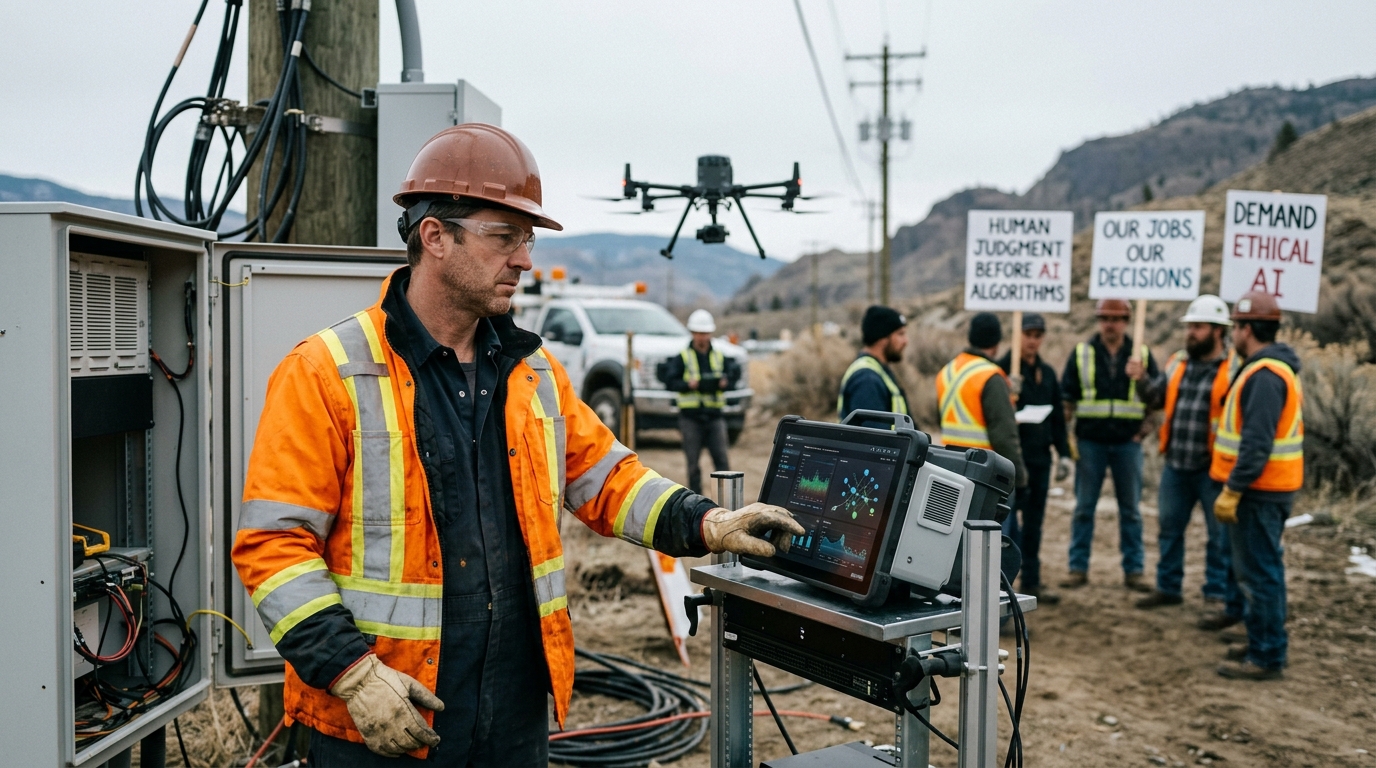
The history of technological progress has always been a narrative of tension between efficiency and human labor. However, the current rise of Generative Artificial Intelligence (AI) appears to be a turning point unlike any before. In Canada, telecom workers, represented by powerful unions such as United Steelworkers (USW) Local 1944, are sounding the alarm, demanding the inclusion of "AI clauses" in their collective bargaining agreements.
The demand is clear: technology must not be used as a tool to dismantle job security or degrade the quality of service. The case of workers in Kamloops and across Canada serves as a microcosm of a global anxiety now permeating every knowledge-intensive and service-oriented industry.
The Threat of Automation and the Erosion of Expertise
For decades, telecommunications has been a sector where human contact and technical expertise went hand-in-hand with technology. Today, chatbots and automated diagnostic algorithms threaten to replace thousands of jobs in call centers and technical departments. Workers argue that AI often fails to grasp the nuances of customer problems, leading to a frustrating user experience while simultaneously pushing experienced professionals out of the labor market.
The issue is not just job loss, but the "deskilling" of the industry. When decisions are made by an algorithmic "black box," the critical thinking and experience of the worker become redundant, turning the human into a mere observer of a process they no longer control.
Algorithmic Surveillance: The Digital Panopticon
Beyond replacement, workers are expressing grave concerns about the use of AI as a management tool. "Algorithmic management" allows companies to monitor every second of an employee's activity, from the time spent on a call to their mouse movements. This constant, invisible pressure leads to unprecedented levels of workplace stress and burnout.
"We are not against technology, but against its use as a means to trample on the dignity of the worker," labor representatives state.
The demand for the "right to human intervention" and transparency in how algorithms evaluate performance is now a central point of negotiations. Workers are demanding to know what data is being collected and how it affects their professional development or job retention.
The Need for a New Social Contract
The conflict in the telecom sector highlights the need for a regulatory framework that precedes developments rather than following them. While the European Union has made strides with the AI Act, on the other side of the Atlantic, worker protection often relies on the strength of unions. Integrating ethical rules into AI use is not just a matter of justice but also of economic sustainability, as mass unemployment due to automation could shake the foundations of the consumer economy.
In conclusion, telecom workers are not asking for a halt to progress, but for an assurance that the fruits of this progress are shared fairly. AI should function as an augmentor of human capability rather than a cheap substitute for it. The outcome of these labor disputes will serve as a roadmap for how our society manages the digital revolution in the coming years.