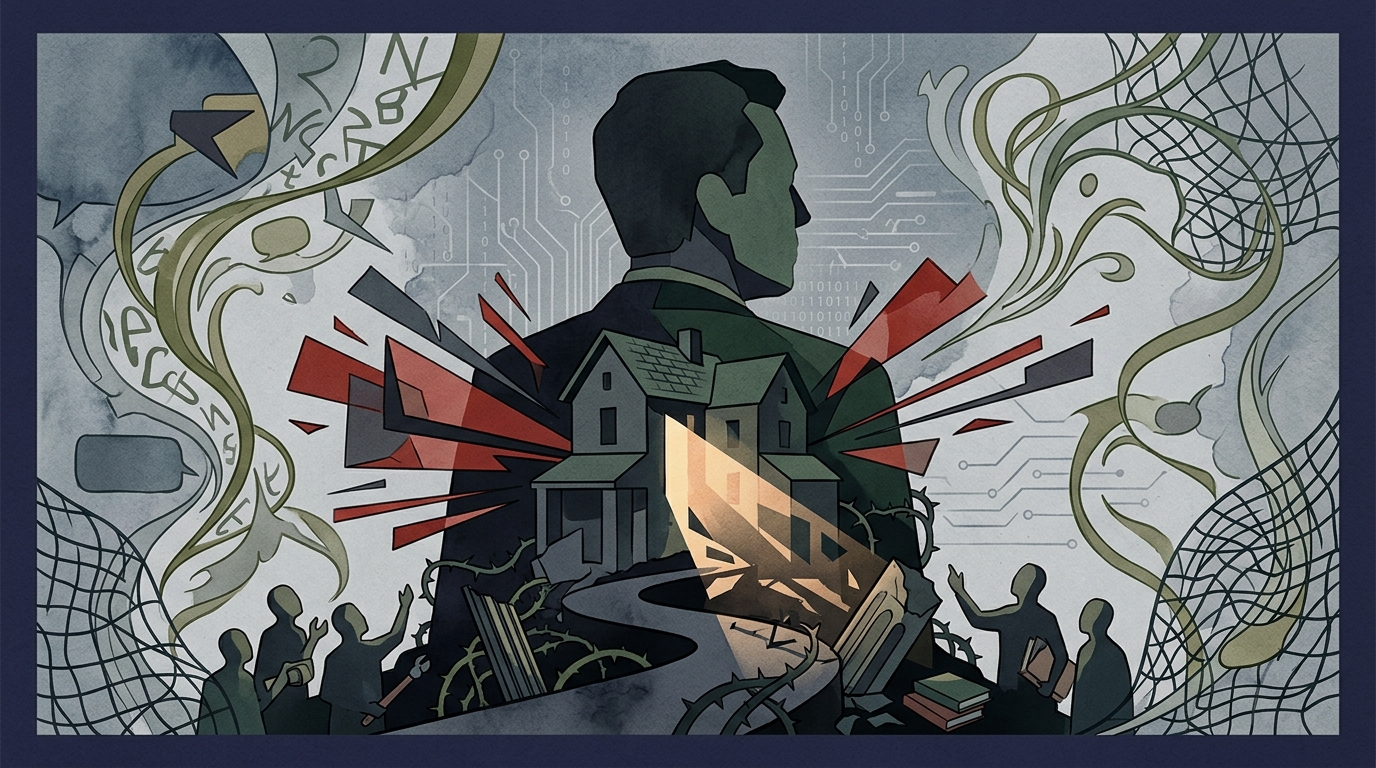
The news of a security breach at Sam Altman’s private residence in San Francisco was not merely a police report; it served as the catalyst for deep introspection—and a sharp counter-offensive—regarding the nature of public discourse surrounding Artificial Intelligence. The OpenAI CEO, through a series of statements and strategic leaks, has linked the incident to what he describes as a "toxic climate" and "doomer rhetoric," casting direct blame on competitors, most notably Anthropic.
This incident highlights a darker facet of technological advancement: when philosophical disagreements about the future of humanity spill out of laboratories and boardrooms, transforming into motivations for physical violence or harassment. For Altman, the constant promotion of "existential risk" scenarios no longer serves as a constructive warning but as a mechanism for radicalizing individuals who view AI developers as the architects of a coming apocalypse.
The Rhetoric of Doom as a Marketing Tool
At the heart of Altman’s critique is the belief that certain companies have weaponized fear. Anthropic, founded by former OpenAI executives who departed over safety concerns, has built its brand identity around "Constitutional AI" and the prevention of catastrophic outcomes. However, Altman argues that this obsession with species-level extinction risks has fostered a level of hysteria that transcends scientific debate.
According to industry analysts, the "safety-first" strategy is not always purely altruistic. In an industry where capital flows at breakneck speeds, positioning a company as the "only safe choice" against "irresponsible accelerators" is a powerful tool for attracting investors and regulatory favor. Altman appears to believe that this tactic has significant collateral damage: the demonization of the individuals leading the development of the world's most advanced models.
- The rise of the "Effective Altruism" movement and its influence on AI safety policy.
- The distinction between technical safety research and public fear-mongering.
- The psychological pressure on CEOs targeted by public outrage fueled by dystopian narratives.
OpenAI vs. Anthropic: A Personal and Ideological Vendetta
The rivalry between OpenAI and Anthropic is well-documented, but it has now taken on a deeply personal dimension. Altman contends that the existential risk narrative promoted by circles close to Anthropic and other "decelerationists" is a calculated strike against OpenAI’s credibility. He views the attack on his home as the physical manifestation of this tension—where the theoretical threat of AI is transmuted into a real threat against his life.
"When you tell the world every day that we are building something that will destroy them, some people will believe it and try to stop us by any means necessary," sources close to the CEO suggest.
On the other hand, Altman’s critics argue that he was among the first to sound the alarm on the dangers of Artificial General Intelligence (AGI) to secure funding and regulatory attention. His current stance is interpreted by some as an attempt to deflect responsibility for the social friction his technology causes, shifting the blame onto the "messengers of bad news."
The Responsibility of Leaders in a Polarized Tech Era
The issue at hand is deeper than a mere corporate feud. It concerns the responsibility of scientists and entrepreneurs in how they communicate progress. AI is not a neutral technology; it is a mirror reflecting human fears and ambitions. When the dialogue is reduced to binaries like "saviors vs. destroyers," the middle ground of reason is often the first casualty.
Silicon Valley stands at a crossroads. The need for transparency and safety is undeniable, but using "the apocalypse" as a competitive tool risks igniting social unrest long before AI itself becomes a tangible threat. Sam Altman, as the face of this revolution, is experiencing firsthand the consequences of a narrative that has escaped the control of its creators. The challenge for the future will be restoring a balanced discourse that focuses on immediate, tangible challenges—such as misinformation and economic displacement—rather than sci-fi scenarios that arm the hands of the desperate.