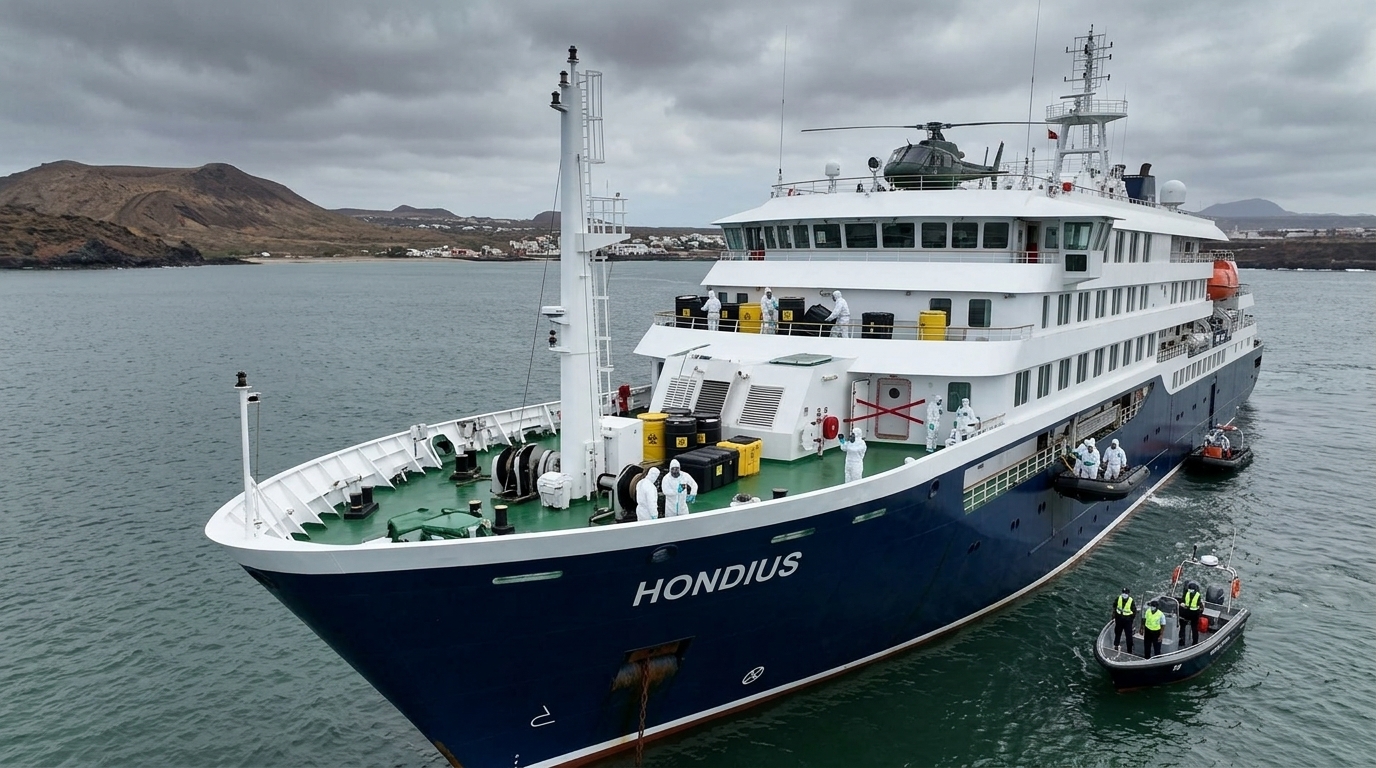
The news that a Canadian citizen tested positive for the Andes virus (a strain of hantavirus) after disembarking from the luxury cruise ship MV Hondius is not merely an isolated medical incident. It is a warning shot highlighting the complex intersections between luxury tourism, global health, and the ethical responsibility of corporations operating in remote regions. The MV Hondius, renowned for its expeditions to the Antarctic and Arctic, found itself at the center of a health crisis that brings back to the forefront the vulnerabilities of globalized movement.
The Andes Virus: An Invisible and Deadly Foe
Hantavirus is not unknown to the medical community, but the Andes strain (Andes virus - ANDV) is particularly concerning. Unlike most hantavirus strains transmitted exclusively from rodents to humans via aerosolized excreta, the Andes strain is the only one documented to allow human-to-human transmission. With mortality rates reaching 35% to 40%, its presence in a confined environment like a cruise ship is a nightmare scenario for health authorities.
The Canadian passenger, whose name was withheld for privacy reasons, developed symptoms after returning to British Columbia. The provincial government acted swiftly, initiating a contact-tracing process spanning several continents. The question remains: how did the virus penetrate a ship considered a model of safety and technology?
The Ethics of Frontier Tourism
The incident on the MV Hondius opens a broader debate on the ethics of so-called 'frontier tourism.' As wealthy travelers seek increasingly pristine and remote experiences, human presence penetrates ecosystems where pathogens may never have come into contact with modern civilization. Is it ethically acceptable to risk the global spread of rare viruses for the sake of a leisure experience?
- Corporate responsibility for monitoring supply chains in high-risk areas.
- The need for stricter quarantine and medical screening protocols before boarding expedition vessels.
- The balance between economic growth through tourism and the protection of public health.
Critics argue that the luxury cruise industry often prioritizes passenger comfort over biological safety. The case of the MV Hondius demonstrates that even the most sophisticated air filtration systems and strict hygiene rules can be bypassed by a virus exploiting the slightest human oversight or a contaminated batch of food from local suppliers.
Biosecurity and Corporate Accountability
The management of the crisis by the ship's operator will be under intense scrutiny. In the post-COVID-19 era, public and regulatory tolerance for health gaps is zero. Oceanwide Expeditions, the company managing the MV Hondius, is now called to prove that its protocols were sufficient and its response immediate. However, the ethical dimension goes beyond legal compliance. It concerns the social contract between the tourism industry and the global community.
"Health is not a local commodity, but a global responsibility. When we transport people to the furthest reaches of the earth, we carry with us the responsibility not to become vectors of destruction," a public health analyst noted.
In conclusion, the hantavirus incident on the MV Hondius must serve as a catalyst for revising safety standards in the expedition cruise industry. The need for transparency, rigorous surveillance, and an ethical approach to exploration is more urgent than ever. The Andes virus has reminded us that our world is interconnected and that luxury provides no immunity against biology.