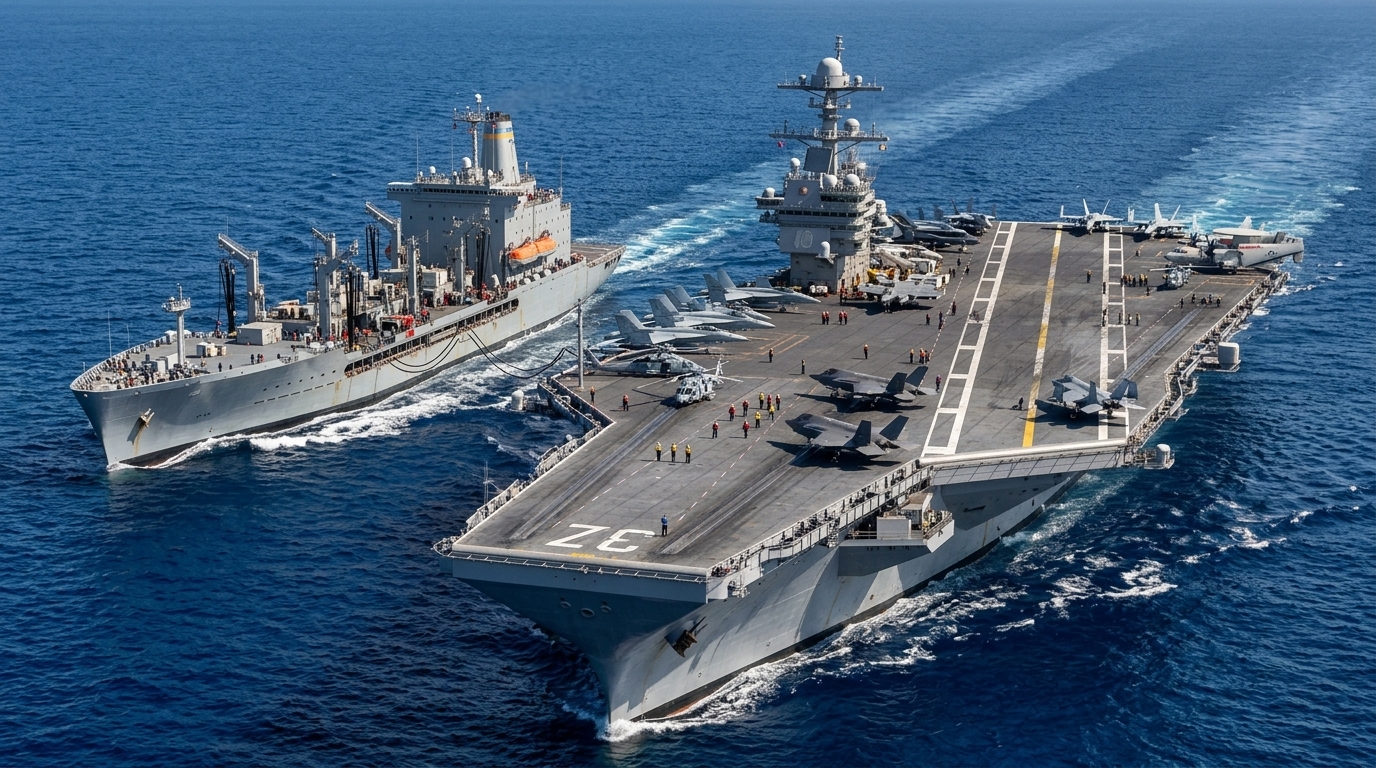
The return of the USS Gerald R. Ford (CVN-78) to Naval Station Norfolk is more than just the end of a deployment; it marks the conclusion of a chapter that has redefined the limits of naval endurance and geopolitical influence in the 21st century. As the spearhead of American naval technology, the ship remained deployed in the Eastern Mediterranean and the Middle East for a duration unprecedented in recent decades, serving as the ultimate bulwark against regional destabilization.
Redefining Naval Aviation: The Ford-Class Breakthrough
The USS Gerald R. Ford is not merely a replacement for the Nimitz class; it represents a radical reboot of how the United States projects air power at sea. Equipped with the Electromagnetic Aircraft Launch System (EMALS) and the Advanced Arresting Gear (AAG), the ship has successfully increased its Sortie Generation Rate by 33% compared to its predecessors. During its recent deployment, these systems were tested under high-intensity, real-world conditions, proving that initial technical hurdles have been decisively overcome.
The integration of next-generation nuclear reactors (A1B) allows the Ford to generate three times more electrical power, a critical feature that enables it to host future directed-energy weapon systems (lasers) and advanced radar arrays. This energy autonomy and the ship's digital backbone make it a platform capable of evolving for the next 50 years, adapting to the threats of 2026 and beyond.
A Sentinel in the Mediterranean: Strategic Deterrence
The Ford’s presence in the Eastern Mediterranean was no coincidence. Its deployment was accelerated and repeatedly extended in response to escalating tensions in the Middle East. Its mission was clear: deterrence. The presence of a floating airbase capable of carrying over 75 aircraft sent a powerful message to regional actors, such as Iran and Hezbollah, significantly limiting the probability of a broader regional conflict.
- Deterring the escalation of the conflict in Southern Lebanon.
- Securing vital trade routes through the Suez Canal.
- Bolstering the confidence of NATO allies in the region.
- Counterbalancing Russian naval presence in Tartus, Syria.
Strategic "carrier diplomacy" remains Washington's most potent tool. Analysts suggest that the Ford’s ability to remain at full combat readiness for such an extended period without returning to port for major repairs sets a new gold standard for global naval strategy.
The Strain of Endurance: Lessons in Logistics and Morale
Despite the technological triumph, the longest deployment in years also highlighted significant challenges. The strain on the crew of over 5,000 personnel was unprecedented. Continuous extensions of their time at sea tested the morale and psychological resilience of the sailors. The US Navy must now find a balance between the necessity of a global presence and the vital need for crew rest and training cycles.
"The success of the USS Gerald R. Ford is measured not just by the miles it sailed, but by the crises that did not erupt because of its presence," stated a senior Pentagon official.
Furthermore, the ship's return signals the beginning of an intensive maintenance period. While the Ford class is designed to require less personnel and long-term maintenance, this first extensive deployment will provide invaluable data on the wear and tear of new materials and systems. These lessons will be integrated into the construction and operation of future ships in the class, such as the USS John F. Kennedy and the USS Enterprise.
Looking Ahead: The US Navy’s Global Posture in 2026
As 2026 progresses, the Ford’s return highlights a shift in American strategy. While the Mediterranean remains critical, the Pentagon’s gaze is increasingly fixed on the Indo-Pacific. The experience gained from CVN-78’s mission will serve as a blueprint for future deployments in environments where threats from swarming drones and hypersonic missiles are becoming increasingly complex. The USS Gerald R. Ford has proven that the aircraft carrier remains the ultimate unit of power, provided it can adapt to rapidly shifting geopolitical realities.