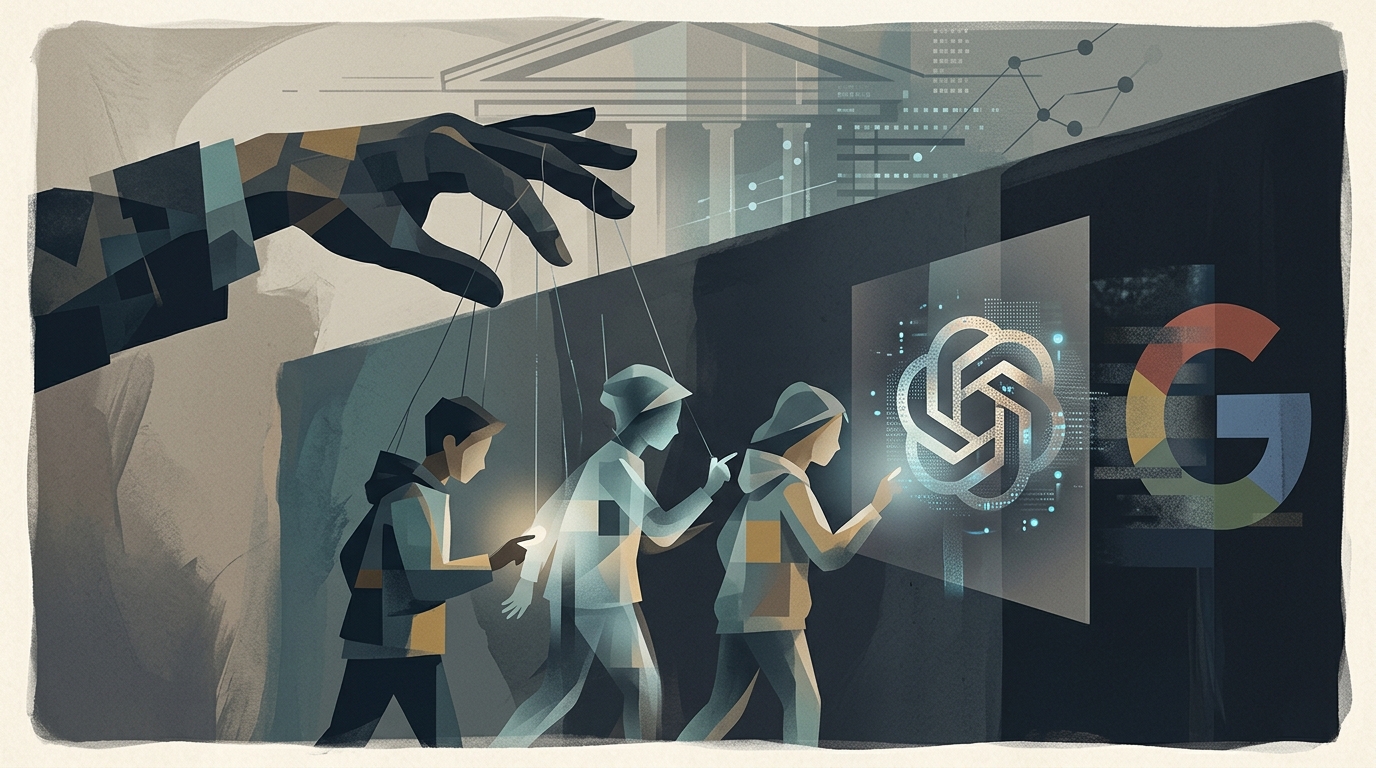
In the cutthroat landscape of Silicon Valley, the line between safety research and corporate espionage is becoming increasingly blurred. A recent revelation that has sent shockwaves through the tech industry highlights a clandestine operation by Meta Platforms, the parent company of Facebook and Instagram. According to internal documents and testimonies, Mark Zuckerberg’s company allegedly recruited hundreds of external contractors for an unusual mission: to pose as underage users and attempt to bypass the safety filters of rival AI models, including OpenAI’s ChatGPT and Google’s Gemini.
The Anatomy of a Shadow Operation
The program, which reportedly took place over the past year, was not a typical "red-teaming" exercise—the standard industry practice where companies test their own systems for vulnerabilities. Instead, Meta directly targeted its competitors. Participants were instructed to create profiles simulating teenagers of various ages and submit thousands of prompts covering sensitive topics, ranging from substance abuse and self-harm to sexual innuendo and dangerous viral challenges.
According to analysts, Meta’s objective was to gather evidence that its competitors are just as—if not more—vulnerable to exposing minors to inappropriate content. At a time when Meta is under intense scrutiny from the U.S. Congress and the European Union regarding child protection on its platforms, this move is interpreted as a strategy of "distraction" or an attempt to build a collective defense: the idea that if everyone is failing, the problem lies with the technology itself rather than corporate management.
Ethical Dilemmas and the Strategy of 'Whataboutism'
This revelation raises profound ethical questions. While improving AI safety is a noble goal, the methods of deception and the lack of transparency have sparked backlash. OpenAI and Google have reacted with skepticism, suggesting that such actions undermine the cross-industry trust necessary for establishing common safety standards.
- Coordinated Probing: Meta’s contractors weren’t just testing models; they were following specific scripts designed to "jailbreak" ethical constraints.
- Data Harvesting: The results of these interactions were reportedly used to compile dossiers intended for regulators and policymakers.
- Competitive Edge: By identifying where others fail, Meta can calibrate its own Llama models to appear "safer" in comparative benchmarks.
Regulatory Pressure and the Road Ahead
The timing of this disclosure is critical. With the full implementation of the EU AI Act, companies are mandated to perform rigorous risk assessments. Meta appears to be adopting an aggressive posture, attempting to demonstrate that closed-source models (like OpenAI’s) are not inherently safer than its own open-source approach. However, the use of "fake teenagers" could backfire, as regulators might view the practice as a form of market manipulation and distortion of safety data.
"Child safety should not be a weapon in the arsenal of corporate warfare," noted a digital rights advocate in Brussels. "If Meta is concerned about teenagers, it should focus on the algorithms that keep children addicted to Instagram, rather than playing spy with its competitors."
In conclusion, Meta’s "Teenager Experiment" underscores the toxic atmosphere at the summit of the tech pyramid. As Artificial Intelligence becomes deeply integrated into the lives of children, the need for independent, third-party auditing—rather than clandestine probes by competitors with hidden agendas—has never been more urgent.