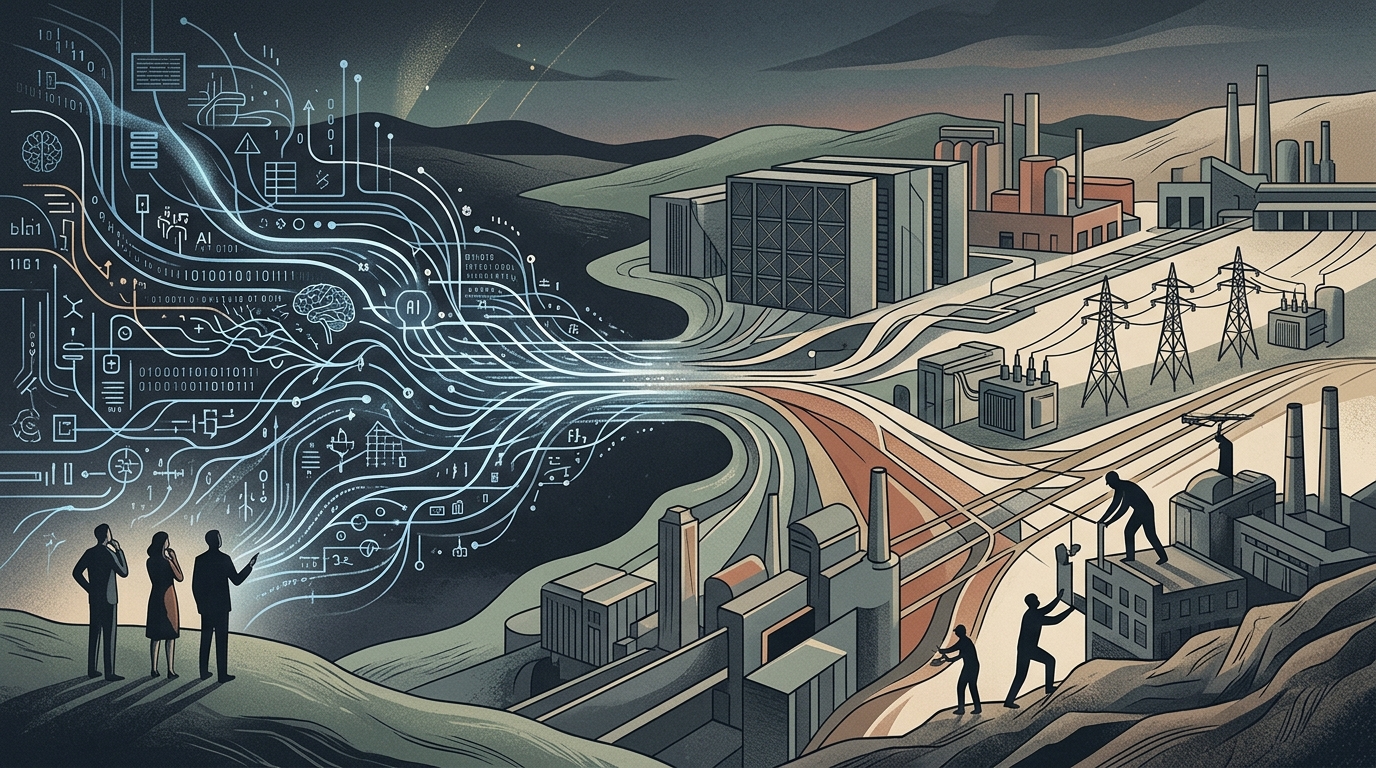
In the twilight of traditional political communication, Artificial Intelligence (AI) is emerging as the ultimate disruptor. As we move through 2026, the debate is no longer about whether AI will influence elections, but whether its influence will serve as an equalizer for underfunded candidates or as a sophisticated mechanism of deception that renders truth obsolete. A recent analysis by The Guardian highlights this very duality: on one hand, the potential to produce high-quality content at a fraction of the cost; on the other, the peril of deepfakes and hyper-targeted misinformation.
The Democratization of Political Advertising
Historically, television and digital campaigns required massive budgets, armies of consultants, and expensive production studios. This placed independent candidates or smaller parties at a significant disadvantage. Today, Generative AI tools allow a candidate with limited resources to create professional-grade videos, translate their message into dozens of languages, and analyze voter data with a precision previously reserved for major political machines.
This "democratization" of technology could theoretically lead to a more pluralistic democracy. When the cost of entry into the political marketplace drops, the focus can shift from who has the most money to who has the best ideas. However, this optimistic view overlooks the fact that these same tools are available to those seeking to manipulate public opinion through falsehoods.
The Dark Side: Deepfakes and the "Liar’s Dividend"
The greatest fear among analysts is the normalization of deepfakes. These are no longer amateurish edits but video and audio clips practically indistinguishable from reality without specialized tools. In recent global elections, we have seen examples of candidates "appearing" to say things they never uttered, or being involved in scandalous situations that were entirely algorithmic fabrications.
Even more dangerous is the phenomenon academics call the "Liar’s Dividend." In a world where everything can be an AI product, politicians can deny the validity of real, damaging evidence by claiming it is "AI-generated." This erosion of trust in audiovisual evidence strikes at the heart of journalism and political accountability. If citizens cannot believe their eyes and ears, then truth becomes a matter of faith rather than proof.
Micro-targeting and Digital Echo Chambers
AI enables the creation of thousands of variations of a single ad, each tailored to the psychological traits, biases, and concerns of a specific user. This hyper-targeted communication happens "under the radar" of public discourse. While a TV ad is subject to scrutiny by opponents and the media, an ad that appears only in a specific individual's feed remains invisible to everyone else.
This creates fragmented realities. A candidate can promise different, even contradictory, things to different population groups without ever being confronted with their inconsistency. AI is not just a magnifier of existing divisions but an accelerator that can lead to complete social alienation.
Regulatory Response and Platform Responsibility
The European Union, through the AI Act, has taken steps toward mandatory labeling of AI-generated content. However, technology moves faster than legislation. Major platforms like Meta and Google have announced policies for labeling political ads that use AI, but enforcement remains problematic—especially when it comes to content shared organically by users rather than through official advertising accounts.
In conclusion, AI in politics is a double-edged sword. It can give a voice to those who lacked the means to be heard, but it can also drown democracy in an ocean of manufactured truths. The challenge for 2026 and beyond is not just technical, but deeply ethical and educational: we must train citizens to be critical consumers of information in an era where reality has become optional.