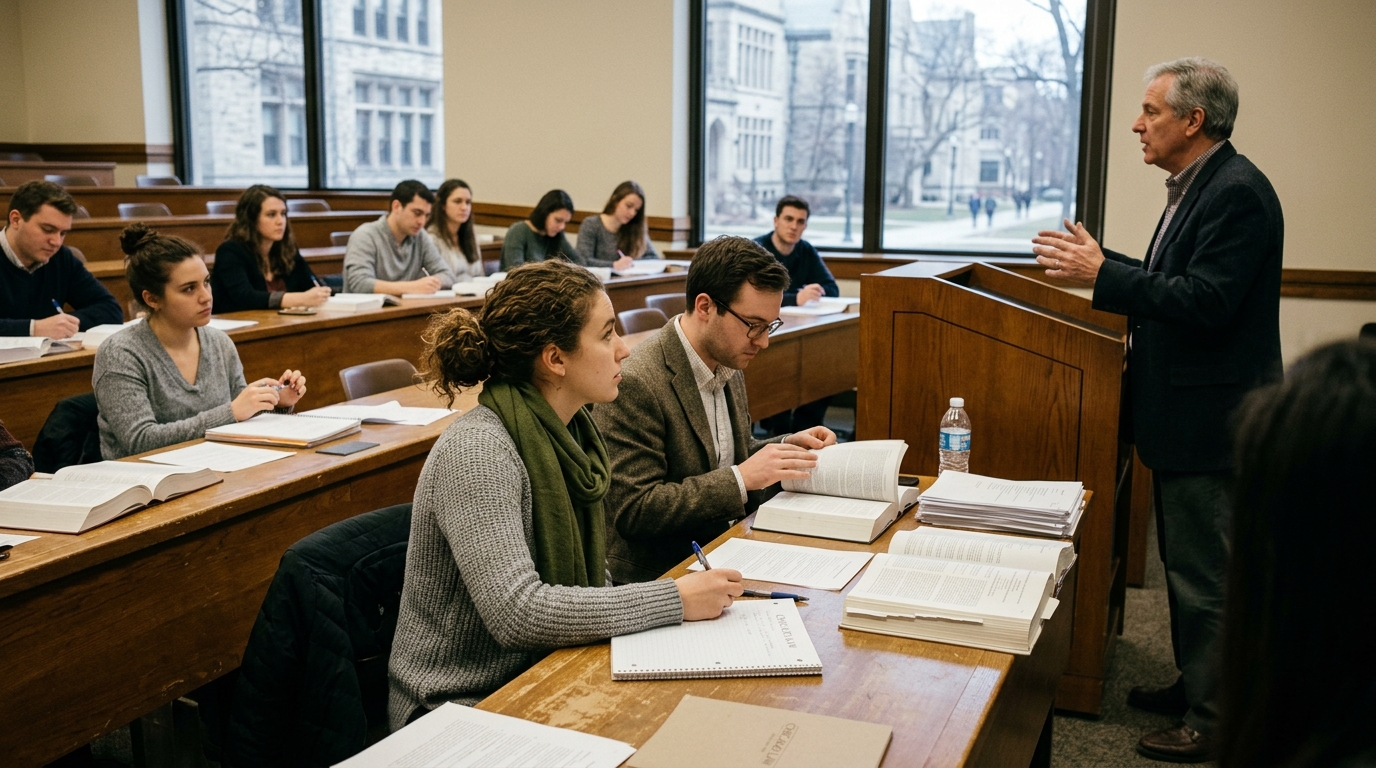
In an era defined by digital omnipresence, one of the world's most prestigious academic institutions, the University of Chicago Law School, has decided to pull the plug. The school's recent decision to ban electronic devices—including laptops, tablets, and smartphones—from first-year (1L) classrooms is not merely a nostalgic retreat to pen and paper. It is a strategic "declaration of war" against the growing reliance on Artificial Intelligence and the perceived erosion of traditional legal pedagogy.
The Threat of Cognitive Outsourcing
For decades, the Socratic Method has been the cornerstone of American legal education. This process of relentless questioning by professors, which forces students to think under pressure, analyze complex precedents, and synthesize legal arguments in real-time, is now threatened by the advent of Generative AI. With tools like ChatGPT and specialized legal LLMs, students now have the ability to obtain case summaries or even pre-packaged answers in seconds, bypassing the arduous but essential process of mental processing.
The administration argues that the presence of screens creates a "digital wall" between professor and student. However, the true fear runs deeper: "cognitive outsourcing." When a student can rely on a device to organize their thoughts or retrieve a legal statute instantly, the muscle of critical analysis atrophies. At UChicago Law, the conviction is steadfast: the lawyer of the future must be able to think without crutches, especially during the formative stages of their professional identity.
The Socratic Method in the Age of Algorithms
The ban specifically targets first-year students because the 1L year is considered the most critical for learning to "think like a lawyer." Proponents of the policy emphasize that the absence of electronics fosters attention and active participation. Without the temptation of multitasking or the convenience of instant search, students are forced to grapple with the ambiguity and complexity of the law head-on.
- Enhancement of interpersonal communication and classroom dialogue.
- Protection of intellectual property of lectures from being fed into AI models.
- Reduction of distractions caused by social media and notifications.
- Leveling the playing field among students with varying access to premium AI tools.
However, the decision is not without its critics. Many students and educational analysts point out that the modern lawyer works exclusively in a digital environment. Severing the tie to technology in the classroom may create a chasm between academic theory and professional reality. Furthermore, serious questions arise regarding accessibility for students with learning disabilities or physical impairments, for whom digital devices are not a luxury but a necessity for equitable learning.
The Dilemma: Integration vs. Resistance
UChicago Law’s move reflects a broader dilemma in higher education: Should universities integrate AI as an indispensable tool or create "sanctuaries" free from technology? While other schools are experimenting with "AI Prompt Engineering" courses for lawyers, Chicago is choosing the path of resistance, betting on the value of unmediated human thought.
"The law is not just information; it is judgment. And judgment cannot be automated—at least not without losing the essence of justice," notes one supporter of the new policy.
Ultimately, this ban serves as a high-stakes experiment. If UChicago graduates prove to be more incisive and capable in the courtroom than their peers who were raised with AI at their side, we may see a universal return to analog education across the world's elite institutions. However, if the labor market demands a speed that only technology can provide, this move might be remembered as a heroic but futile attempt to stem the tide of the inevitable.