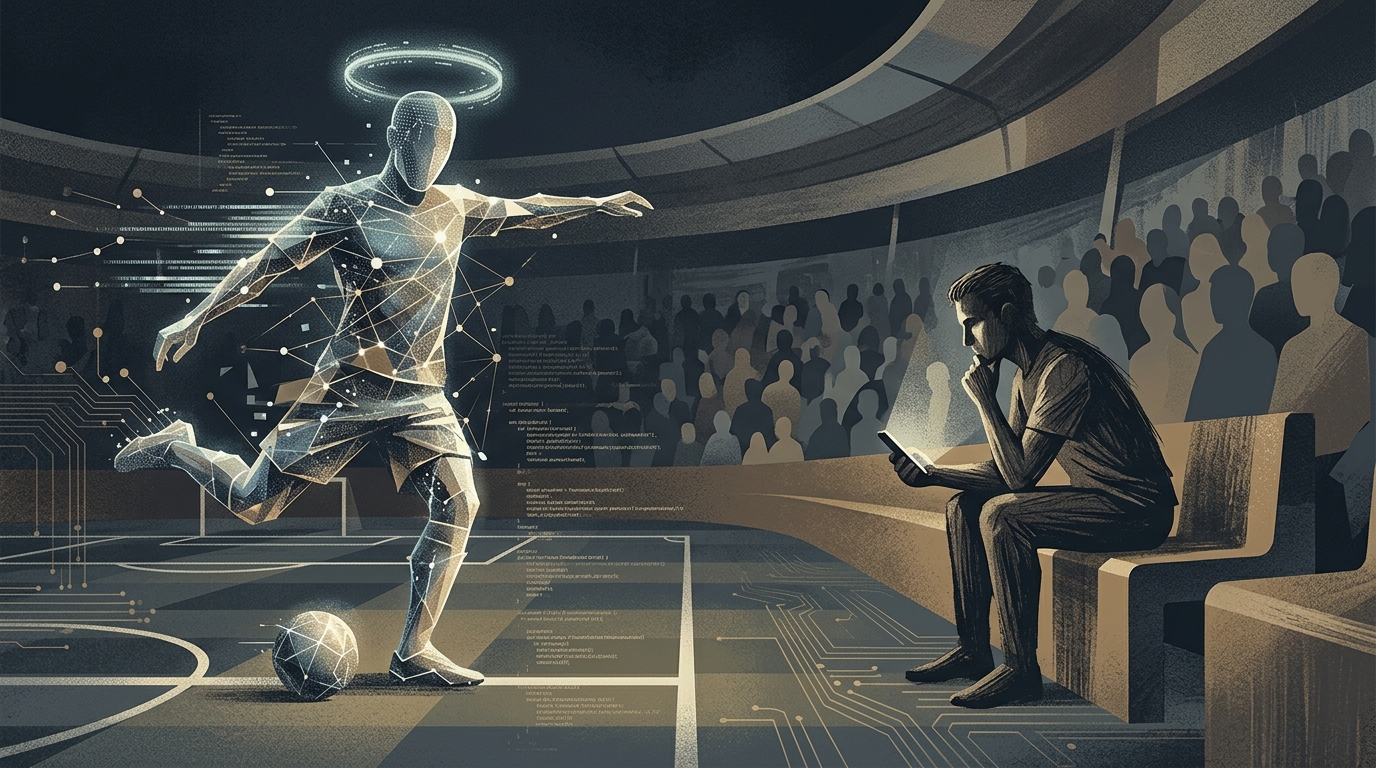
In the high-stakes world of modern football, where athletes are no longer just players but global brands, Erling Haaland’s foray into the digital realm marks a pivotal moment. This isn't merely a marketing gimmick; it is the dawn of an era where Artificial Intelligence (AI) is tasked with augmenting, or even replacing, the physical presence of superstars. The use of a 'fake' Haaland—a highly sophisticated deepfake or AI avatar—in campaigns like 'Visit Norway' and his integration into digital ecosystems like Clash of Clans, raises fundamental questions about ethics, the ownership of human likeness, and the evolving relationship between fans and their idols.
The Rise of the Digital Twin: From Pitch to Pixels
The technology allowing for the creation of a digital replica of an athlete has moved far beyond the rudimentary graphics of past video games. Today, we speak of 'digital twins' capable of mimicking a person’s voice, facial expressions, and body language with eerie precision. For Haaland, an athlete whose time is incredibly scarce and whose commercial value is astronomical, AI offers a solution: omnipresence. An AI avatar can film ten commercials a day in ten different countries, speaking ten different languages fluently, while the real player is training in Manchester.
However, this convenience comes with a heavy ethical price tag. The 'decoupling' of the face from the soul and physical effort creates a crisis of authenticity. When a fan sees Haaland promoting a product or interacting with an audience, the knowledge that it is an algorithmic construct rather than the man himself alters the emotional connection. The entertainment industry is walking a tightrope between innovation and deception.
Legal Voids and the Ownership of Digital Existence
The case of the 'fake Haaland' highlights the urgent need for a new legal framework. Who owns the rights to an AI avatar? If an athlete retires or passes away, can the company holding their digital rights continue to utilize them? In the European Union, the AI Act attempts to establish some ground rules, particularly regarding the labeling of AI-generated content. Nevertheless, the speed of technological advancement is outstripping legislation.
- Consent and Control: The risk of an athlete's likeness being misused for purposes they do not endorse is a growing concern.
- The Ethics of Deception: The thin line between creative use and misleading the public is becoming dangerously blurred.
- Commodification: Turning the human face into a perpetual digital asset changes the very nature of labor in sports.
- Market Saturation: The ease of creating AI content could lead to a devaluation of the athlete's actual brand.
Clubs and sponsors see AI as an opportunity to maximize profits without the risks associated with human fatigue or personal scandals. A digital Haaland will never say something controversial in an interview, will never get injured, and will never demand a transfer. He is the perfect employee in an imperfect world.
The Social Dimension: Idols in the Age of Deepfakes
Beyond the legal and economic implications, there is a profound social dimension. Sports idols function as role models. Their digitization turns them into 'products' stripped of the humanity that made them beloved in the first place. If Haaland can be everywhere at once, the value of his presence diminishes. Scarcity is what creates value in art and sports alike. AI threatens to flood the market with 'synthetic presence,' making real contact an expensive privilege for the few.
"Artificial intelligence is not replacing the player on the field, but it is replacing the myth of the player in society. When the idol becomes code, admiration becomes mere consumption."
In conclusion, the 'fake Haaland' is just the beginning. As technology evolves, we will see more athletes adopting digital personas. The challenge for us, as a society and as fans, is to demand transparency and preserve the human essence that makes sports the most compelling drama on the planet. Technology should serve humanity, not displace it from its own image.