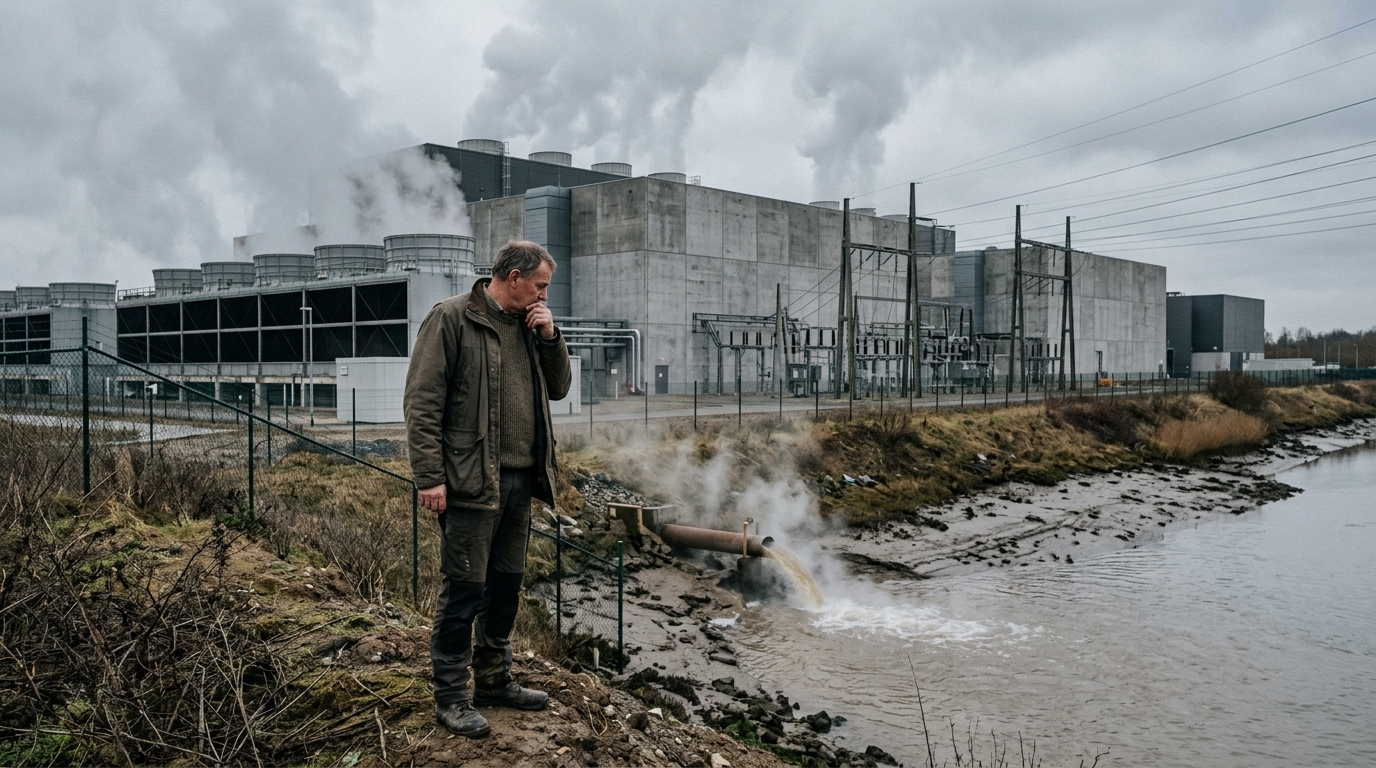
At the heart of our digital age, behind the sleek interface of ChatGPT and Google’s instantaneous searches, lies a harsh, industrial reality. Datacenters, the temples of modern computing, are evolving into a "ticking time bomb" for the planet. As the AI arms race accelerates, the demand for computational power is skyrocketing, dragging along with it energy consumption, water usage, and carbon emissions. The question now being urgently asked is not just what AI can do for us, but whether the environmental price is sustainable.
The Voracious Need for Power and the End of Efficiency
For years, tech giants prided themselves on the energy efficiency of their systems. However, the advent of Generative AI has changed the game. Training a large language model, such as GPT-4, requires tens of gigawatt-hours of electricity—enough to power thousands of households for a year. But the problem doesn't stop at training. Every time a user asks an AI to write an email or generate an image, energy is consumed in real-time.
According to recent analyses, electricity demand from datacenters worldwide is expected to double by 2026. In countries like Ireland, datacenters already consume nearly 20% of the nation's total electricity, raising concerns about grid stability and rising prices for ordinary consumers. The promise of "green AI" feels increasingly distant as companies rush to build new facilities without waiting for the development of renewable energy infrastructure.
The Thirst of the Machines: The Water Crisis
A frequently overlooked aspect of the problem is water consumption. Datacenters generate enormous amounts of heat, and the most efficient way to cool them remains water evaporation. It is estimated that for every 20 to 50 questions we ask a chatbot, the system "drinks" about half a liter of water. In regions hit by drought, such as Arizona or parts of Southern Europe, the presence of giant datacenters is causing social tensions.
Local communities face a dilemma: welcome the investment and jobs (which are often few once construction is complete) or protect their water resources. The lack of transparency from tech companies regarding exact water usage exacerbates the situation, making oversight and accountability difficult.
Ethics and Responsibility: Who Pays the Bill?
The debate over datacenters is not just technical; it is deeply political and ethical. Artificial Intelligence is promoted as the tool that will solve the climate crisis through system optimization. However, there is the risk of the "Jevons Paradox": as a technology becomes more efficient, we use it more, ultimately leading to greater overall resource consumption.
"We cannot allow digital progress to undermine physical survival. AI must prove its worth not just in the stock markets, but in the carbon balance sheet," environmental experts state.
To avoid disaster, a stricter regulatory framework is required. The European Union has already begun considering rules that would force datacenters to report their environmental footprint in detail and reuse waste heat for district heating. Without such interventions, the "ticking time bomb" will continue to tick, threatening to undo decades of climate protection efforts.