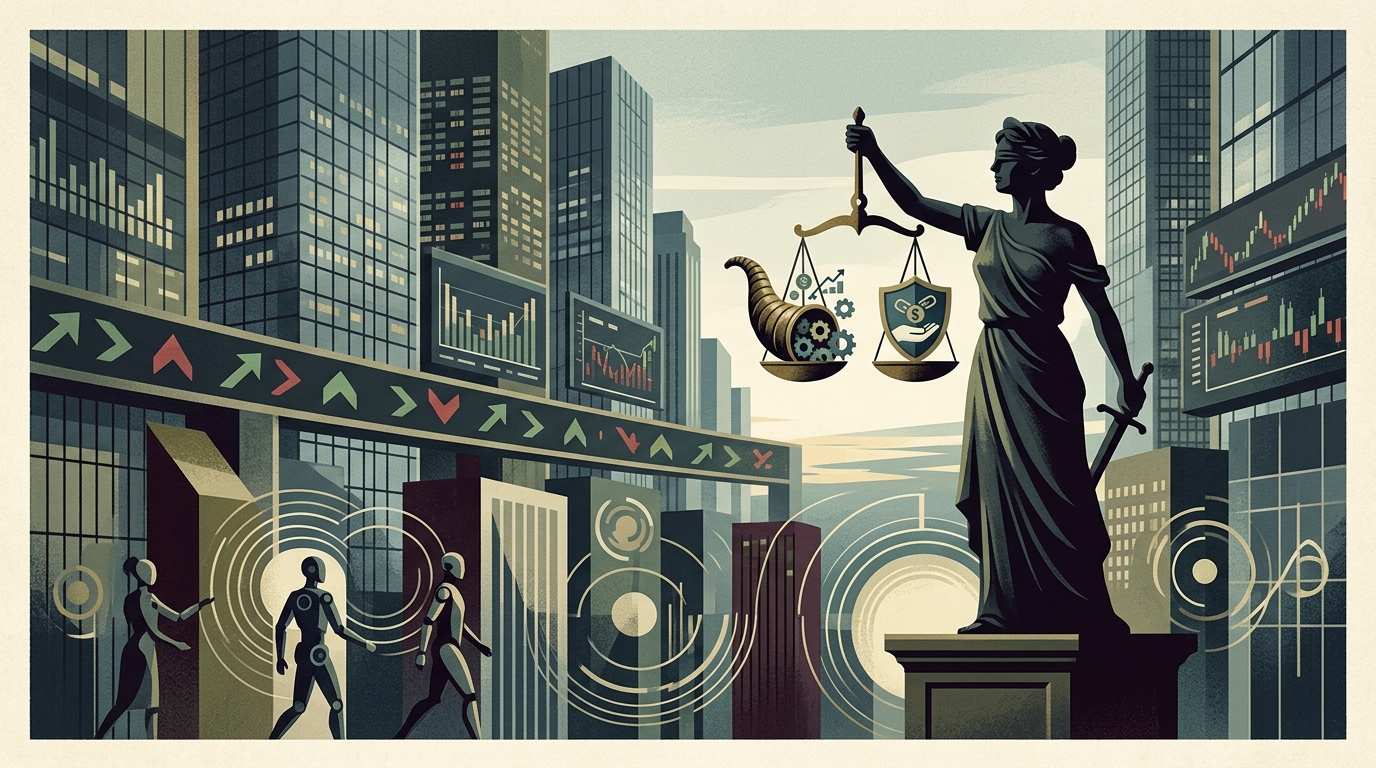
For over a century, the oil industry has operated in a manner that, despite technological leaps in extraction, remained archaic in its transactional nature. Bureaucracy, opaque supply chains, and cumbersome clearing mechanisms were the standard. However, 2026 finds 'black gold' crossing the threshold of the digital age through blockchain technology. The concept of converting every barrel of oil into a digital token is no longer a science fiction scenario but an emerging reality promising to democratize access to one of the world's most exclusive economic sectors.
The Technology Behind the Digital Barrel
The process of tokenization involves creating digital certificates on a distributed ledger (blockchain) that represent ownership of specific quantities of physical oil. These tokens are not merely unbacked cryptocurrencies; they are Real World Assets (RWA) directly linked to storage tanks and delivery contracts. The use of 'smart contracts' allows for automated payment execution and ownership transfer once certain conditions are met, eliminating the need for armies of intermediaries, bank guarantees, and paper documents.
According to analysts, this shift offers unprecedented transparency. Each barrel can be traced from the extraction point to the refinery, reducing the chances of fraud or illicit trafficking. Furthermore, the possibility of fractional ownership allows smaller investors to participate in the oil market, which until now was the exclusive domain of large institutional investors and hedge funds.
Economic Implications and Liquidity
The entry of oil into the blockchain is expected to unlock massive capital that remained 'trapped' due to high entry barriers. In the traditional market, buying oil requires complex logistics and storage arrangements. With tokenization, oil is transformed into a highly liquid asset that can be traded 24/7 on digital exchanges. This reduces the so-called 'liquidity premium' and allows for faster capital recycling for production companies.
"The digitization of commodities is the final frontier of financial technology. By turning oil into code, we are not just changing how we sell it, but how we perceive it as value," says a prominent executive from a sector startup.
However, the transition is not without challenges. The volatility of the crypto space often deters traditional players, while the need for a robust regulatory framework is imperative. Regulators in the US and EU are already examining how these digital assets should be classified to prevent their use for money laundering or bypassing sanctions—a particularly sensitive issue given oil's geopolitical significance.
Geopolitics and the Energy Paradox
There is an inherent irony in linking blockchain—a technology often touted as the future of a decentralized economy—with oil, the fuel that symbolizes the old, centralized, and environmentally taxing industry. Nonetheless, OPEC+ nations are closely monitoring developments. For Gulf states, tokenization offers a way to maintain their dominance in the energy market while modernizing their financial infrastructure.
Moreover, integrating ESG (Environmental, Social, and Governance) data into the blockchain could allow buyers to choose 'green' oil—oil produced with a lower carbon footprint. This differentiation through technology could create new pricing tiers, where blockchain transparency serves as the guarantee for producers' environmental compliance.
Conclusions for the Future
The digitization of oil is more than a technical upgrade; it is a structural shift in commodity capitalism. While we are still in the early stages, the convergence of energy and cryptography heralds a world where the physical boundaries of the market become increasingly blurred. The question is no longer whether oil will go digital, but who will control the networks through which this new, digital 'black gold' will flow.