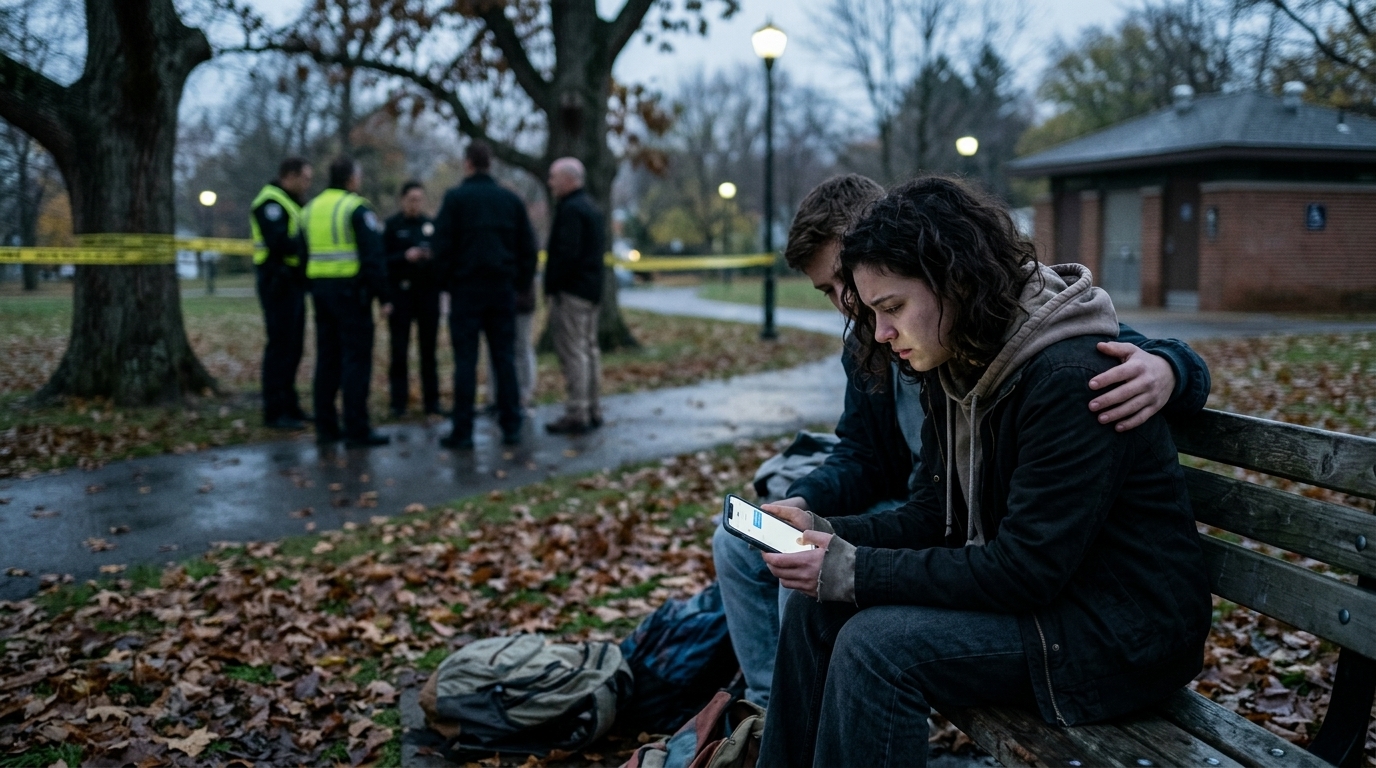
The news of the double suicide of two 17-year-olds in Greece did not only cause profound grief but also sparked an intense debate regarding the way modern journalism handles trauma. In an era where the speed of information outweighs its quality and the number of clicks determines a report's success, human tragedy risks becoming just another disposable product of the "attention economy." The question that arises is relentless: Where does the need for information end, and where does the exploitation of pain begin?
Tragedy as Spectacle in the Digital Arena
When news of such gravity surfaces, the media machinery goes into high alert. However, this mobilization often slides into practices reminiscent of yellow journalism rather than serious reporting. Detailed descriptions of methods, the publication of private messages, or the analysis of the victims' private lives offer nothing to the understanding of the phenomenon. Instead, they satisfy a voyeuristic curiosity that distracts from the deeper causes: the youth mental health crisis, the lack of support structures, and social isolation.
Transforming a suicide into a "story" with dramatic music, sensationalist headlines, and photos of the victims creates a context where death ceases to be an irreversible tragedy and becomes "content." This content is quickly consumed on social networks, accompanied by comments that often lack empathy, turning the grief of families into public fodder.
The Risk of Contagion and the Werther Effect
Journalistic ethics are not an abstract concept but a tool for protecting public health. The World Health Organization (WHO) has issued clear guidelines for covering suicides, emphasizing the risk of the "Werther effect" (copycat suicide). When media romanticize the act or present suicide as a "liberating" way out, the risk of imitation by other vulnerable individuals, especially young people, increases.
- Avoid describing the method of suicide.
- Avoid sensationalist headlines and front pages.
- Refrain from using photos or material from the victims' social media.
- Always provide information for helplines and support services.
In the case of the two 17-year-olds, we saw many of these boundaries being crossed. Focusing on the "romantic" dimension of a joint decision to die is extremely dangerous. Suicide is not an act of heroism or a romantic choice; it is the result of unbearable internal pressure that requires medical and social intervention, not journalistic dramatization.
The Ethical Responsibility of the Reader and the Journalist
Responsibility lies not only with content creators but also with its consumers. In a digital ecosystem, our "click" is our vote. When we choose to read an article that violates the privacy of victims, we feed the algorithm that demands more blood and more drama. Media literacy is essential so that citizens can recognize and reject toxic information.
"Journalism that does not respect human dignity at the moment of absolute weakness ceases to be a service and becomes a trade in pain."
Journalists must act as filters rather than magnifying glasses of tragedy. The news should be accompanied by expert analysis, discussions on prevention, and highlighting the gaps in the welfare system. Only then does information acquire social utility. Silence, in some cases, is more ethical than the noise aimed at advertising revenue.
Conclusion: Towards Information with Empathy
The loss of two young people is a wound that does not close with easy conclusions. Our society must ask itself why our youth feel so helpless. The media has the power to assist in this search, provided they abandon the culture of spectacle. Information must return to its roots: truth, respect, and the protection of the human being. The consumption of tragedy is another form of violence, and it is time we stop it.