Disneyland, the global icon of escapism and childhood wonder, is currently navigating a complex ethical storm. As of late April 2026, visitors to the Anaheim resort are finding themselves at the center of a high-tech experiment: the widespread rollout of facial recognition technology for park entry and queue management. While Disney frames this as a necessary evolution to enhance efficiency and combat ticket fraud, a growing chorus of guests and privacy advocates is raising alarms over the lack of transparency and the perceived erosion of personal choice.
The Digital Gatekeeper: Efficiency at a Cost
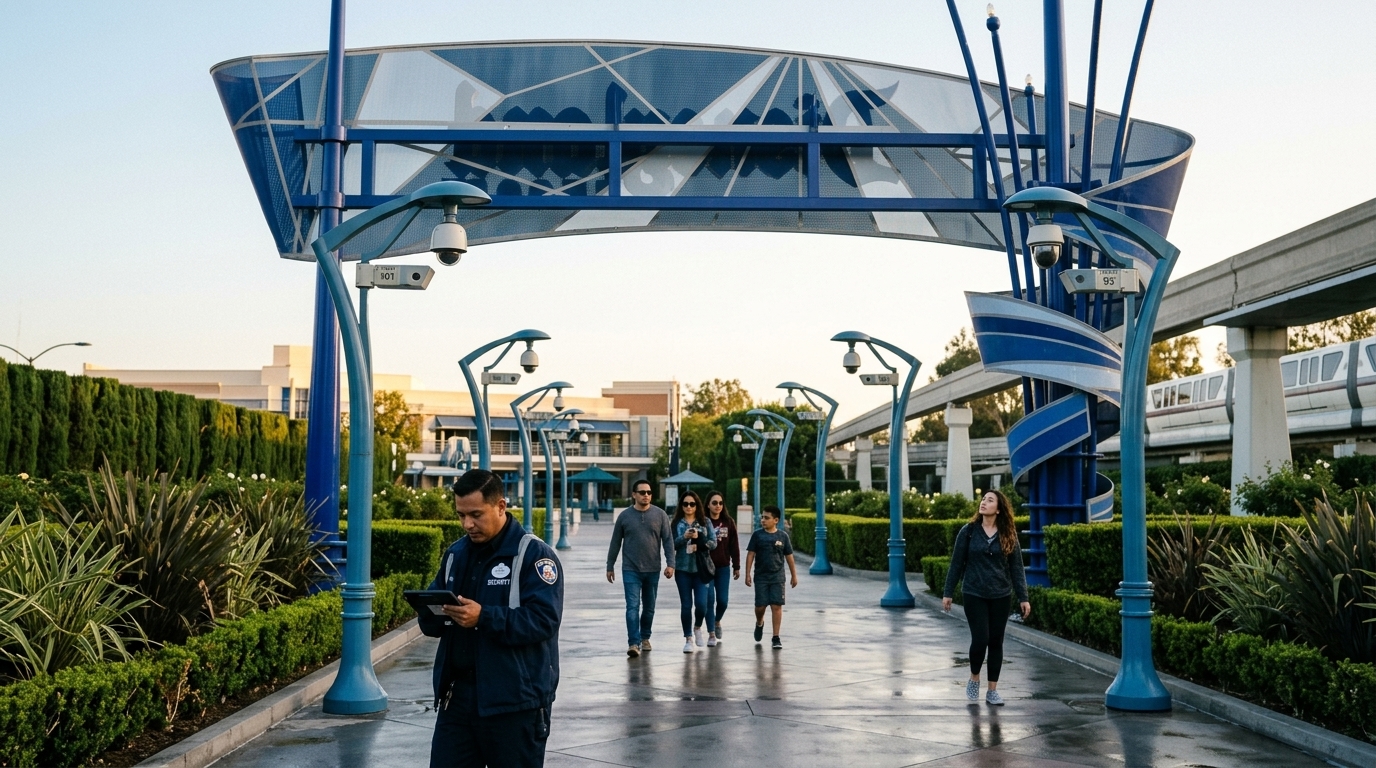
The implementation of biometric scanning at the theme park gates is not entirely new, but its scale and integration have reached a tipping point. High-resolution cameras now capture the facial geometry of guests, linking their physical identity to their digital tickets in milliseconds. The goal is clear: to eliminate the friction of physical scanning and manual ID checks, allowing for a seamless flow of thousands of visitors through the turnstiles.
However, the controversy lies in the implementation. Reports from the ground suggest that the process is presented as the default—and often the only—option. Many guests have reported being ushered through biometric lanes without being informed that they could opt out. The signage explaining the voluntary nature of the program is often described as inconspicuous, tucked away in areas where excited families are unlikely to stop and read the fine print. This has led to accusations of 'dark patterns' in user experience design, where the choice to protect one's privacy is made intentionally difficult or socially awkward.
Ethics, Minors, and the Normalization of Surveillance
The use of facial recognition on children is perhaps the most sensitive aspect of this rollout. Under California’s privacy laws, such as the CCPA and CPRA, companies are held to high standards regarding the collection of data from minors. Disney maintains that the biometric data is encrypted and deleted within 30 days, yet the psychological impact remains a concern for experts. By integrating surveillance into the core experience of play and family bonding, critics argue that we are conditioning children to accept constant monitoring as a standard price for participation in modern society.
"When we turn a place of joy into a high-security environment under the guise of convenience, we are fundamentally altering the social contract between the individual and the corporation," says one digital ethics researcher.
Beyond the psychological impact, there is the ever-present risk of data security. While Disney’s infrastructure is robust, the centralization of biometric data creates a high-value target for cyberattacks. Unlike a password or a credit card number, a person's facial map cannot be reset or replaced if compromised, leading to lifelong risks of identity theft or unauthorized tracking.
The Illusion of Consent in the Corporate Panopticon
The strategy employed by Disney relies heavily on behavioral economics—specifically, the concept of 'nudging.' By making the biometric path the fastest and most prominent route, the park effectively penalizes those who value their privacy with longer wait times and additional bureaucratic hurdles. This creates a powerful social pressure; few parents want to be the reason their children are stuck in a slow-moving manual line while others breeze through the 'magic' gates.
This dynamic reflects a broader trend in what Shoshana Zuboff termed 'Surveillance Capitalism.' Private entities are increasingly claiming the right to extract personal data as a condition for service. In the context of Disneyland—a destination many families save for years to visit—the power imbalance is stark. Guests feel they have little leverage to refuse the scan once they have reached the gates, having already invested thousands of dollars in their trip.
Conclusion: Reclaiming the Analog Escape
Disneyland’s move is a harbinger of a future where biometric identity is the key to every door, whether physical or digital. But as we move toward this 'frictionless' future, we must ask what we are losing in the process. The charm of the theme park has historically been its ability to transport us away from the pressures of the modern world. By bringing the most advanced surveillance tools into the heart of the Magic Kingdom, Disney risks breaking the very spell it seeks to cast.
For the 'Happiest Place on Earth' to remain true to its legacy, it must prioritize the agency of its guests over the efficiency of its algorithms. Transparency must be more than a footnote on a hidden sign; it must be a core part of the guest experience. As technology continues to blur the lines between convenience and control, the burden remains on both corporations and regulators to ensure that the price of admission doesn't include our right to remain anonymous.