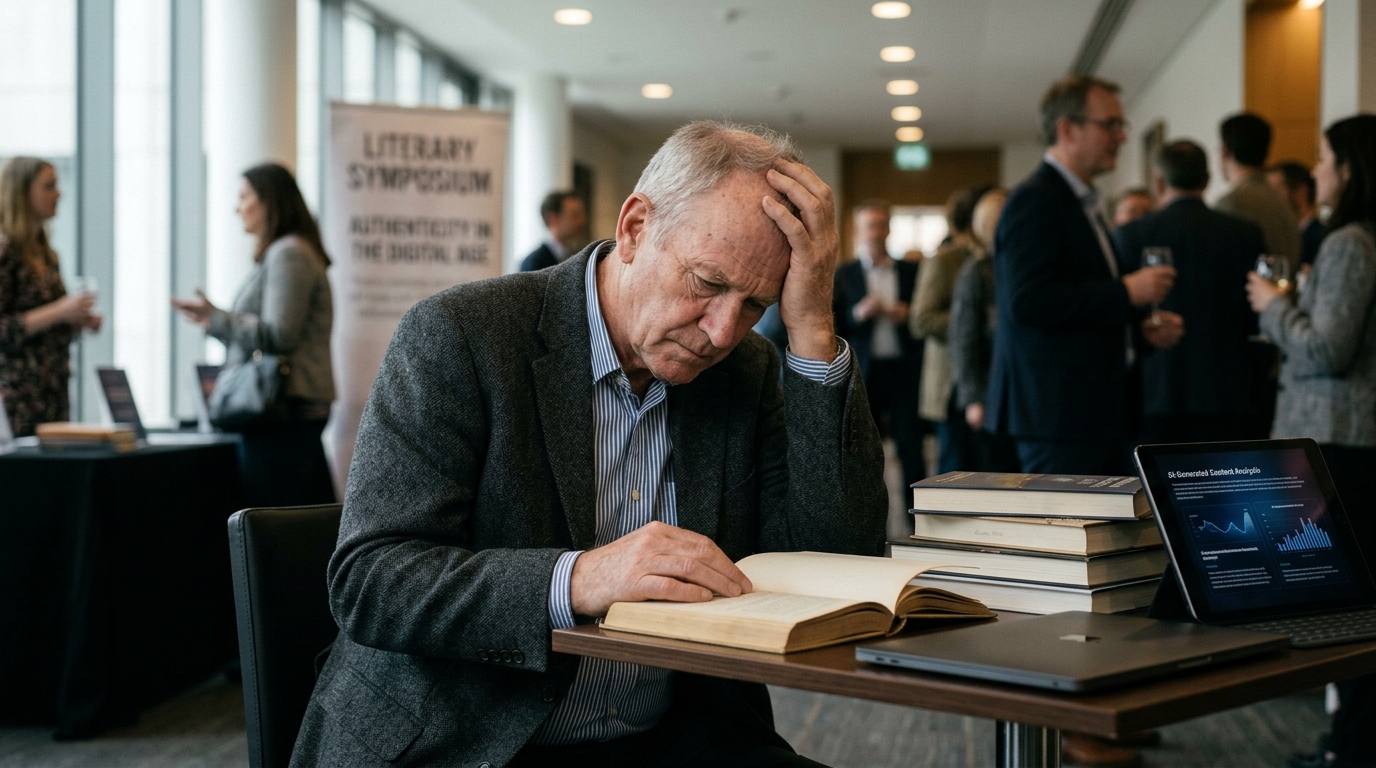
Literature, perhaps the most intimate expression of the human experience, is facing an existential challenge. The recent news from Vietnam, where a short story that won a significant prize is now suspected of being authored by Artificial Intelligence (AI), is not merely a local scandal. It is the prelude to a global shift in how we perceive creativity, intellectual property, and the very concept of the "author."
The incident, widely reported via the state portal Vietnam.vn, concerns a work that impressed critics with its structural perfection and narrative flow, only to later be targeted by analysts who identified writing patterns characteristic of Large Language Models (LLMs). This case highlights the regulatory vacuum in literary competitions, which until recently took for granted that the creator is human.
The Illusion of Human Connection
The problem with AI in literature isn't that it writes "badly." On the contrary, the problem is that it writes disturbingly "correctly." Models like GPT-4 or Claude have been trained on millions of pages of classic and contemporary literature. They can mimic Hemingway’s brevity, Kerouac’s flow, or Murakami’s emotional depth with a simple prompt. When a writer uses these tools to build structure or enrich vocabulary, the line between tool and creator becomes dangerously blurred.
In the Vietnamese case, suspicions were raised by the unusual "cleanliness" of the language and the absence of those small, human imperfections that give a text its character. Judging panels, traditionally looking for originality, now find themselves in an awkward position: how can you prove that a breathtaking metaphor isn't the product of an algorithm calculating the probability of word sequences?
Ethical Dilemmas and the Loss of the "Self"
The ethical dimension of this issue is multi-layered. First, there is the question of transparency. If a writer uses AI for 10% or 50% of their work, are they obligated to disclose it? Recently, Japanese author Rie Kudan admitted that about 5% of her Akutagawa Prize-winning book was written by ChatGPT. The difference is that Kudan was transparent, whereas in the Vietnam case, the suspicion concerns clandestine use.
Secondly, there is the issue of intellectual theft. AI does not create from scratch; it reassembles existing knowledge. When an award comes with a cash prize and professional recognition, using AI is seen by many as a form of "doping" in the arts. Traditional writers, who spend years on research and drafting, feel that competition is becoming inherently unfair.
The Future of Literary Competitions
The global literary community's response cannot be limited to mere bans. The technology is here to stay. Many international organizations are already developing new protocols. Some of these include:
- Mandatory disclosure forms regarding the use of generative AI tools.
- The use of AI detection software (though their reliability remains questionable).
- In-person interviews with finalists to verify their deep understanding and connection to their work.
The stakes are high. If literature turns into an exercise in algorithmic optimization, we risk losing our ability to communicate true human suffering and joy. The award-winning story in Vietnam may just be the tip of the iceberg in an era where the machine learns to whisper to our hearts, without possessing one of its own.