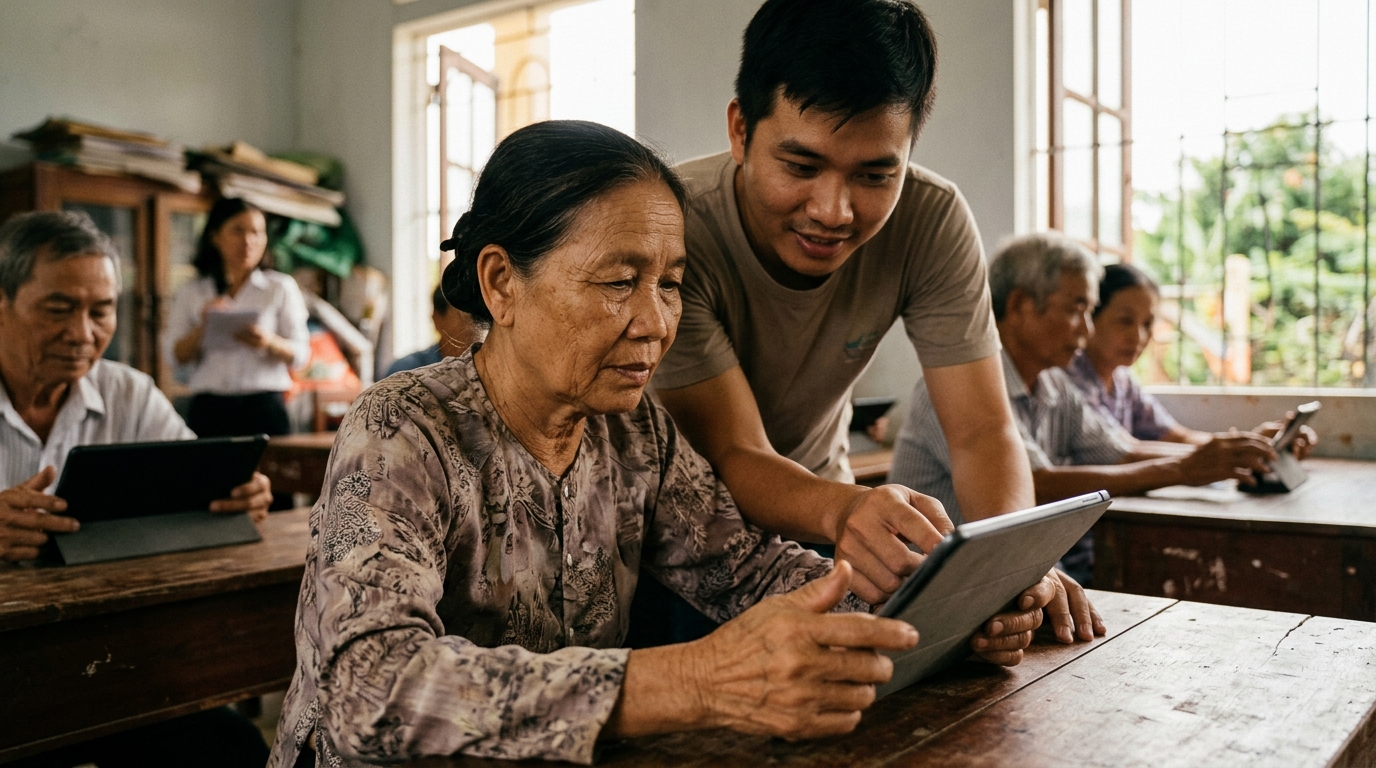
In the heart of Vietnam, a quiet revolution is taking place, where traditional local economic structures meet the cutting edge of global technology. The Hoa Khanh district, an area traditionally reliant on handicrafts and small-scale trade, is emerging as a model for digital transformation. Through a targeted initiative, local authorities are providing specialized training in Artificial Intelligence (AI) applications exclusively for women, aimed at enhancing their economic standing and integrating them into the modern digital economy.
From Tradition to Digital Innovation
This initiative is not merely a computer literacy seminar; it is a strategic intervention in the social fabric. Women in Hoa Khanh, many of whom manage small family businesses or work in the manufacturing sector, are being taught how to use Generative AI tools to improve their daily operations. From creating marketing content for their products on social media to using algorithms for sales forecasting and inventory management, AI is being transformed from an impersonal technology into a valuable partner.
The training focuses on accessible tools that do not require deep programming knowledge. The use of voice assistants, translation apps to reach foreign markets, and automated customer service platforms allows these women to save time and increase productivity. This is particularly crucial in a region where women often shoulder the double burden of professional work and domestic care.
Ethical and Social Dimensions of Technological Inclusion
From an ethical perspective, the Hoa Khanh program raises the critical question of equitable access to technology. While AI is often accused of widening the gap between developed and developing economies, such local initiatives prove that technology can act as an equalizer. Providing knowledge to marginalized or less privileged groups is an act of digital justice.
- Closing the Digital Divide: The training aims to eliminate the fear of new technologies.
- Boosting Confidence: Participants report higher levels of self-esteem as they acquire skills once thought to be the privilege of a few.
- Local Growth: Empowering women has a direct impact on the well-being of families and the broader community.
However, the challenge remains to ensure that this education does not lead to a new form of dependence on large tech platforms from the West or China. Ethical technological development also means fostering critical thinking toward the tools used, something the instructors in Hoa Khanh are striving to incorporate into the curriculum.
Vietnam as an Emerging AI Player
The case of Hoa Khanh is not isolated. Vietnam has set a national goal to become one of the leading players in AI in the Southeast Asian region by 2030. The government is investing heavily in infrastructure and education, recognizing that AI is the key to avoiding the "middle-income trap." Focusing on women is a savvy economic move, as their labor force participation in Vietnam is already among the highest in the world, yet often restricted to low-skilled positions.
"Artificial intelligence is not a luxury; it is the new literacy of our time," says one of the program coordinators.
In conclusion, AI education in the Hoa Khanh district serves as a beacon of hope. It demonstrates that technology, when combined with social sensitivity and strategic planning, can break the cycle of poverty and offer real opportunities for economic advancement. The challenge for the future is scaling such programs nationally, ensuring that no woman is left behind in the digital race.