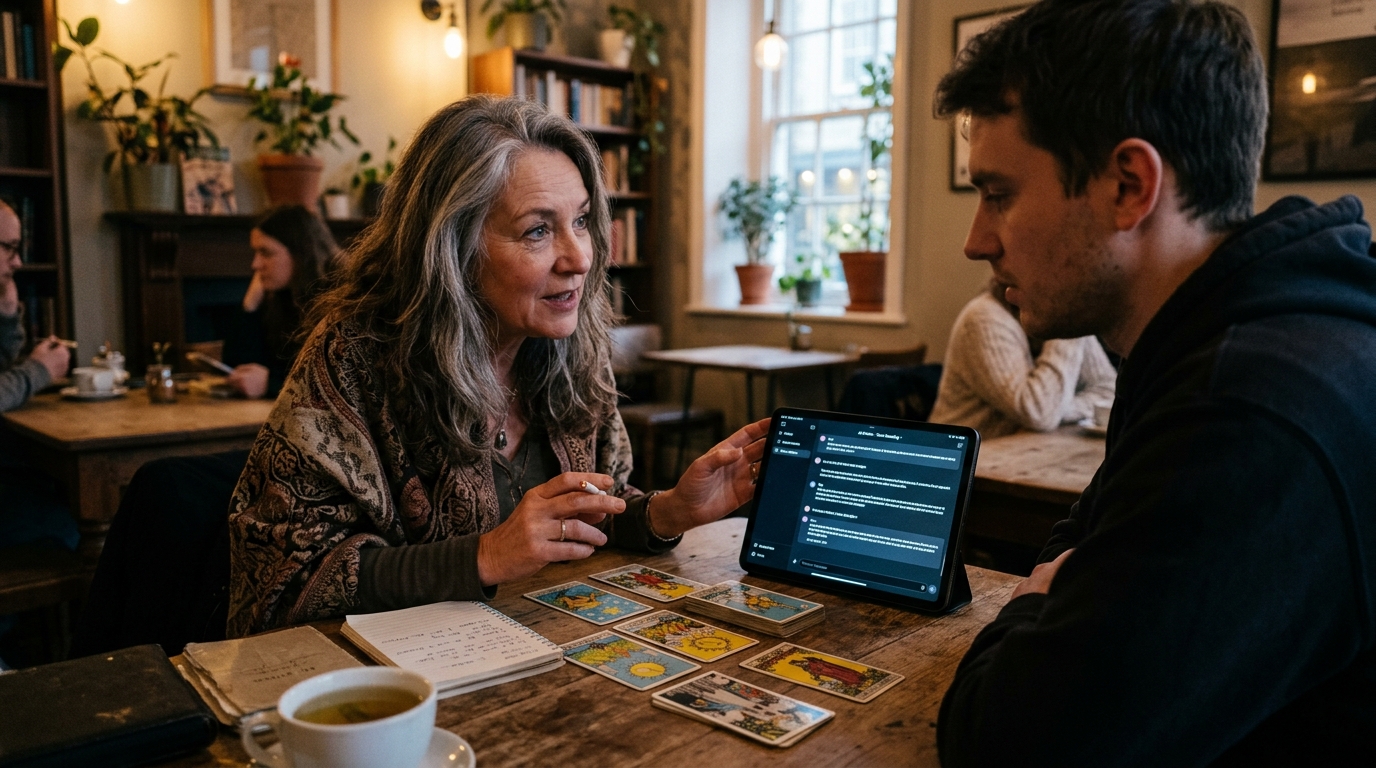
In an era where technology permeates every facet of the human experience, the intersection of ancient tarot symbolism and cutting-edge Artificial Intelligence (AI) seems almost inevitable. According to recent reports, a growing number of tarot readers and spiritual advisors are now using chatbots like ChatGPT and Claude to interpret complex card spreads and offer deeper psychological insights to their clients. This phenomenon is not merely a technical upgrade of a traditional profession; it is a sign of the times, highlighting our increasing reliance on mechanical systems for emotional and spiritual guidance.
Algorithmic Intuition: How AI 'Reads' Symbols
Tarot is based on a system of 78 cards, each carrying rich archetypal and symbolic content. Traditionally, the reader uses their intuition and knowledge of mythology, psychology, and the occult to connect the cards with the querent's personal narrative. AI, however, operates through pattern recognition across vast datasets. Trained on thousands of texts regarding esotericism and psychoanalysis, an AI can produce interpretations that sound remarkably astute, often blending Jungian terminology with the modern language of self-improvement.
For many practitioners, AI acts as a 'copilot.' It helps them find new perspectives on difficult combinations or draft responses that are more empathetic and structured. However, this practice raises a fundamental question: if the interpretation originates from an algorithm that lacks consciousness or lived experience, does the process remain 'spiritual'?
The Loneliness Epidemic and the Digital Crutch
The shift toward chatbots for emotional support is not limited to tarot readers. It is part of a broader trend where individuals seek solace in machines. In a world plagued by isolation and a lack of affordable mental health care, AI offers immediate, inexpensive, and non-judgmental listening. Users often confess secrets to chatbots that they wouldn't tell friends, creating what psychologists call a 'parasocial relationship.'
In the context of tarot, AI functions as a mirror. Due to the Barnum Effect (or Forer Effect), people tend to accept general personality descriptions as highly accurate for themselves. When a chatbot generates a well-phrased tarot reading, the user projects their own hopes and fears onto the text, imbuing it with meaning that the machine itself does not comprehend. This 'synthetic empathy' can be comforting, but it carries the risk of alienation from genuine human contact.
Ethical Dilemmas and Data Privacy
The use of AI in spiritual practices brings serious ethical issues to the forefront. First, there is the matter of privacy. When someone shares their deepest anxieties with a tarot reader using AI, that data often feeds the models of major tech corporations. Where does the sanctity of confession end, and where does data harvesting begin?
Second, there is the risk of manipulation. Algorithms are designed to keep users engaged. If an AI-powered tarot app begins giving advice that encourages dependency on the app itself, we enter a moral gray zone. Furthermore, AI can suffer from 'hallucinations,' providing incorrect or even dangerous advice to individuals in vulnerable psychological states.
The Future of Intuition in the Age of Data
As we move further into the late 2020s, the distinction between human and artificial wisdom will become increasingly blurred. The challenge for tarot professionals and spiritual guides will be to maintain the 'human spark'—the unique capacity for true connection and understanding that no machine can fully replicate. AI may be an excellent librarian of symbols, but the role of the 'healer' or 'sage' requires more than data processing: it requires a soul.
"The cards are a map, but the AI is just a very sophisticated GPS that doesn't know where it's going—it only knows the coordinates you've already visited."