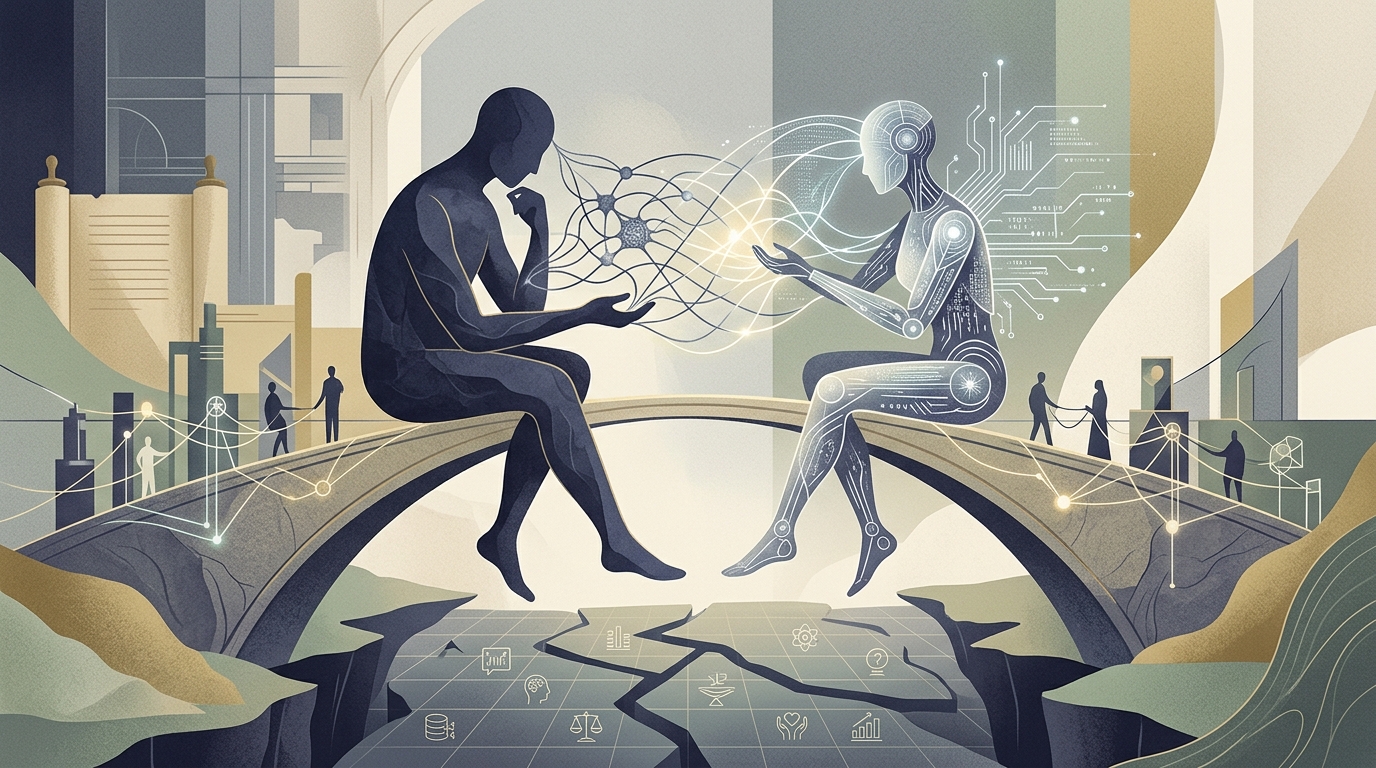
In the heart of modern medical practice, a quiet revolution is unfolding. Healthcare providers, from sprawling hospital complexes to small private clinics, are increasingly turning to Artificial Intelligence (AI) to manage the deluge of data and administrative demands that have traditionally "stolen" time from patient interaction. However, this technological shift is not without its perils. While AI promises to return the "human" to the center of medicine, it simultaneously raises fundamental questions about data security, privacy, and the future shape of the therapeutic relationship.
Administrative Relief: Reclaiming the Doctor-Patient Bond
For decades, the primary complaint of physicians worldwide has been "bureaucratic burnout." The necessity for detailed documentation in Electronic Health Records (EHRs) forced healthcare professionals to spend more time staring at a screen than at the patient. Enter AI, specifically "ambient clinical intelligence." Systems based on advanced large language models can now monitor conversations between doctor and patient in real-time, taking notes and drafting medical reports with startling accuracy.
This evolution is not merely a convenience; it is a structural change. When a doctor no longer needs to type during an examination, non-verbal communication—eye contact, observation of patient movements, empathy—returns to the forefront. Proponents of the technology argue that AI can, paradoxically, make medicine more "human" precisely because it takes over the mechanical tasks.
The Shadow of Surveillance: Privacy and Security
However, convenience comes at a heavy price in data security. The use of AI in healthcare means that vast amounts of sensitive personal data—from medical history to genetic information—are fed into algorithms. The pressing question is: Where is this data stored, and who has access to it? Healthcare providers often partner with third-party tech firms, creating a data transfer chain that is vulnerable to cyberattacks.
Furthermore, there is concern over the "secondary use" of data. While a patient may consent to AI use for improving their diagnosis, they may not wish for their data to be used to train future models by private, profit-driven corporations. Transparency in informed consent remains one of the greatest ethical challenges of our decade.
The Human Factor: Can Judgment Be Automated?
Beyond technical issues, there is a deeper philosophical concern: the erosion of human judgment. AI is exceptional at identifying patterns in thousands of X-rays or suggesting treatment regimens based on statistical probabilities. But medicine is not just a science; it is also an art. The ability of an experienced physician to perceive the subtle nuances of a patient's condition, social parameters, or ethical preferences cannot—at least for now—be codified.
The risk of "algorithmic bias" is also very real. If AI is trained on data that does not adequately represent certain population groups, its recommendations may be flawed or even dangerous for those groups. Trust in technology must not lead to a passive acceptance of its outputs without the critical eye of the human scientist.
Policy and Accountability: Navigating the Ethical Labyrinth
As technology outpaces legislation, regulators in Europe and America are struggling to set rules. Who is responsible if a diagnosis based on AI proves incorrect? The physician, the software company, or the hospital? The lack of a clear legal framework creates a "gray zone" that could discourage innovation or, conversely, allow for its unchecked use.
In conclusion, Artificial Intelligence in healthcare is not a simple software upgrade; it is a reshaping of the social contract between the healer and the healed. Its success will be judged not by the speed of its processors, but by our ability to ensure that technology remains in the service of human dignity and not the other way around.