Medical science stands on the precipice of one of the most radical transformations in its history. Artificial Intelligence (AI), having already permeated fields such as radiology and pathology, is no longer a futuristic scenario but a daily reality in modern hospitals. The central question now occupying the scientific community and policymakers is not whether AI can help, but whether it can – and should – outperform the human physician.
Data Precision vs. Clinical Intuition
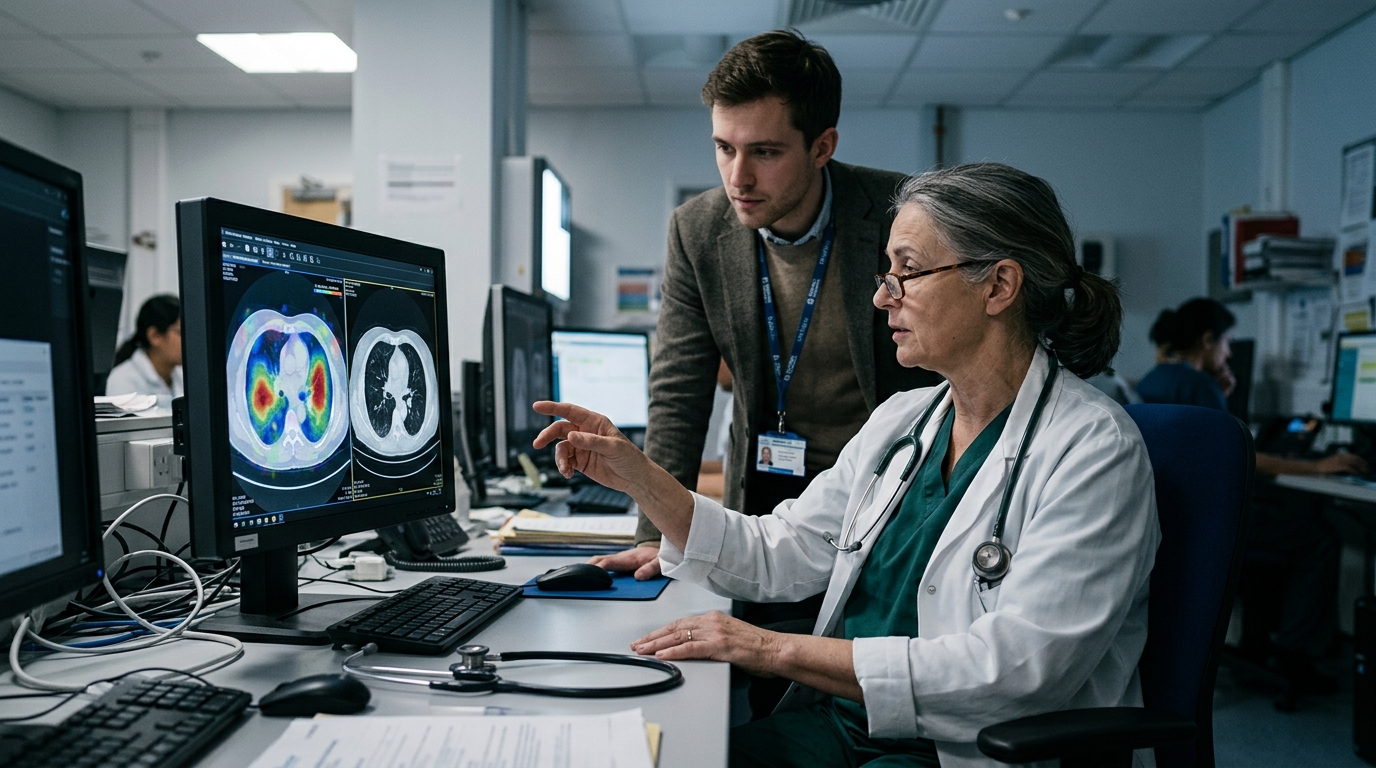
At the heart of this confrontation lies data processing capability. An experienced radiologist may have viewed tens of thousands of images in their career. A deep learning system can be trained on millions of cases within hours. Studies have shown that in specific tasks, such as identifying melanomas or detecting early signs of diabetic retinopathy, AI systems achieve accuracy rates that often surpass those of specialized physicians.
However, medicine is not merely pattern recognition. Clinical intuition, the "gut feeling" a doctor develops after years of patient contact, remains something algorithms struggle to simulate. A patient is not a collection of pixels or laboratory values; they are a complex biological and psychological entity. AI can identify a tumor, but the doctor is the one who will assess whether a specific patient, with their unique medical history and personal values, should undergo invasive treatment.
The Ethical Dilemma and the "Black Box"
One of the most significant barriers to the full adoption of AI is the so-called "black box problem." Many advanced algorithms arrive at a diagnosis without being able to explain the logical path they followed. In medicine, justification is as important as the result. If an AI makes a mistake, who bears the responsibility? The software developer? The hospital? Or the doctor who trusted the system's recommendation?
The ethical dimension extends to data bias. If an algorithm's training data comes primarily from specific population groups, diagnoses for minorities may be inaccurate. Reliance on technology also risks the "dehumanization" of care. The doctor-patient relationship, built on trust and empathy, is a therapeutic tool in its own right. Replacing it with a screen could lead to a cold, mechanistic approach to health.
Economic Pressure and the "Centaur" Model
Despite reservations, economic reality is pushing toward automation. Healthcare systems worldwide are under pressure from rising costs and staff shortages. AI promises to reduce the workload of doctors by taking over repetitive and time-consuming tasks, allowing them to devote more quality time to their patients.
The future seems to belong to the "Centaur" model – a collaboration between human and machine where each complements the other's weaknesses. AI offers speed and exhaustive data analysis, while the human offers judgment, ethical oversight, and empathy. In this scenario, the doctor is not replaced but upgraded to a high-tech orchestrator who remains, above all, human.
- AI excels in image analysis and big data processing.
- Lack of explainability remains the primary ethical hurdle.
- Empathy remains an exclusive human privilege.
- Legal liability for AI medical errors remains unclear.
In conclusion, the question of whether AI can outperform doctors may be misplaced. The real challenge is how we will ensure that technology enhances medical care without sacrificing its humanity. Progress is inevitable, but its direction remains in our hands.