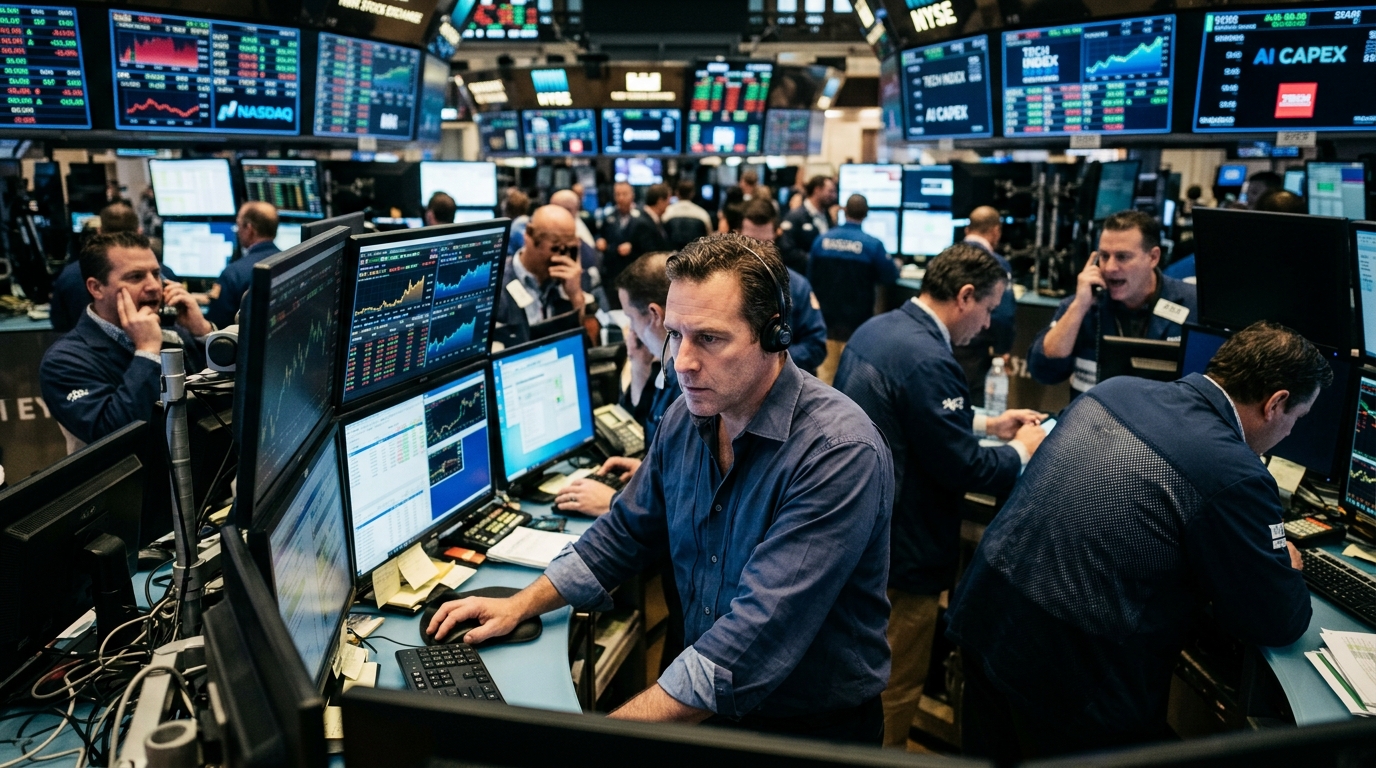
The global economy is witnessing one of the most significant capital shifts in technological history. According to recent data analyzed by The New York Times, spending on Artificial Intelligence (AI) has shattered all previous records, as "Big Tech" giants—Microsoft, Alphabet, Meta, and Amazon—engage in a frantic race for dominance in computational power. What began as an experiment with ChatGPT has now evolved into an industrial restructuring requiring hundreds of billions of dollars in hardware, energy, and real estate.
The Architecture of a New Digital Era
Capital expenditures (CapEx) for the four largest tech firms are expected to exceed $200 billion this year, a staggering figure even by Silicon Valley standards. This investment is not being funneled into software or marketing, but into "hard" infrastructure: massive data centers housing thousands of specialized Nvidia processors. These buildings are not mere server warehouses; they are the 21st-century factories where data is the raw material and intelligence is the final product.
The scale of these investments suggests a profound conviction that AI is not just another application, but a foundational layer upon which all future economic activity will be built. However, investors are beginning to show signs of anxiety. The question looming over Wall Street is simple: When will this spending begin to generate returns that justify the costs?
The Energy Bottleneck and the Nuclear Pivot
One of the most critical limiting factors in this expansion is not capital, but energy. AI data centers consume vast amounts of electricity, pushing national grids to their breaking points. In the United States, electricity demand from data centers is projected to double by 2030. This has led to an unexpected renaissance for nuclear power.
- Microsoft signed a deal to restart the reactor at Three Mile Island.
- Amazon and Google are investing in Small Modular Reactors (SMRs).
- The need for steady "baseload" power makes renewables like wind and solar insufficient on their own for AI's 24/7 requirements.
This pivot toward nuclear energy highlights the AI paradox: while it promises to help solve the climate crisis through system optimization, its own development requires an unprecedented surge in resource consumption.
Bubble or New Reality?
Skeptics compare the current situation to the dot-com era of the late 1990s. Back then, telecommunications companies spent billions laying fiber optic cables that remained dark for years. The difference today, AI proponents argue, is that the companies investing already have massive profits from other sectors (advertising, cloud, e-commerce) and can afford the cost of waiting.
"This is not a choice, but a survival necessity," says a Morgan Stanley analyst. "If a company stops investing now and AI proves to be as transformative as predicted, they will be locked out of the market forever."
Nevertheless, the pressure for results is mounting. Shareholders will not indefinitely tolerate falling profit margins due to increased depreciation costs. The next phase of the AI revolution will not be judged by who has the most chips, but by who can translate that computing power into services that consumers and businesses are willing to pay a premium for.
Conclusion: The Risk of Inaction
In conclusion, 2026 finds the tech industry at a critical crossroads. Record spending indicates there is no turning back. Either AI will become the engine of a new global growth cycle, or it will go down in history as Silicon Valley's most expensive miscalculation. For now, the generators keep humming and the capital keeps flowing, as the world awaits the next breakthrough that will justify the trillions.