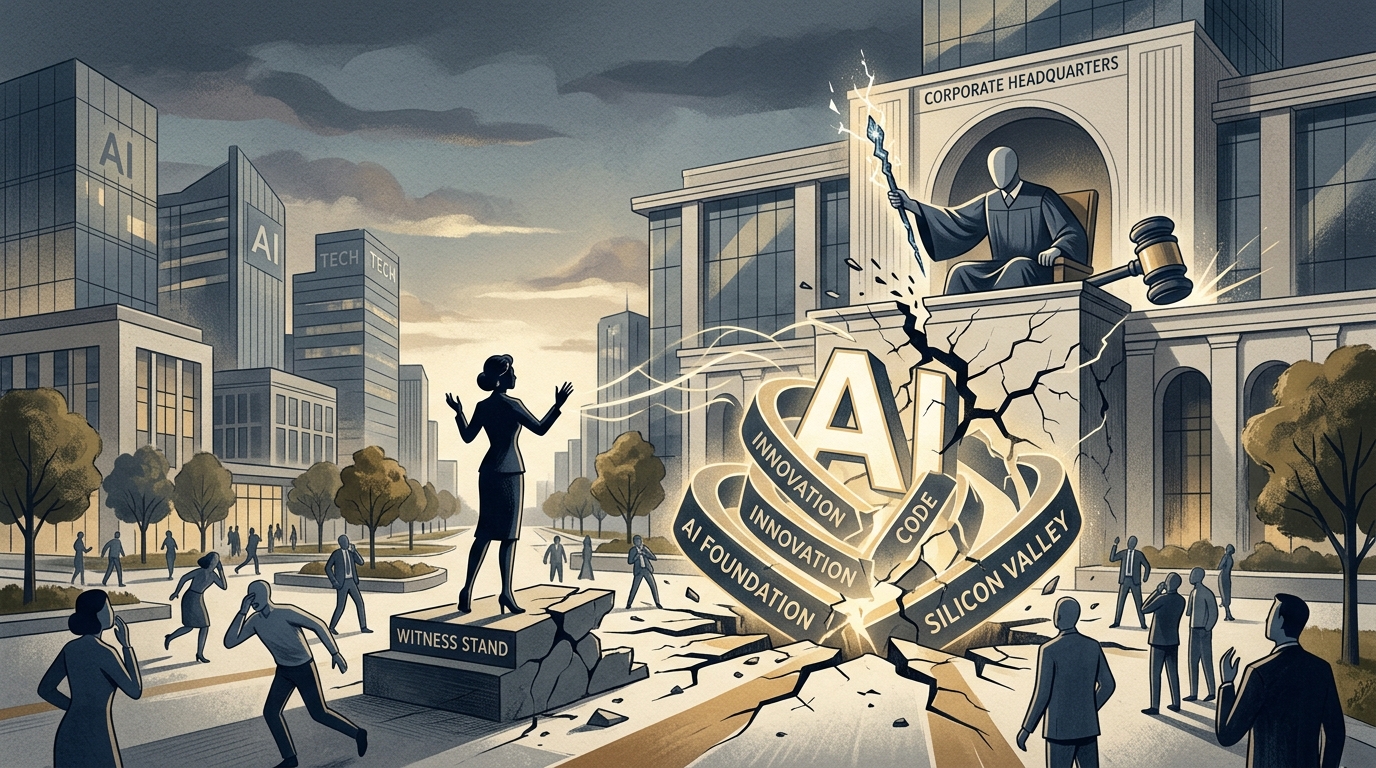
The atmosphere in the San Francisco federal courtroom today, April 29, 2026, was electric. Elon Musk, the man who once helped fund OpenAI as a counterweight to Google’s dominance, took the witness stand for the second consecutive day. The legal battle against Sam Altman and OpenAI is not merely a corporate dispute; it is an existential fight for the soul of artificial intelligence and the definition of "public benefit" in the age of algorithms.
The "Founding Agreement" vs. Corporate Reality
Musk argues vehemently that Altman and Greg Brockman lured him into investing tens of millions of dollars with the promise that OpenAI would remain a non-profit organization dedicated to developing Artificial General Intelligence (AGI) for the benefit of humanity. During today's testimony, Musk presented internal emails from 2015 that emphasized the need for "open source" and "democratic access."
"They turned a charitable organization into a closed-source, for-profit subsidiary of Microsoft," Musk stated, looking directly at Altman. Musk's legal team claims that OpenAI's pivot to a "capped-profit" model constitutes a flagrant breach of its mission statement. Conversely, OpenAI maintains that there was never a formal, written "founding agreement" and that the structural change was necessary to attract the billions of dollars required for compute power.
The Microsoft Shadow and the AGI Question
One of the most critical points of the trial is the definition of AGI. According to OpenAI's agreement with Microsoft, the latter has rights to OpenAI's technology only up to the point it is considered "pre-AGI." Once AGI is achieved, Microsoft is supposed to lose its access, as the technology must then belong to humanity.
Musk claims that GPT-5 and subsequent models currently in testing already meet the criteria for AGI, but OpenAI is concealing this to keep the funding flow from the Redmond giant. OpenAI's lawyers countered these claims by presenting technical reports showing that current models still exhibit "hallucinations" and lack true reasoning capabilities, thus not constituting AGI.
Political and Social Implications
This trial has sparked intense reactions in Washington and Brussels. If Musk wins, it could force OpenAI to open-source its code, which many safety experts fear could provide dangerous tools to malicious actors. However, if OpenAI wins, it will establish a precedent where non-profit promises can be sacrificed at the altar of commercial success.
- The credibility of founding commitments in the tech industry.
- Transparency of algorithms affecting billions of people.
- The role of major investors in shaping global AI ethics.
As the trial continues, the industry watches with bated breath. This is not just about billions of dollars; it is about who will control the most powerful technology humans have ever created. Musk's testimony is expected to conclude tomorrow, with Sam Altman set to take the stand next, in a confrontation that will define the trajectory of the next decade.
"Artificial intelligence is too dangerous to be left in the hands of a monopoly masquerading as a charity," Musk concluded during the afternoon session.