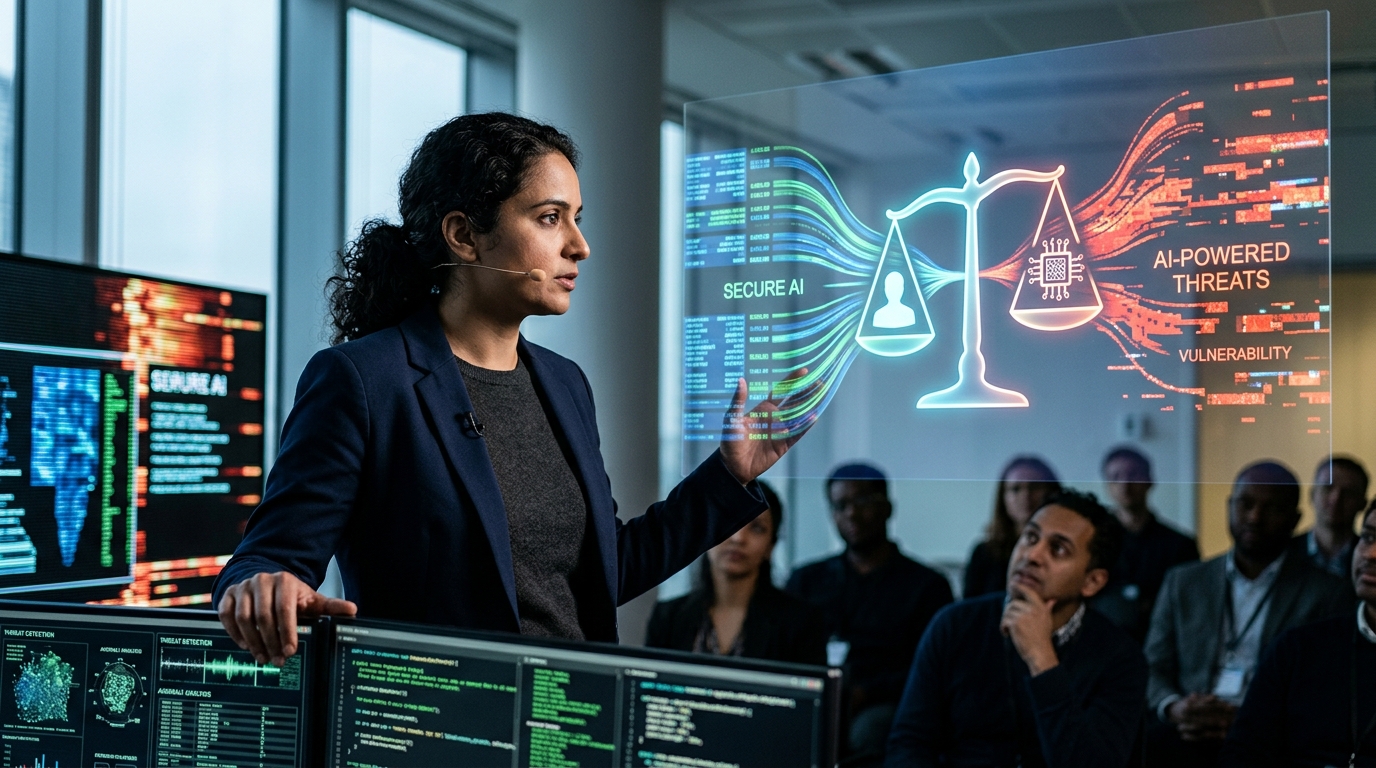
In the modern digital geopolitical landscape, Artificial Intelligence (AI) is no longer just a player; it is the board itself upon which information warfare is conducted. Recent analysis from Arizona State University (ASU) highlights a fundamental contradiction: the same technology that promises to fortify our infrastructure also serves as the most dangerous catalyst for its destabilization. We are at a critical tipping point where cybersecurity is evolving from a static defense into a dynamic, automated algorithmic competition.
AI as an Offensive Weapon
The dark side of AI in cybersecurity is no longer confined to theoretical scenarios. Malicious actors are now utilizing Large Language Models (LLMs) to craft highly convincing phishing campaigns, devoid of the grammatical errors that once tipped off victims. What previously required a team of experts and weeks of preparation can now be executed in seconds by a single individual with access to sophisticated AI tools.
Furthermore, the emergence of "polymorphic malware" is a game-changer. This is code that can change its structure every time it replicates, making it invisible to traditional signature-based antivirus programs. AI allows attackers to scan vast networks for vulnerabilities at speeds exceeding human response capabilities, creating an asymmetric threat where the defender must be perfect every time, while the attacker only needs to succeed once.
AI as a Digital Shield
Despite the risks, AI is the "indispensable defense" in the modern world. AI-driven Endpoint Detection and Response (EDR) systems can analyze petabytes of traffic data in real-time, identifying anomalies that would be impossible for a human analyst to spot. The ability of machine learning algorithms to learn from previous attacks means that defense becomes smarter with every failed breach attempt.
- Automated Response: Systems can now isolate infected servers within milliseconds, containing damage before a security team is even alerted.
- Predictive Analytics: AI can forecast potential attack vectors by analyzing global trends in cybercrime activity.
- Identity Verification: Behavioral biometrics (how a user types or moves their mouse) offer an additional layer of security that is extremely difficult to spoof.
The Ethical Dimension and Responsibility
The question arising from the ASU research is profoundly ethical: How do we ensure that AI development does not lead to an unchecked digital arms race? The "democratization" of AI tools means that power once reserved for nation-states is now available to individual criminals. This necessitates a new approach to technology governance, where security is not an afterthought but integrated into the very design of the models (Security by Design).
"Artificial Intelligence is not just a tool in the cybersecurity toolbox; it is the engine that will determine who prevails in the digital arena," researchers note.
In conclusion, the battle for cybersecurity in the age of AI is a race between offensive innovation and defensive intelligence. The solution does not lie in banning the technology—which would be impossible—but in augmenting human judgment with algorithmic precision. Our digital resilience will depend on whether we can train our systems to be not only faster but more ethical than those who seek to exploit them.