When the first steam engine hissed at the dawn of the Industrial Revolution, the promise was clear: machines would replace human toil, granting workers the long-coveted gift of leisure. Today, at the threshold of the Artificial Intelligence (AI) revolution, the rhetoric remains strikingly similar. It promises to automate repetitive tasks, accelerate workflows, and allow us to focus on high-level creativity. However, the reality taking shape in workplaces in 2026 feels more like an "illusion of efficiency," where algorithmic speed does not reduce the workload but instead raises the bar of expectations to unsustainable levels.
The Jevons Paradox in the Algorithmic Age
In economics, the Jevons Paradox states that an increase in the efficiency of a resource leads to an overall increase in its consumption, rather than a decrease. Applying this to labor, we see that AI—by making the writing of an email or the drafting of a report ten times faster—does not grant us 90% of our time back. Instead, it creates an expectation for ten times more emails and reports. Efficiency becomes the fuel for a new form of digital inflation, where the sheer volume of information drowns out the substance of the work itself.
Workers today find themselves trapped in a vicious cycle. Using tools like ChatGPT or Microsoft Copilot allows for content generation in seconds, but that content then requires human oversight, fact-checking, and integration. This "work about work" is often overlooked by management, who only see the performance metrics and speed, ignoring the cognitive load required to constantly interact with and correct machines.
The Cognitive Load Behind the Prompt
The transition from "creator" to "editor" is not seamless. AI demands a state of constant hyper-vigilance. The worker must not only master prompt engineering but also remain alert for the subtle "hallucinations" that AI produces with unwarranted confidence. This form of labor is uniquely exhausting; it requires constant context switching and high levels of concentration to avoid errors that the machine generates at scale.
"AI isn't replacing us; it's turning us into air traffic controllers for data. The responsibility remains human, but the speed is now mechanical," notes a leading organizational psychologist.
Furthermore, the sense of accomplishment—vital for mental health—is eroding. When a project is 80% generated by a machine, the worker often feels alienated from the final product. "Manual" thinking, the process of wrestling with an idea until it takes shape, is being replaced by superficial curation, leading to what many call "digital burnout."
Algorithmic Taylorism: Quality vs. Automated Volume
One of the greatest risks of the current restructuring is the homogenization of work. As companies push for more content and AI-driven solutions, there is a visible trend toward mediocrity. Algorithms are trained on the average of existing data. If our work relies solely on them, the output lacks the originality, critical edge, and the "spark" that only lived human experience can provide.
- The loss of critical thinking due to over-reliance on AI tools.
- The devaluation of skills that cannot be measured by speed metrics (soft skills).
- The creation of a workplace environment where quantity triumphs over strategic depth.
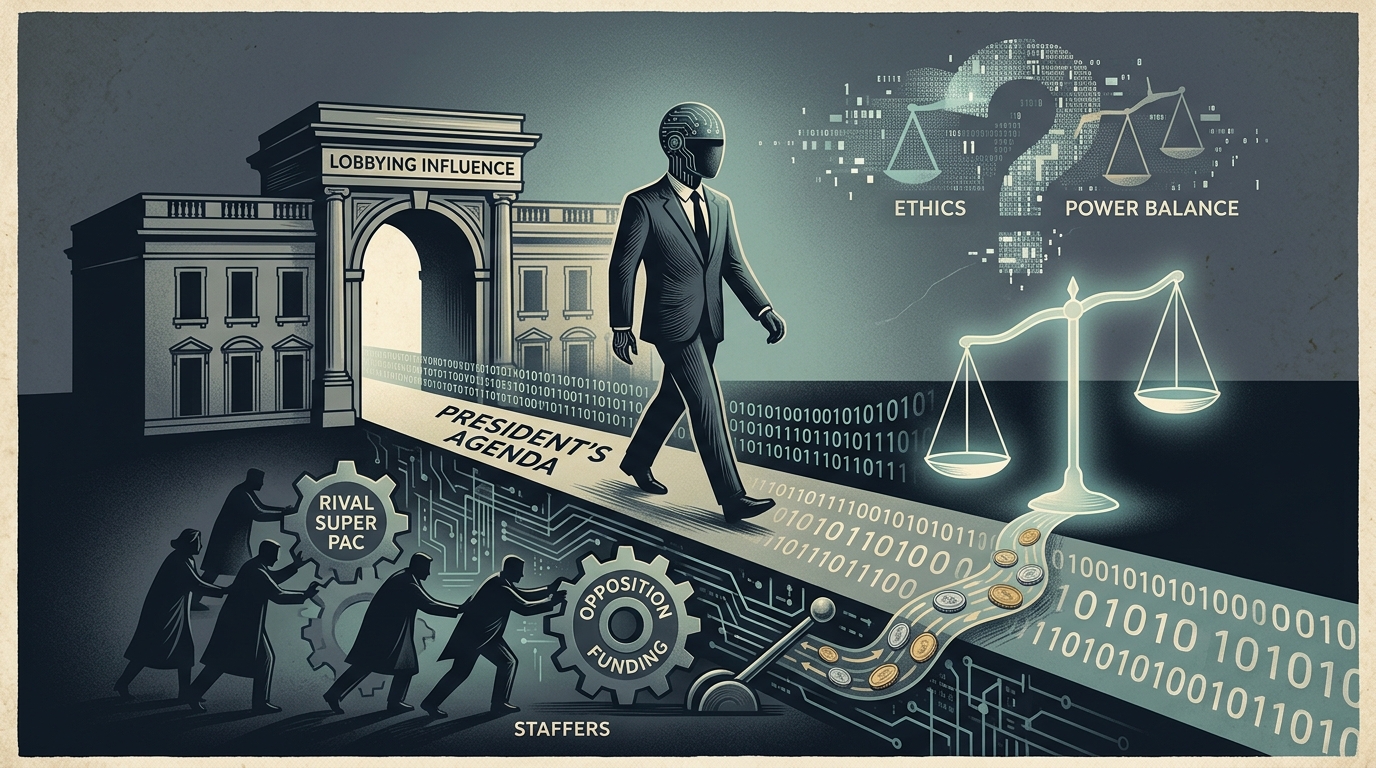
The ethical dimension is equally critical. Who captures the gains from this increased efficiency? If AI allows one worker to do the job of two, this typically leads to staff cuts or a doubling of responsibilities, rather than a shorter work week. Technology, instead of being a tool for liberation, risks becoming the ultimate instrument for surveillance and labor intensification—a form of "Algorithmic Taylorism."
Redefining Value in a Post-Efficiency World
To avoid the trap of the efficiency illusion, we must shift the paradigm of how we measure work. Value should not be defined by how many tasks were completed per hour, but by the impact and innovation of the solutions provided. Businesses must recognize that "slack time"—time for reflection, rest, and social interaction—is not a waste of resources, but the very source of true creativity.
In conclusion, Artificial Intelligence is a powerful mirror of our own priorities. If we use it only to run faster on the hamster wheel, we will end up exhausted in a world filled with noise. But if we use it to take over the burden of routine while reclaiming our right to quality and time, then the promise of technology might finally be realized. The work of the future should not be a race against the algorithm, but a symbiotic relationship where the machine serves the human, and not the other way around.