Humanity stands at a critical crossroads where the promise of scientific advancement meets the threat of absolute annihilation. The rapid evolution of Large Language Models (LLMs) and specialized AI tools in biology is not just transforming medical research; it is dangerously lowering the barrier to entry for the production of biological weapons. Recent mobilizations by international organizations and governments highlight a bitter truth: the same knowledge that can cure cancer is the same knowledge that can resurrect extinct viruses or create new, more lethal pathogens.
The Democratization of Risk and 'Digital Labs'
The core issue is not AI itself, but how it makes specialized knowledge accessible to individuals without academic backgrounds. In the past, creating a biological agent required years of study, access to classified documents, and a strictly controlled network of suppliers. Today, a sophisticated AI model can provide detailed instructions for culturing pathogens, modifying their genetic code to resist vaccines, and devising strategies for their dispersal in urban centers.
Security researchers have already demonstrated that models like GPT-4 or Claude, despite having built-in safety guardrails, can sometimes be bypassed through 'jailbreaking' techniques. In experimental trials, individuals with no prior biology experience managed, with AI assistance, to design protocols for synthesizing pandemic-capable viruses within just a few hours. This 'democratization' of destruction is one of the greatest headaches for intelligence agencies worldwide.
Corporate Response and the Regulatory Push
Tech giants like OpenAI and Anthropic are under increasing pressure to fortify their models. The recent White House Executive Order on AI sets strict frameworks for auditing models that could assist in creating biological, chemical, or nuclear weapons. However, the challenge remains: how do you restrict knowledge without stifling innovation?
- Stricter screening of synthetic DNA orders from private laboratories.
- Integration of 'biological filters' in AI models to identify and block dangerous queries.
- International cooperation to establish a 'red code' for bioinformatics.
The European Union, through the AI Act, is also attempting to categorize such systems as 'high-risk,' imposing rigorous audits before they reach the market. Nevertheless, the existence of open-source models complicates the situation, as they cannot be centrally controlled in the same manner.
Ethical Dilemmas and the Fine Line of Science
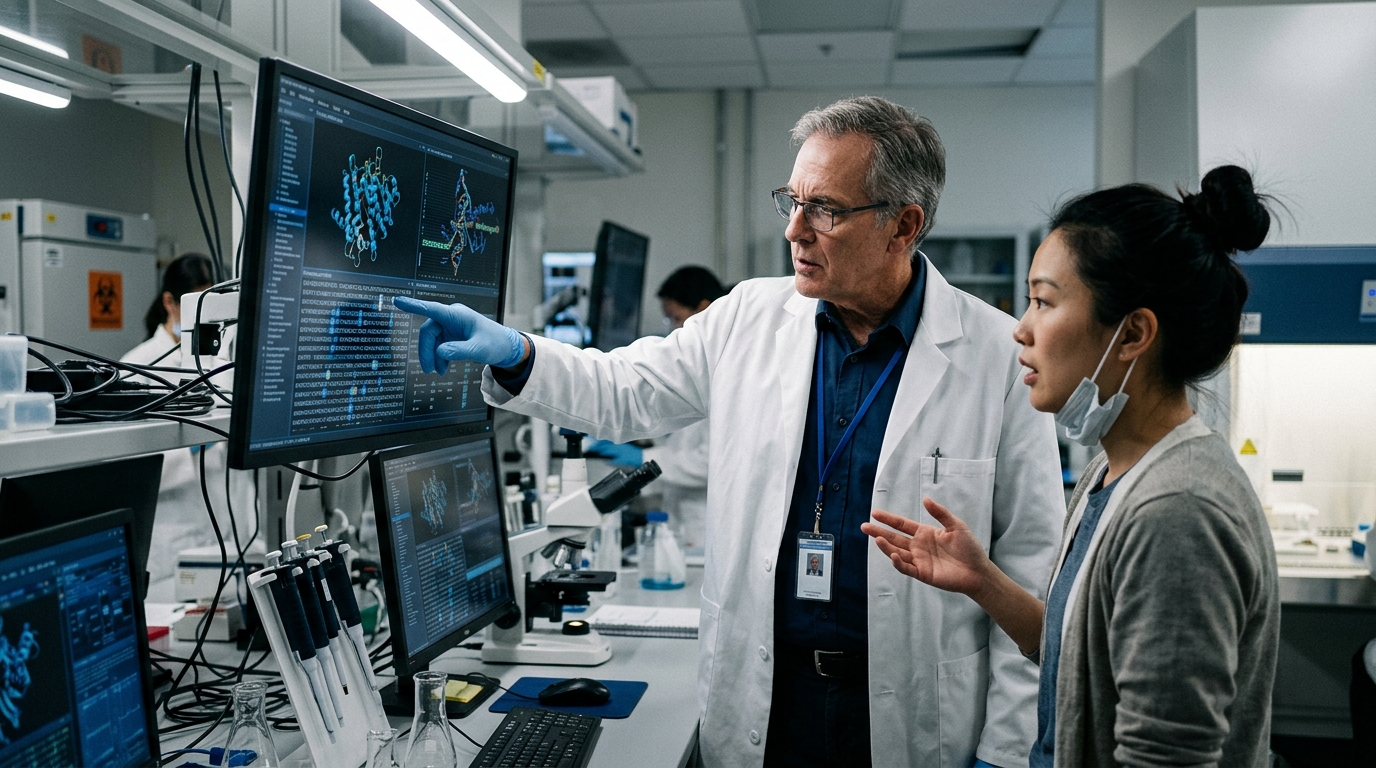
The 'dual-use' paradox lies at the heart of the problem. The same tools used to predict protein folding — a revolution promising new drugs — can be used to design toxins that bypass the human immune system. The scientific community is divided: some advocate for full transparency and open access to data, while others warn that absolute freedom in bioinformatics is tantamount to collective suicide.
"We no longer need an army of scientists to cause a catastrophe; we only need a malicious actor with a good internet connection and a powerful AI model," a security analyst recently stated at a NATO conference.
The solution cannot be purely technical; it must be political. The need for a global biosecurity observatory, similar to the IAEA for nuclear energy, is becoming imperative. Artificial intelligence moves at speeds that legislation fails to match, and in the case of bioterrorism, the cost of a single mistake could be irreversible.
Conclusion: A New Era of Vigilance
The convergence of AI and biology is perhaps the most significant challenge of our decade. As models become smarter, our ability to control the consequences of their outputs will determine global security. Bioterrorism is no longer a science fiction scenario but a digital reality requiring new ethical and technological armor. The alarm has been sounded; the question is whether we can lock the door before the virus — digital or biological — escapes.