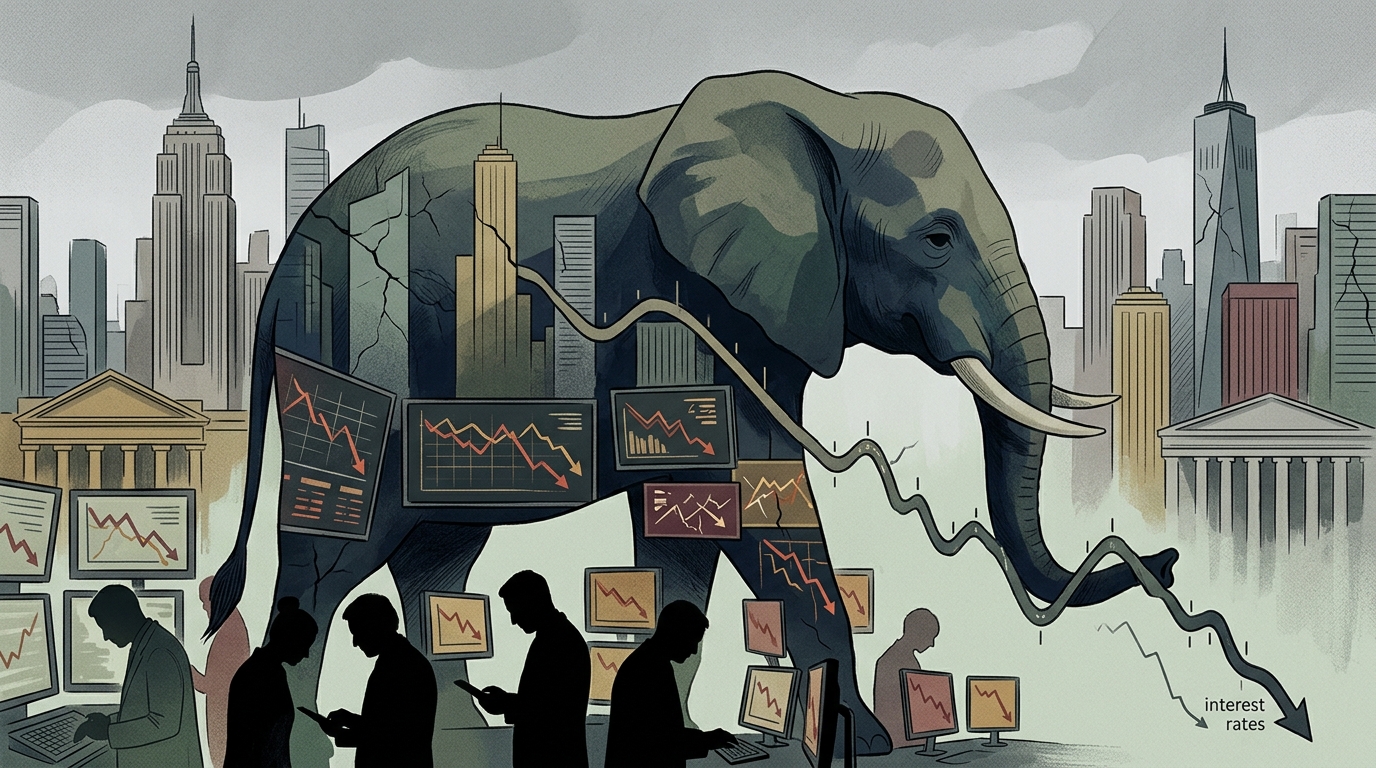
In May 2026, the global economy faces a reality that many predicted but few wished to confront: U.S. sovereign debt is no longer a theoretical future problem, but an immediate destabilizing factor for international markets. The recent bond market rout highlights growing investor concern that the United States has entered a perilous feedback loop, where high interest rates fuel larger deficits, which in turn require even higher rates to attract buyers.
The Mechanics of the Fiscal Trap
The core concern among analysts lies in the fact that U.S. debt servicing costs have now crossed critical thresholds. As the Federal Reserve maintains rates at elevated levels to combat persistent inflationary pressures, the Treasury Department is forced to refinance existing debt at significantly higher costs. This creates a "fiscal bleed," where an ever-increasing percentage of the federal budget is diverted toward interest payments rather than productive investment or social services.
According to recent data, interest outlays are now rivaling the national defense budget, causing political tremors in Washington. Investors, witnessing the political system's reluctance to implement meaningful spending cuts or tax increases, are demanding a higher "term premium" to hold long-dated U.S. Treasuries. This development is transforming a short-term liquidity issue into a long-term credibility crisis.
Reflation and the Loss of Control
The current situation is exacerbated by the "reflation" narrative. Despite the Fed's efforts, structural changes in global supply chains, the costs of the green transition, and geopolitical tensions are keeping prices on an upward trajectory. When inflation remains "sticky," bond yields naturally rise, but when this is coupled with unchecked debt issuance, the market reacts violently.
- The 10-year Treasury yield serves as a global benchmark for mortgages and corporate loans.
- The lack of a "fiscal anchor" in Washington amplifies market volatility.
- Foreign central banks, traditional buyers of U.S. debt, are becoming increasingly cautious.
Fortune AI reports that this dynamic is no longer sustainable. "We are seeing a convergence of unsustainable fiscal policy and inflationary pressures that is turning a market correction into a structural crisis," top analysts note. The question is no longer whether a crisis will occur, but how it will be managed without triggering a global recession.
Global Implications: From Wall Street to Europe
The U.S. debt problem is not confined within its borders. Due to the dollar's role as the global reserve currency, the rise in U.S. yields causes "suffocation" in emerging markets and puts pressure on European bonds. The European Central Bank finds itself in a difficult position, having to balance its own monetary policy against imported volatility from across the Atlantic.
"When the U.S. Treasury bond, considered the ultimate safe haven, begins to be viewed with skepticism, the entire architecture of the global financial system trembles," a London-based economic analyst remarked.
In conclusion, the situation in May 2026 demands a radical paradigm shift. Without a coordinated effort toward fiscal consolidation in the U.S., the bond market will continue to punish inaction, increasing the cost of living for citizens and uncertainty for businesses in every corner of the globe. The "elephant in the room" has become far too large to ignore.