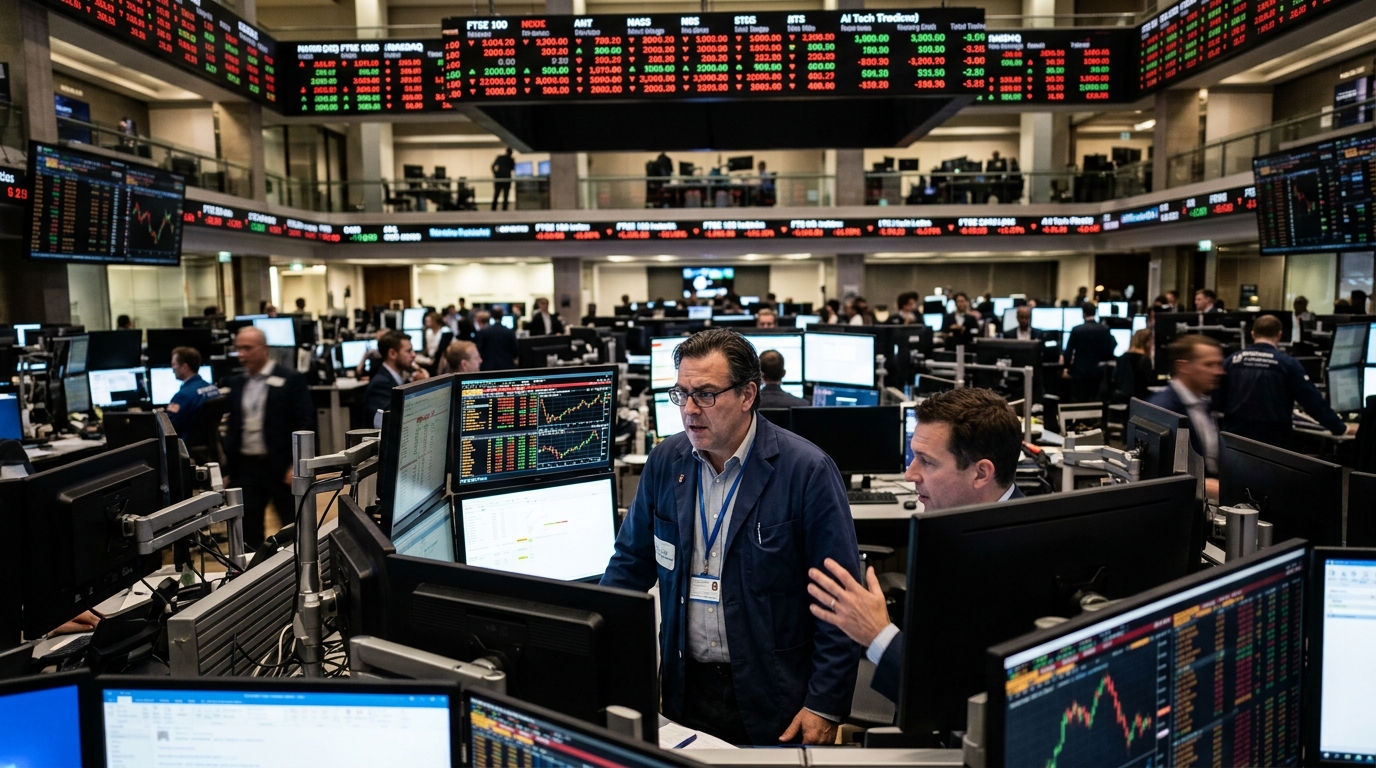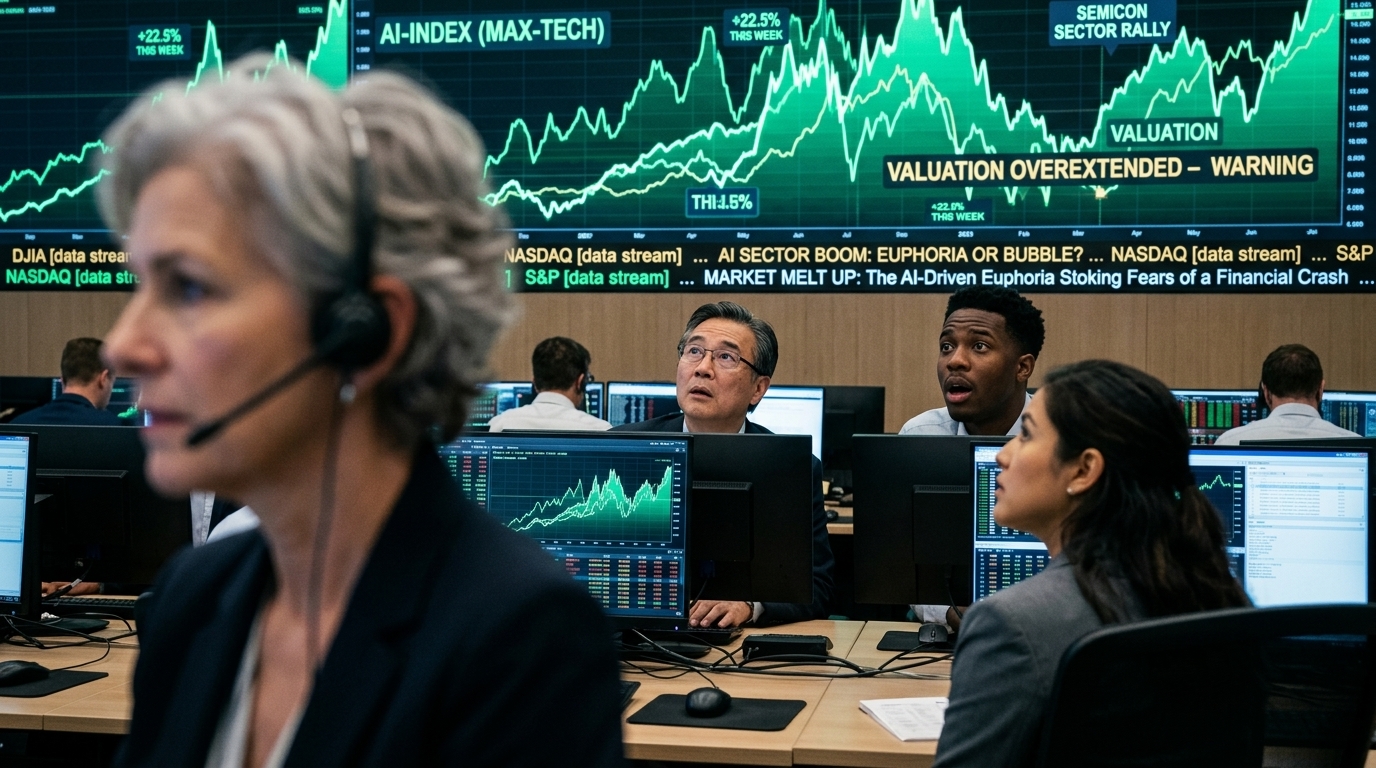
In the hallowed halls of major investment banks and the offices of global fund managers, a term is being whispered with increasing trepidation: "melt up." While the phrase might sound positive—suggesting a sharp and unexpected surge in stock prices—it is actually one of the most dangerous omens for financial markets. This phenomenon is not driven by fundamental economic improvements, but by mass psychology, the fear of missing out (FOMO), and a pervasive sense that the upward trajectory has no limit.
Today, in May 2026, global markets find themselves on a similar path. The S&P 500 and the Nasdaq are shattering one record after another, propelled by the relentless rise of semiconductor companies and Artificial Intelligence (AI) giants. However, the gap between stock valuations and real economic activity is widening, sending shivers through analysts who remember the heady days of 1999.
What is a Melt Up and Why Does it Differ from a Bull Market?
In a traditional bull market, stock prices rise because corporate earnings are improving, interest rates are favorable, and the economy is growing. In a "melt up" scenario, investors abandon logical analysis and rush to buy stocks simply because they see others profiting. It is the moment when greed overrides the fear of risk.
The primary characteristic of a melt up is acceleration. Prices don't just go up; they "skyrocket" in an almost vertical trajectory. This creates a self-fulfilling prophecy where the rise fuels further gains, as even the most skeptical investors feel forced to enter the market to avoid underperforming their benchmarks. The problem, of course, is that a melt up is almost always followed by a "melt down"—a violent and sudden correction that can wipe out gains in a matter of weeks.
The AI Catalyst and the Semiconductor Engine
If the 1999 catalyst was the internet (the dot-com boom), in 2026, the undisputed protagonist is Artificial Intelligence. The companies producing the chips that power large language models have seen their market capitalizations surpass the GDP of entire nations. The optimism that AI will transform global productivity is well-founded, but the market seems to be pricing in decades of profits within a few months.
- Big Tech Dominance: A small number of companies are responsible for the lion's share of index gains, creating a dangerous lack of market breadth.
- The Semiconductor Revolution: The demand for computing power is now viewed as "infinite," leading to valuations that exceed any historical precedent.
- Central Bank Liquidity: Despite the high interest rates of previous years, the market is betting on a "soft landing" and future rate cuts, further fueling the rally.
Historical Parallels and the Bubble Risk
Experts warn that the similarities to the past are unsettling. In 1929, 1987, and 2000, markets experienced melt-up periods before major crashes. In all these instances, there was a new technology or a new economic theory that "justified" the surge. Today, the argument is that AI is "different."
"The most dangerous phrase in investing is: This time it's different," a veteran Wall Street analyst notes.
History teaches that the laws of economic gravity eventually prevail. When valuations (P/E ratios) reach levels that require perfection to be justified, any minor disappointment—be it an earnings miss or a geopolitical crisis—can trigger a mass exodus.
Investor Sentiment: Strategy or Blindness?
For the average investor, a melt up presents a dilemma. Staying out of the market means missing out on significant gains, while entering at these levels carries the risk of buying at the "top." Experts are now advising increased caution, the use of stop-loss orders, and portfolio diversification into sectors that have not been swept up in the tech euphoria.
The melt-up scenario is not just a prediction; it is a warning about the psychological fragility of modern markets. As Artificial Intelligence continues to evolve, the challenge for investors will be to distinguish real value from the noise of a market that has become dangerously overheated.