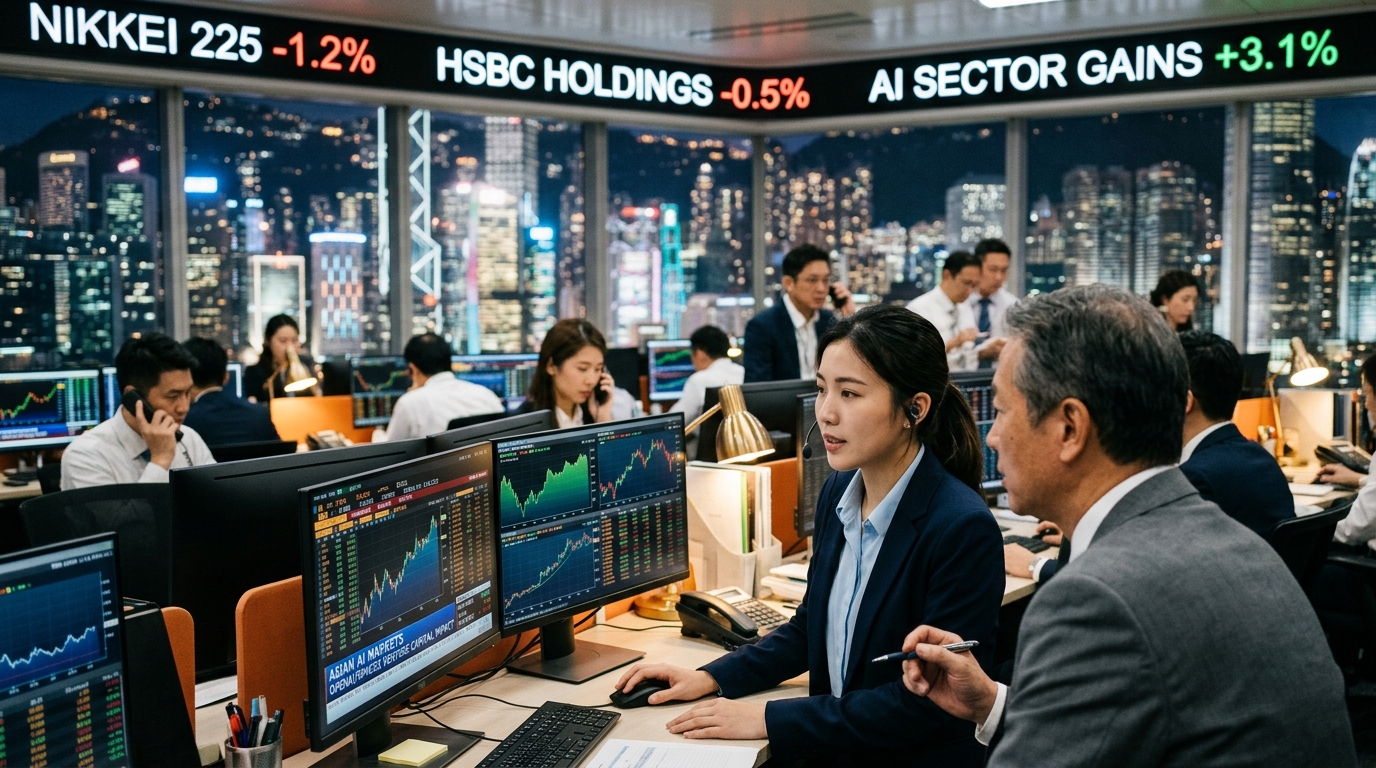
As we navigate the final days of May 2026, the Artificial Intelligence (AI) investment landscape is entering a phase of maturation that few predicted with such precision. The massive accumulation of wealth and liquidity generated from recent secondary stock sales and funding rounds of giants like SpaceX and OpenAI is no longer staying confined to Silicon Valley. Instead, this windfall is being channeled into a strategic search for the next wave of winners, with institutional investors shifting their gaze emphatically toward Asia.
The logic behind this shift is simple yet profound: while the US dominates software and Large Language Models (LLMs), Asia holds the keys to the physical manifestation of AI. From advanced lithography in Japan to High Bandwidth Memory (HBM) in South Korea and semiconductor manufacturing in Taiwan, the Asian supply chain forms the backbone upon which the future of computing power is being built.
The Liquidity Ripple Effect: From San Francisco to Seoul
The recent surge in OpenAI’s valuation, which now rivals some of the world’s largest publicly traded companies, has allowed employees and early investors to liquidate significant stakes. A similar phenomenon has occurred with SpaceX, which continues to dominate space logistics while supporting the Starlink network—a critical infrastructure for global AI connectivity. These funds are now seeking new growth pockets, and Asia offers opportunities at valuations often considered more attractive than the overheated US tech stocks.
Investors are no longer just looking for the next AI "app." They are seeking the companies that manufacture the components without which AI cannot function. In South Korea, SK Hynix and Samsung Electronics are at the center of this vortex, as demand for next-generation memory chips has outstripped all previous records. The ability of these firms to scale production is the deciding factor in whether Nvidia and other chip designers can deliver their products to the market.
The Strategic Importance of Japan and Southeast Asia
Japan, long considered a "sleeping giant" in technology, is emerging as the ultimate winner in the semiconductor manufacturing equipment sector. Companies like Tokyo Electron and Advantest are seeing their order books explode as governments worldwide subsidize the creation of new chip factories (fabs). Japanese precision engineering is irreplaceable, and investors who profited from OpenAI are now betting that the demand for this equipment will remain high for the next decade.
Meanwhile, we are witnessing a significant shift toward Southeast Asia. Malaysia and Vietnam are becoming hubs for semiconductor assembly, testing, and packaging (ATP). As geopolitical tensions between the US and China persist, the "China Plus One" strategy is driving massive capital flows into these nations. Investors see an opportunity here to invest in infrastructure that is less exposed to direct trade wars but equally essential to the global ecosystem.
Geopolitics and Economic Reality
However, this investment surge is not without risks. Taiwan remains the epicenter of global production through TSMC, but regional geopolitical uncertainty is forcing investors to diversify their portfolios. The trend of "friend-shoring"—shifting production to Western-allied nations—is creating new winners in India and Japan but is also driving up production costs.
"Artificial Intelligence is no longer a software experiment. It is a resource war, and Asia has the mines, the factories, and the expertise to win that war," says a Tokyo-based market analyst.
The conclusion is clear: the profits generated from the first phase of the AI revolution in the US are being used to fund the physical infrastructure of the second phase. Asia is no longer just a low-cost supplier but the strategic partner that will determine the speed and scale of global AI adoption. For investors, the question is not whether to invest in Asia, but how quickly they can position themselves before valuations there reach Silicon Valley levels.