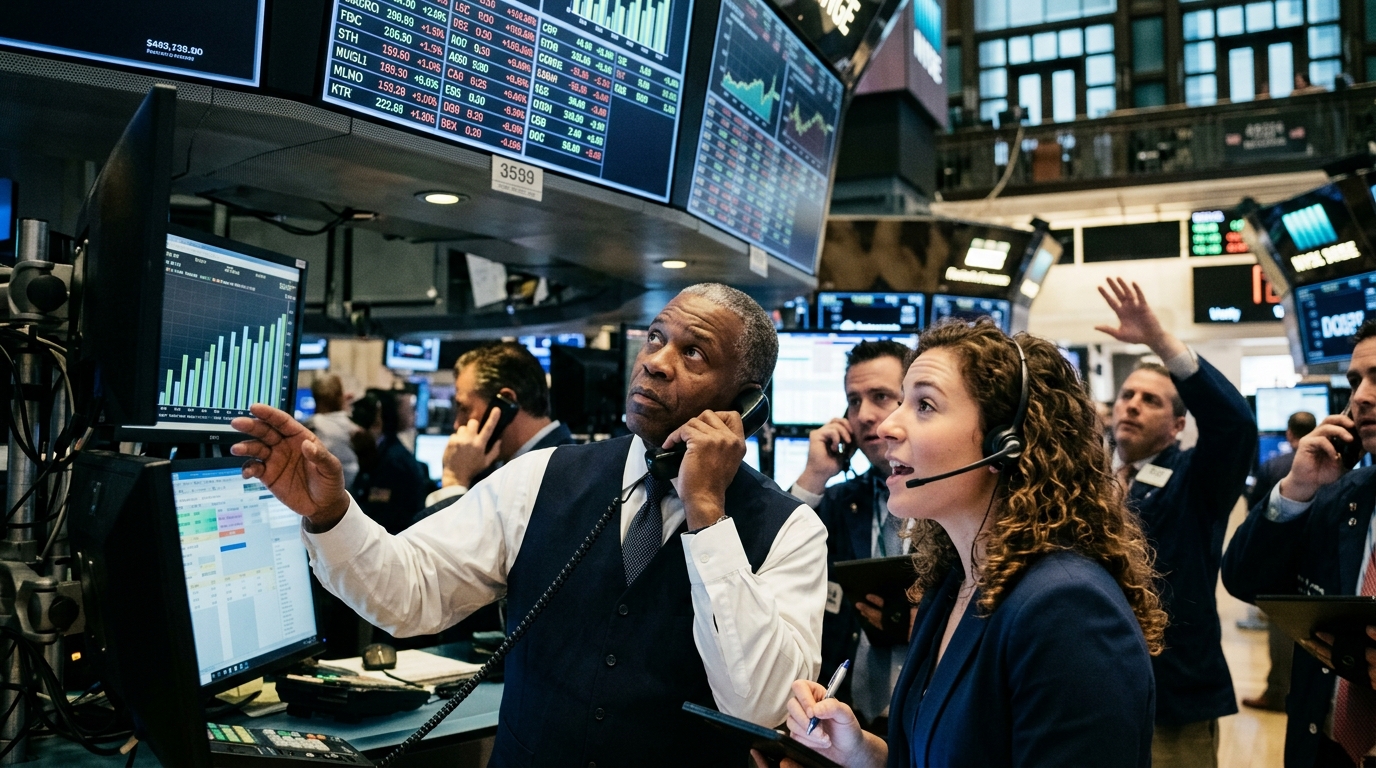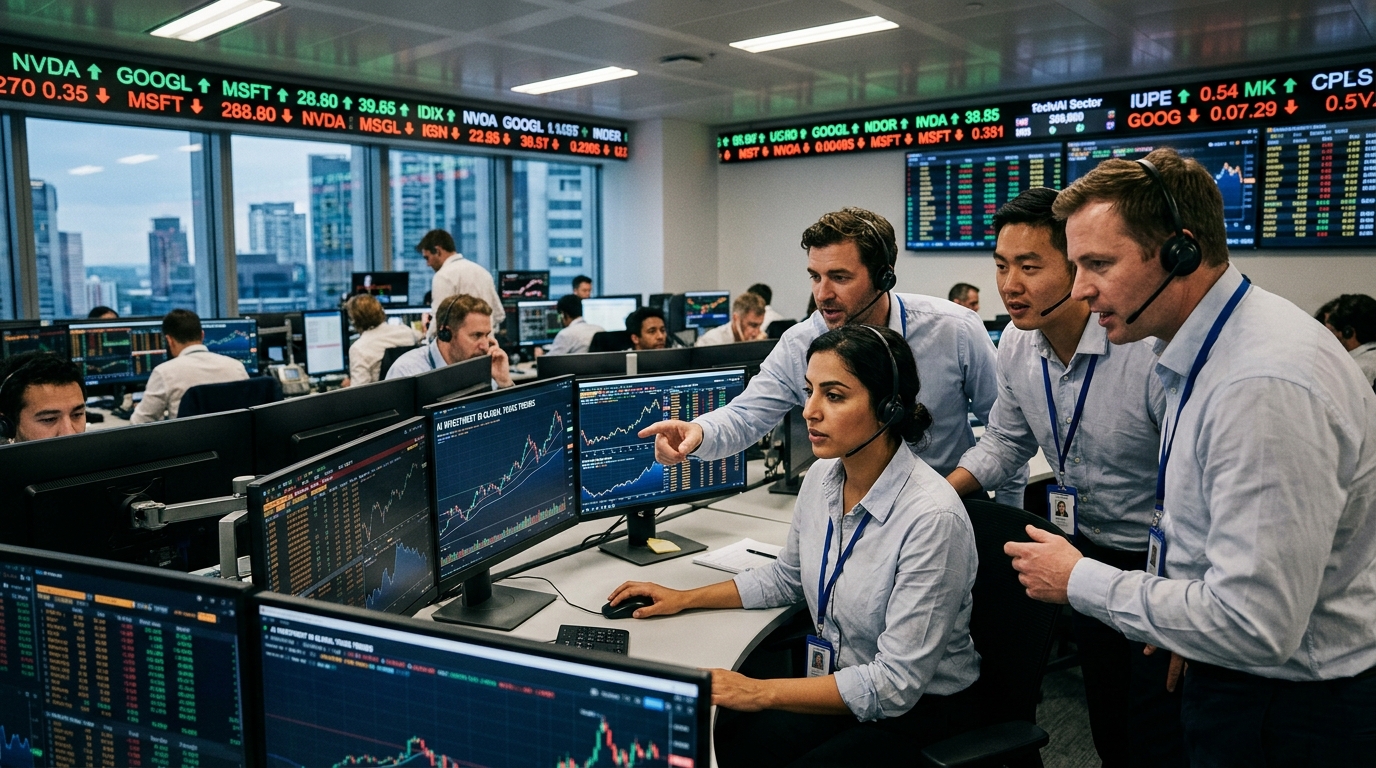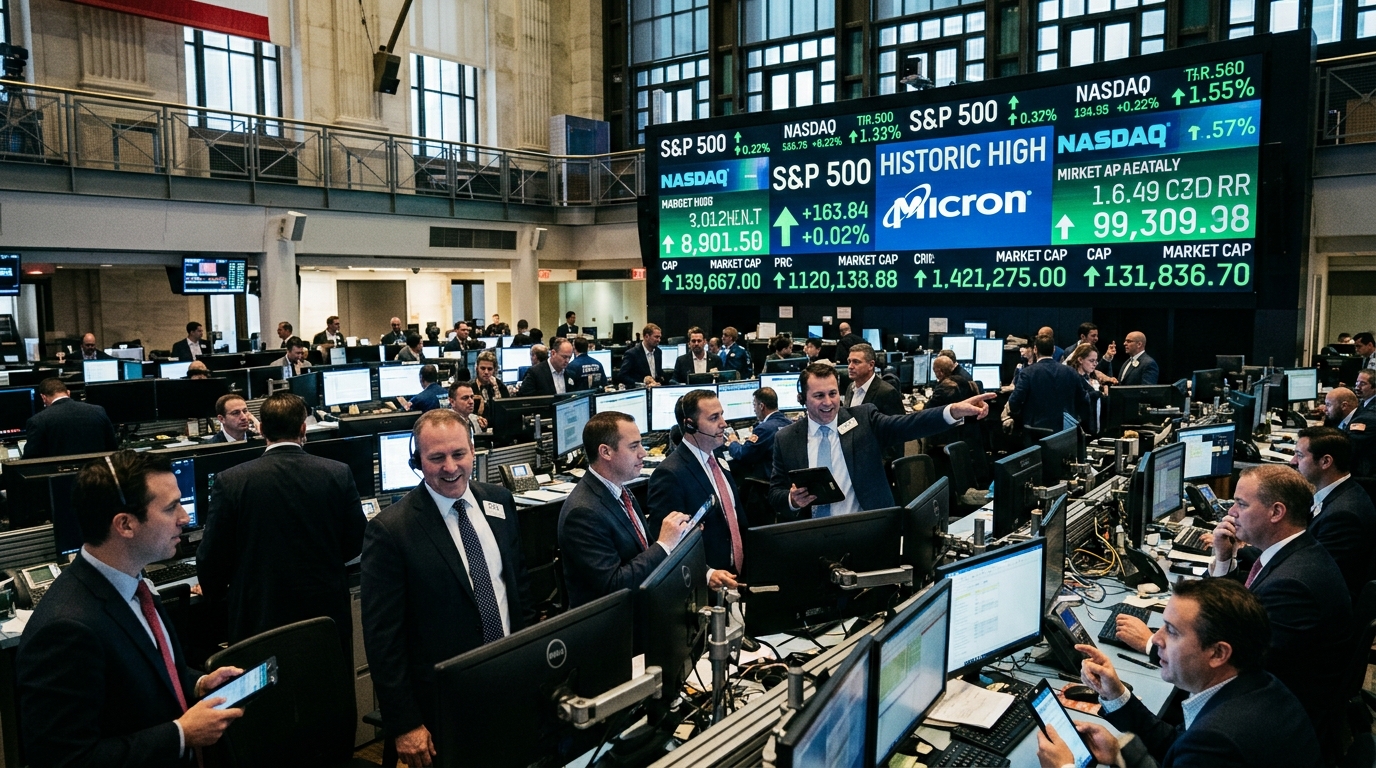
The global financial landscape is witnessing an unprecedented surge as the Artificial Intelligence (AI) revolution continues to redraw the maps of capital markets. On Tuesday, May 26, 2026, the S&P 500 and Nasdaq Composite indices reached new all-time closing highs, fueled by a relentless wave of optimism that appears to be shielding investors from broader macroeconomic concerns such as persistent inflation and interest rate volatility. The highlight of the day, however, was Micron Technology, which officially joined the elite ranks of companies boasting a market capitalization exceeding $1 trillion.
The Micron Milestone: Why Memory is the New Gold
Micron’s ascent to the trillion-dollar club is far more than a numerical achievement; it is a profound validation of the semiconductor industry’s shifting dynamics. While Nvidia has long been the face of the AI boom through its dominant GPUs, Micron has established itself as the indispensable leader in High Bandwidth Memory (HBM). This specialized memory is the critical bottleneck in AI training; without it, even the fastest processors cannot function at peak efficiency.
Industry analysts point out that Micron’s strategic pivot toward HBM3E chips has allowed it to capture a massive share of the data center market. With production capacity reportedly sold out through 2027, the company has transformed from a cyclical commodity player into a high-growth infrastructure giant. This shift has fundamentally altered how Wall Street values the firm, moving it away from the volatile memory price swings of the past toward a more stable, premium valuation model.
Market Sentiment and the S&P 500’s Resilience
The S&P 500 continues to defy gravity, marking a series of record closes despite the Federal Reserve’s cautious stance on monetary easing. The prevailing narrative suggests that the productivity gains promised by AI are being priced in as a counter-weight to high borrowing costs. Investors are betting that the integration of AI across various sectors—from healthcare to finance—will drive earnings growth that justifies these historic multiples.
However, the concentration of market gains remains a point of contention. The "AI Trade" has created a top-heavy market where a handful of mega-cap tech stocks dictate the direction of the entire index. While the tech-heavy Nasdaq thrives, traditional industrial and consumer sectors show a more nuanced, and sometimes stagnant, performance. This divergence raises questions about the breadth of the current bull market and whether it can be sustained if the broader economy slows down.
"We are not merely observing a speculative bubble; we are witnessing a structural reallocation of global capital toward the fundamental infrastructure of the 21st century," noted a senior strategist at a leading investment bank.
Inflation, the Fed, and the AI Deflation Thesis
Beneath the surface of market euphoria lies the persistent challenge of inflation. Recent data indicates that while goods prices have stabilized, service-sector inflation remains sticky. This complicates the Federal Reserve’s path toward rate cuts. Yet, the market seems to be embracing a "deflationary AI" thesis—the idea that AI will eventually lower the cost of production and services so significantly that it will naturally bring inflation down without the need for aggressive monetary tightening.
Micron, Nvidia, and Apple now serve as the anchors of modern portfolios. Their ability to generate massive free cash flow in a high-interest-rate environment is a rarity that continues to attract capital. The challenge for the remainder of 2026 will be managing expectations. As valuations stretch, any slight miss in earnings or guidance could trigger significant volatility, testing the resolve of the current bull run.
Conclusion: Navigating the New Tech Hegemony
As the closing bell rang on Wall Street, the mood was one of triumph tempered by vigilance. Micron’s entry into the trillion-dollar club marks the maturation of the AI cycle. It is no longer just about software potential or theoretical applications; it is about the physical hardware and the massive capital expenditures required to build the future. With the S&P 500 and Nasdaq in uncharted territory, the focus now shifts to the sustainability of this growth. For now, the AI-driven engine shows no signs of stalling, but the road ahead will require investors to distinguish between genuine structural winners and those merely riding the wave of euphoria.