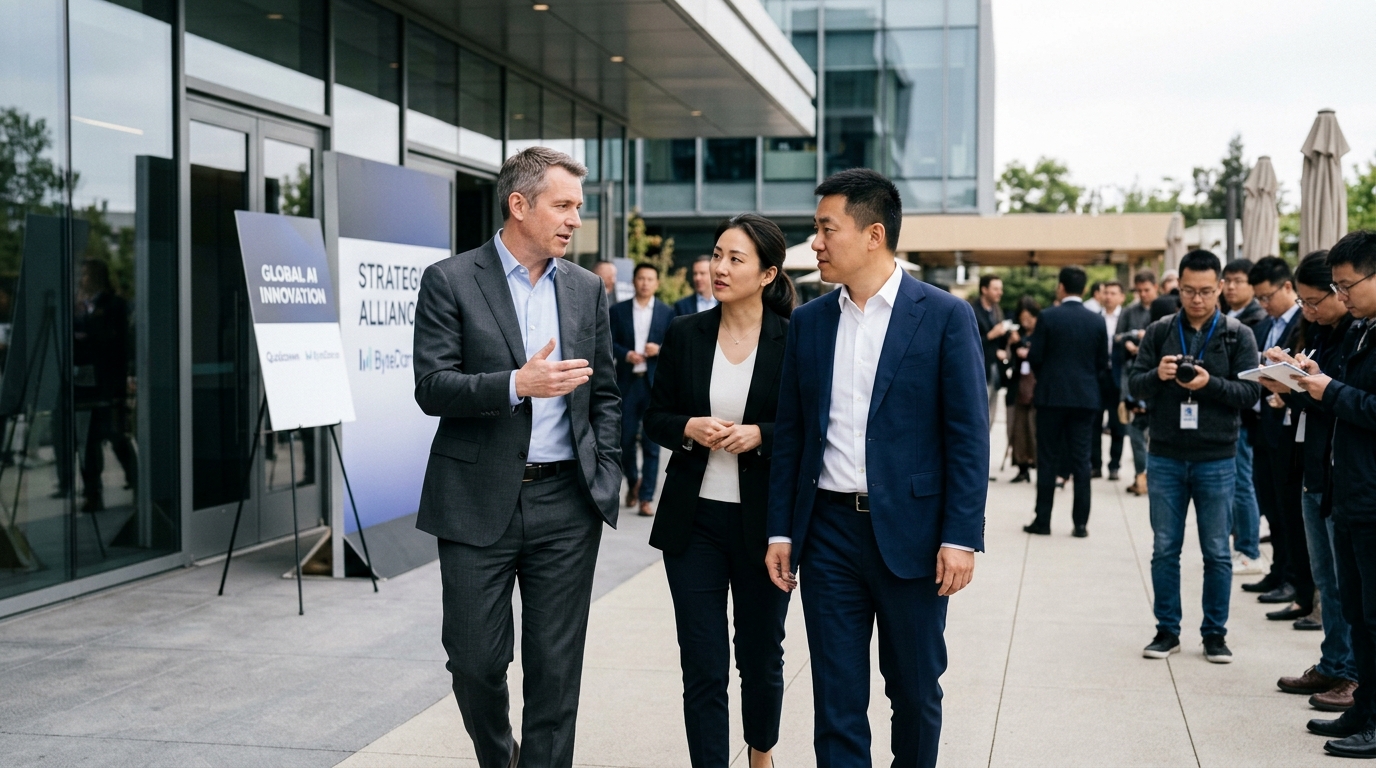
In a move that reverberates through both financial markets and the corridors of geopolitical power, Qualcomm has secured a major AI chip supply deal with ByteDance, the Chinese parent company of TikTok. This partnership is far more than a mere commercial transaction; it represents a critical juncture in the efforts of American tech giants to maintain their foothold in the massive Chinese market while navigating the treacherous waters of Washington-imposed export restrictions.
Qualcomm's Strategic Pivot
For Qualcomm, this deal is the culmination of a long-term diversification strategy. For years, the company has sought to reduce its reliance on the smartphone market by investing billions in the development of Neural Processing Units (NPUs) and specialized AI accelerators. ByteDance, conversely, possesses an insatiable hunger for computational power. TikTok's recommendation algorithms, widely considered the most sophisticated in the world, require continuous training and optimization—processes that now rely entirely on advanced AI architectures.
ByteDance's selection of Qualcomm suggests that the latter's solutions offer a competitive alternative to Nvidia's increasingly scarce and expensive hardware. With Nvidia facing strict prohibitions on the sale of its top-tier chips (such as the H100 and Blackwell) to China, Qualcomm appears to have found a "window" by offering hardware that, while extremely powerful, may fall under different regulatory classifications, allowing ByteDance to continue its model development without being solely dependent on domestic production from the likes of Huawei or Baidu.
The Geopolitical Paradox
The timing of this agreement is steeped in irony. While the U.S. Congress debates the ban or forced sale of TikTok in the United States on national security grounds, one of the premier American semiconductor firms is strengthening the very infrastructure that makes the app so potent and effective. This paradox highlights the deep interdependence of the two economies, despite the persistent rhetoric of "decoupling."
Analysts believe ByteDance will utilize Qualcomm's chips not only for TikTok but also for the development of its own Large Language Models (LLMs), such as Doubao, which is already a dominant force in the Chinese market. ByteDance's ambitions in generative video and content creation require massive resources, and Qualcomm provides the energy efficiency necessary for data-center-scale operations.
Competition and Future Outlook
Competition in the AI chip market is entering a new phase. While Nvidia remains the undisputed leader in model training, Qualcomm is making a strong play for the inference market—the actual running of AI models. The ByteDance deal provides Qualcomm with the necessary validation to convince other global players that its ecosystem is ready for the next stage of the AI revolution.
"This partnership signifies a shift in the AI hardware hierarchy, where efficiency and availability are becoming as crucial as raw peak performance," notes a senior industry analyst.
The implications of this deal extend beyond the balance sheets of the two companies. It serves as a reminder that technology often outpaces policy. As long as ByteDance remains a global data behemoth, it will seek the best possible hardware to fuel its algorithms. Qualcomm, in this instance, appears to be the partner capable of bridging the gap between American innovation and Chinese application at a massive scale.
Market Impact and Beyond
The financial community has reacted positively, seeing this as a sign that Qualcomm can capture a significant share of the non-smartphone AI market. However, the long-term sustainability of such deals remains tied to the shifting sands of international relations. If export controls tighten further, Qualcomm may find itself in the same precarious position as Nvidia. For now, however, the deal stands as a testament to the pragmatism of global tech giants in an era of fragmentation.