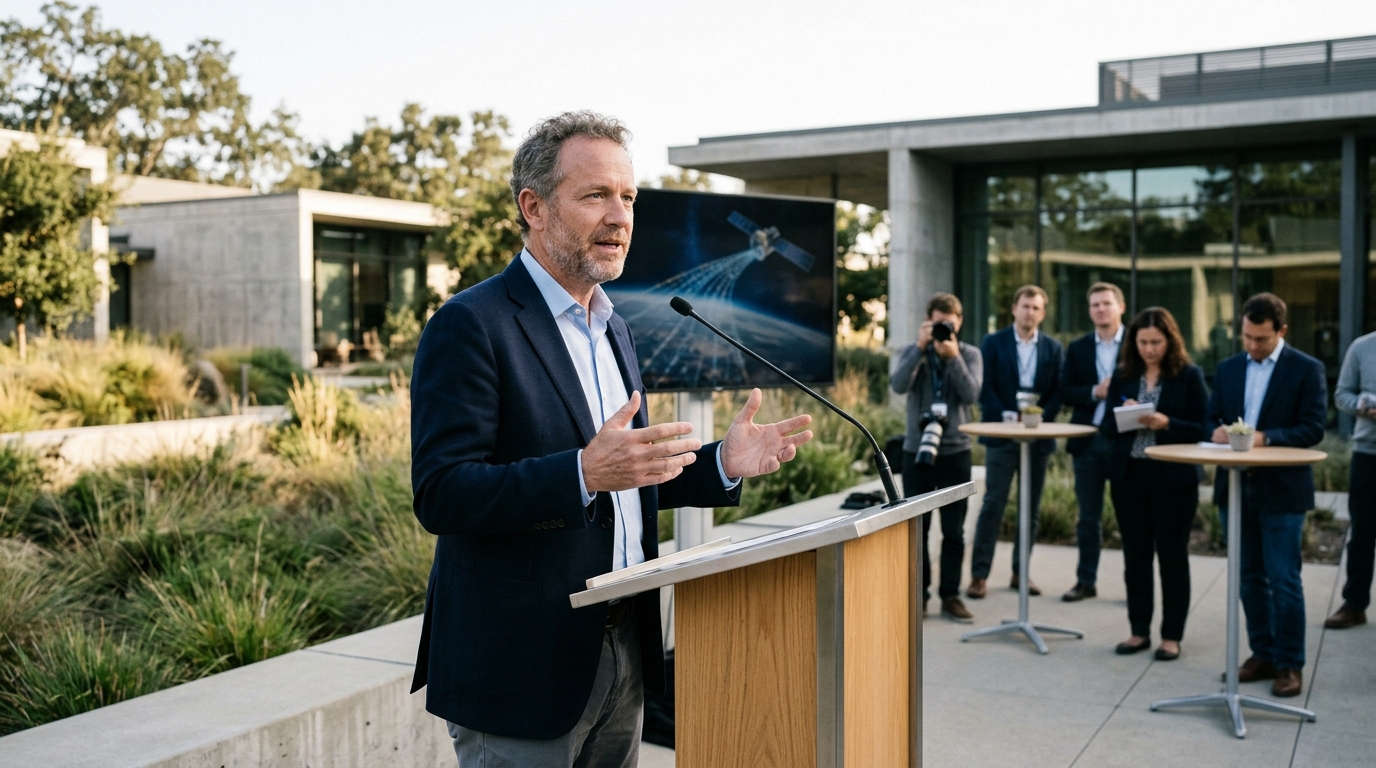
In a move that fundamentally redraws the map of global technology, Alphabet Inc., Google’s parent company, has signed an unprecedented agreement with Elon Musk’s SpaceX. According to corporate filings dated June 5, 2026, Google has committed to paying a staggering $920 million per month to SpaceX for computing power and high-speed interconnection services. This deal, spanning through mid-2029, is not merely a commercial transaction; it marks the dawn of an era where space becomes the natural extension of terrestrial data centers.
Space as the New Frontier of Edge Computing
Google’s strategy is laser-focused on one thing: latency. By integrating SpaceX’s orbital compute capabilities—likely via next-generation Starlink satellites equipped with dedicated processing units—Google can deliver real-time AI services to the most remote corners of the globe. As industry analysts observe, "This is no longer just about providing internet access; it's about deploying a global neural network in orbit."
The role of Starshield, SpaceX’s government-focused satellite constellation, appears to be a cornerstone of this partnership. Google is seeking to fortify its infrastructure against geopolitical instability by offloading critical data processing tasks away from vulnerable undersea fiber-optic cables. SpaceX’s unique ability to launch and iterate hardware at a pace no competitor can match gives Google an agility that Amazon’s Project Kuiper and Microsoft’s Azure Space are still struggling to replicate.
Financial Implications and Market Dominance
The commitment of $11 billion annually is unheard of in the telecommunications and cloud sectors. For SpaceX, this recurring revenue stream represents the 'holy grail' of funding for Musk’s Mars ambitions. For Alphabet, the investment is a pragmatic admission that AI supremacy requires infrastructure that transcends atmospheric boundaries.
- Google Cloud Expansion: Google gains an immediate footprint in regions where building physical data centers is geographically or politically impossible.
- AI Inference at the Edge: Running AI models directly on satellites drastically reduces response times for autonomous systems, maritime logistics, and remote industrial IoT.
- Strategic Resilience: Diversifying infrastructure away from terrestrial nodes enhances security for both corporate and sovereign clients.
"This partnership proves that power in the 21st century is measured not just in lines of code, but in kilometers above sea level," says a senior Google Cloud executive speaking on the condition of anonymity.
Geopolitical and Ethical Considerations
This deal is not without its critics. The concentration of such immense power in the hands of two behemoths raises serious questions regarding information monopolies. If Google controls the AI software and SpaceX controls the orbital medium through which it flows, competition could be stifled. Furthermore, SpaceX’s deep involvement in defense contracts through Starshield means Google is indirectly tethered to military applications, a move that has historically sparked internal revolts at the search giant (notably Project Maven).
However, technological necessity appears to be outweighing ethical hesitation. As the demand for compute power grows exponentially due to Generative AI, companies are desperate for scalable, energy-efficient solutions. Cooling servers in the vacuum of space and utilizing 24/7 solar power in orbit offer a theoretical efficiency gain that Google is willing to pay a premium for.
Conclusion: Toward a Celestial Infrastructure
Ultimately, the $920-million-a-month deal signals a transition from the "Cloud" to the "Orbit." Google isn't just buying bandwidth; it is securing its place in the celestial backbone of the future. As we approach 2030, the distinction between terrestrial and space-based services will continue to blur, with SpaceX emerging as the ultimate landlord of the global internet's infrastructure.