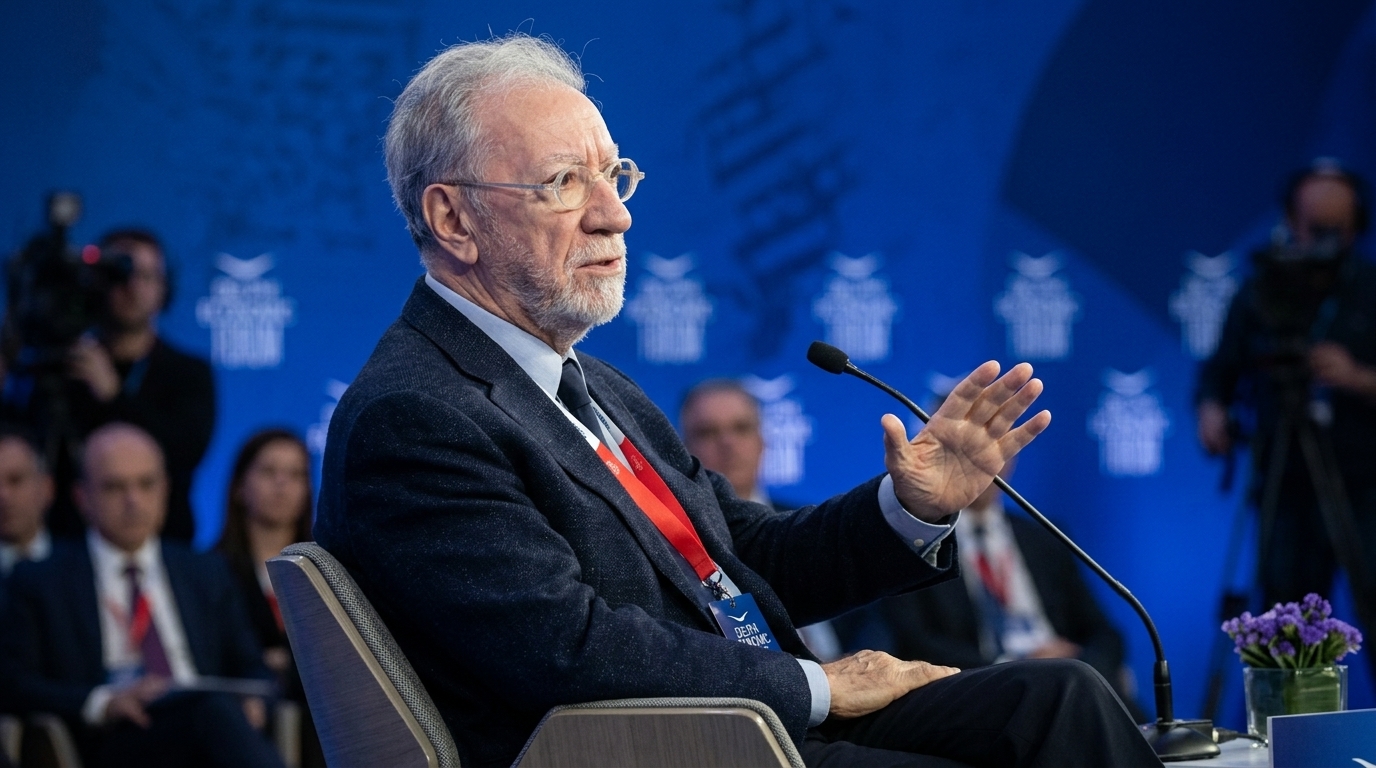
Against the majestic backdrop of the Delphi Economic Forum, warnings about the future of the global economy took on a particular weight as Michalis Sallas, one of the country's most experienced bankers and investors, sounded the alarm. His central message was clear: the return of oil to levels near $100 per barrel is not just a statistical change, but a systemic threat that could derail the fragile recovery of Europe and Greece.
The Energy Trap and Inflation
Mr. Sallas analyzed how rising energy prices act as the ultimate catalyst for inflation. Unlike inflation stemming from excessive demand, the cost-push inflation triggered by oil is much harder to combat. When production and transport costs rise across the board, businesses are forced to pass these costs on to the final consumer, reducing disposable income and strangling consumption.
According to the analysis presented, the $100 scenario would mean a prolonged period of high prices on supermarket shelves, even if other factors stabilize. This "imported inflation" is particularly painful for economies like Greece, which rely heavily on imports of energy and raw materials.
The Brake on Growth and Interest Rates
One of the most concerning aspects of Michalis Sallas's intervention concerned monetary policy. The European Central Bank (ECB) is at a critical crossroads. While markets were hoping for a rapid de-escalation of interest rates within 2026, the energy crisis complicates the data. If inflation remains high due to oil, central bankers will hesitate to reduce borrowing costs.
This creates a double pressure on the real economy: on one hand, increased operating costs due to energy, and on the other, the high cost of money that freezes investments. Mr. Sallas emphasized that if this situation becomes entrenched, growth will slow down sharply, leading to stagflation scenarios—a condition where prices rise while the economy stagnates.
- The rise in oil directly affects transport costs, which form the backbone of the Greek supply chain.
- Tourism services, the main pillar of Greek GDP, are at risk from the reduction in European citizens' disposable income.
- Industrial production in the Eurozone is already showing signs of fatigue, and expensive oil could be the "final blow."
Geopolitical Instability and Strategic Shielding
The analysis was not limited to numbers but extended to the causes. Geopolitical tensions in the Middle East and the ongoing conflict in Ukraine keep oil supply in a state of uncertainty. Mr. Sallas pointed out that markets are now hypersensitive to every geopolitical shock, a fact that favors speculation.
"We cannot rely on wishful thinking for price stabilization. A holistic approach is required to strengthen energy autonomy and protect the productive base from sharp fluctuations," it was noted during the discussion.
For Greece, the challenge is twofold. It must continue the path of fiscal discipline without stifling growth. Utilizing Recovery Fund resources for the green transition is the only way forward, but as Mr. Sallas stressed, this transition must happen in a way that does not disproportionately burden the cost of living in the intermediate stage.
Conclusions and Outlook
In conclusion, Michalis Sallas's intervention at Delphi served as a realistic reminder that economic prosperity is not guaranteed. The shadow of $100 per barrel is a reminder of the global economy's dependence on fossil fuels, despite efforts toward decarbonization. Greece's ability to navigate these turbulent waters will depend on the speed of business adaptation and the flexibility of economic policy in the face of an external shock that seems increasingly likely.