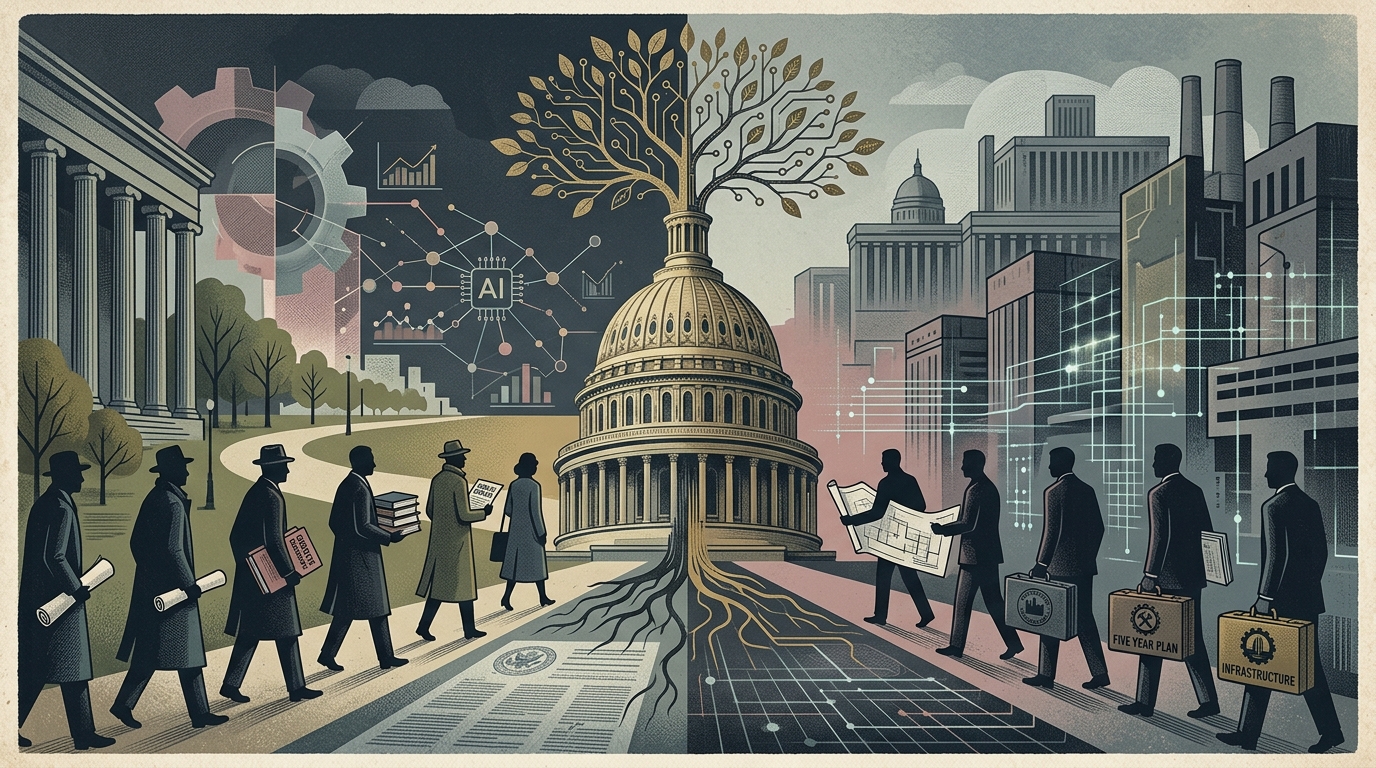
The global economic stage of 2026 is witnessing a remarkable pivot in Beijing's economic strategy. According to the latest data from China's Ministry of Commerce, the country's service trade recorded a 4.9% year-on-year increase during the first four months of the year, reaching unprecedented levels. This rise is not merely a statistical indicator; it is the hallmark of a profound structural shift. China, for decades known as the "world's factory" for material goods, is rapidly transforming into a global player in knowledge-intensive services and international tourism.
The total value of service imports and exports approached 2.5 trillion yuan (approximately $345 billion), highlighting the resilience of the Chinese economy despite geopolitical challenges and "de-risking" efforts from the West. This momentum is primarily driven by two pillars: the explosion of technology-based services and the full recovery of the travel sector.
The Dominance of Knowledge-Intensive Services
One of the most striking elements of the report is the continued rise of knowledge-intensive services. This sector, which includes information technology, consulting, intellectual property, and research and development (R&D), grew by 6.4% in the first quarter. These services now represent nearly 45% of the country's total service trade.
This development aligns perfectly with the national strategy for "New Quality Productive Forces," a term introduced by Chinese leadership to describe growth based on high technology, high efficiency, and high quality. Chinese software companies and AI platforms are now exporting expertise to markets in Southeast Asia, the Middle East, and Africa, creating an alternative digital ecosystem that directly competes with Silicon Valley.
Furthermore, exports of intellectual property services and data management are showing double-digit growth rates. This suggests that China is not only manufacturing the hardware of the future but also owns the code that drives it. The digital economy has become the new Silk Road, connecting Beijing with global innovation centers.
Tourism: The Great Return and Border Opening
The second major winner is the travel services sector, which recorded an explosive growth of over 20%. After years of restrictions, China is not only seeing its citizens travel abroad en masse again but has also implemented an aggressive policy to attract foreign visitors. The expansion of visa-free programs for many European and Asian countries has borne fruit.
Inbound tourism flows do not only boost hotel and airline revenues but also serve as a tool of "soft power." Beijing is investing billions in upgrading tourism infrastructure and digitalizing payments for foreigners, allowing the use of international credit cards on platforms like WeChat Pay and Alipay, solving a long-standing issue for international travelers.
However, the rise in tourism is not limited to leisure. Business tourism (MICE) is experiencing an unprecedented boom, as international conferences and tech exhibitions return to Shanghai and Guangzhou, bringing with them investors and executives from around the world.
Challenges and Geopolitical Context
Despite the positive numbers, the road is not without obstacles. The global economy remains fragmented. Trade restrictions from the US and the European Union regarding advanced semiconductors and green technology are forcing China to turn even more toward domestic consumption and emerging markets.
The challenge for Beijing is to maintain this growth rate while facing demographic aging and the crisis in the real estate sector. The shift to services is seen as the "decompression valve" that will allow the economy to grow without relying solely on infrastructure investment and heavy industry.
In conclusion, the 4.9% increase in service trade in 2026 is confirmation that China is redefining itself. From a low-cost producer, it is evolving into an exporter of intelligence, culture, and technological services, forcing the West to re-evaluate its strategy toward a "Dragon" that no longer just emits smoke from factories, but also data from the clouds.