The Greek economy stands at a critical juncture. As the Recovery and Resilience Facility (RRF) approaches its conclusion in 2026, the burning question for markets and citizens alike is: what comes next? The answer, as recently revealed, comes in the form of a €100 billion "mega-package" expected to flow into the economy over the coming years, ensuring that growth momentum is not abruptly halted.
This massive figure is not a single new fund but a combination of resources from the 2021-2027 NSRF (ESPA), the Common Agricultural Policy (CAP), remaining RRF funds, and, crucially, the leverage of private capital. The government's strategy is shifting from mere fund absorption to qualitative investment, focusing on innovation, green energy, and the digital transformation of industry.
The Architecture of the €100 Billion
To understand the magnitude of this challenge, we must analyze where these funds originate. The new NSRF (2021-2027) contributes approximately €26 billion, while the CAP adds another €19 billion. When we add the RRF loans that will continue to be disbursed for projects already under contract, along with the expected participation of the banking system, we reach a figure that could change the country's destiny. The distinguishing factor in this phase is the requirement for reforms to accompany every euro of investment.
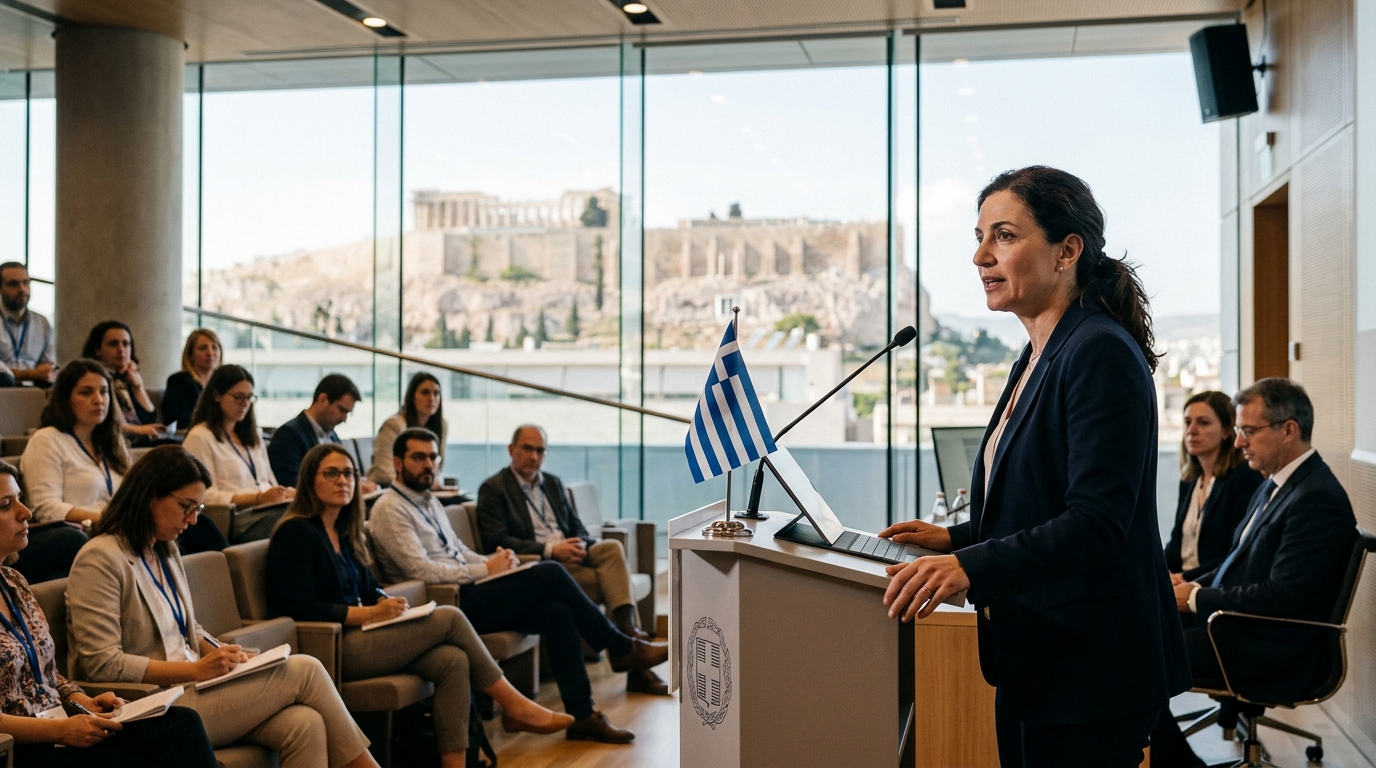
The Deputy Minister of National Economy emphasized that the goal is not just quantity, but maintaining high growth rates—above the European average—to continue income convergence. The emphasis is now on high-value-added sectors such as technology, pharmaceuticals, and specialized manufacturing, moving away from the traditional model based solely on tourism and consumption.
Artificial Intelligence and Digital Transformation
One of the core pillars of this new economic cycle is the integration of Artificial Intelligence (AI) into both the public and private sectors. Funds will be directed toward upgrading the country's digital infrastructure, aiming to create a state that operates with algorithmic precision, reducing the bureaucracy that has traditionally acted as a brake on investment. The use of AI in tax administration to combat evasion and in the judiciary to speed up decision-making is considered key to improving the business environment.
Simultaneously, the private economy is called to modernize. Small and medium-sized enterprises (SMEs), which form the backbone of the Greek market, will have access to financial tools to adopt AI solutions, cybersecurity, and production automation. Without this technological leap, the risk of Greece falling behind in global competition is real, despite the availability of resources.
The Challenges: Absorption and "Dutch Disease"
However, managing €100 billion is not without risks. The first major challenge is administrative capacity. The Greek public administration must prove it can run thousands of projects simultaneously, avoiding the delays that led to lost resources in the past. Furthermore, there is the risk of the so-called "Dutch Disease": an excessive influx of capital into certain sectors (like construction) could lead to cost increases and labor shortages, undermining the competitiveness of other sectors.
The government seems to recognize this risk by promoting reskilling and upskilling programs for thousands of workers. Connecting education with labor market needs is perhaps the most difficult piece of the puzzle, as the shortage of specialized personnel in technical fields and IT is already the number one complaint from investors.
Conclusion: A Historical Opportunity
The €100 billion mega-package is the "fuel" for the Greece of the next decade. If utilized correctly, the country can transform from a service-based economy into a regional technology and energy hub. Success will not be judged by how much money is spent, but by whether this money creates permanent, well-paying jobs and a sustainable economy that does not depend on external subsidies. The post-RRF era is the moment of truth for the Greek productive model.