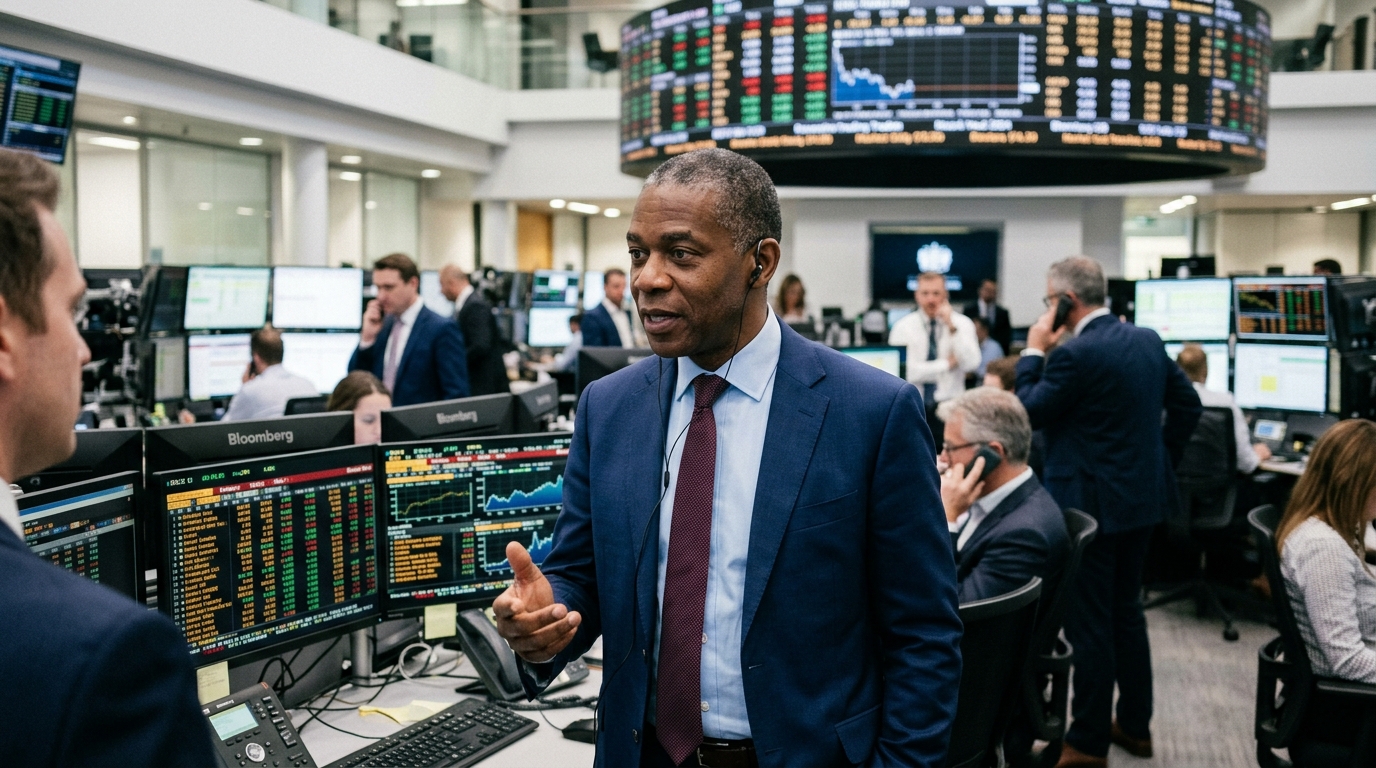
In an era where artificial intelligence (AI) has ceased to be a mere productivity tool and has transformed into a structural architect of the global economy, warnings from the heights of the economic world carry significant weight. Dambisa Moyo, economist, author, and member of the House of Lords, speaking on Bloomberg Tech on June 1, 2026, painted a picture that balances between technological euphoria and social peril. According to Moyo, we are not merely in a transition phase, but in the "early innings" of a radical realignment of the global world order.
The Diminution of Labor and the Productivity Paradox
Moyo's central argument focuses on what she calls the "diminution of jobs"—the gradual but relentless shrinking of labor markets. While previous industrial revolutions replaced muscle power with machines, the current AI revolution targets the core of human cognitive function. Moyo emphasizes that uncertainty remains the dominant factor. "We don't yet know the full depth of the impact," she noted, highlighting that the speed at which businesses are adopting AI solutions outpaces the ability of states to create alternative sources of employment.
Her analysis highlights a dangerous paradox: while productivity may skyrocket due to automation, the distribution of the wealth generated by this productivity is becoming increasingly concentrated. Moyo argues that if labor ceases to be the primary way people participate in the economy, then the social contract underpinning Western democracies risks collapse. The "New World Order" she refers to is not just about geopolitical power, but about the fundamental relationship between capital, the state, and the citizen.
"We are at a point where technology is not just complementing humans, but beginning to render them redundant in sectors we once thought were immune," Moyo emphasized during the interview.
Geopolitical Instability and the Role of Great Powers
Moyo does not limit herself to economic theory; she connects technological evolution to the geopolitical chessboard. The "New World Order" is characterized by a race for dominance in computing power and data. Europe, the US, and China are following different governance models for AI, creating rifts in global trade and diplomacy. Moyo warns that countries that fail to integrate AI ethically and effectively will find themselves marginalized, leading to a new form of global inequality.
Furthermore, she points out that the uncertainty surrounding AI affects long-term investment. Businesses are hesitant to commit capital to traditional infrastructure when the future of work is so unclear. This "wait-and-see" attitude could lead to economic stagnation despite technological progress. Moyo calls on policymakers to act immediately before social inequalities become irreversible.
The Need for New Governance
As a member of the House of Lords, Moyo has a unique perspective on the legislative side of the issue. She argues that current legislation is "hopelessly behind" developments. The debate over Universal Basic Income (UBI) or robot taxation is no longer theoretical, but imperative. The "New World Order" requires, according to Moyo, a new form of global governance that ensures the benefits of AI are diffused across society and not just to the owners of the algorithms.
In conclusion, Dambisa Moyo's analysis reminds us that technology is not destiny, but a choice. Whether the "New World Order" will be an era of prosperity or a period of chaos depends on the decisions made today, in the "early innings" of this great transformation. The uncertainty Moyo describes is a call to action, not an excuse for inertia.
- AI threatens to drastically reduce jobs across all sectors.
- The global economy is entering a phase of structural uncertainty.
- Geopolitical power is shifting toward those who control technological infrastructure.
- Immediate legislative intervention is required to protect the social fabric.