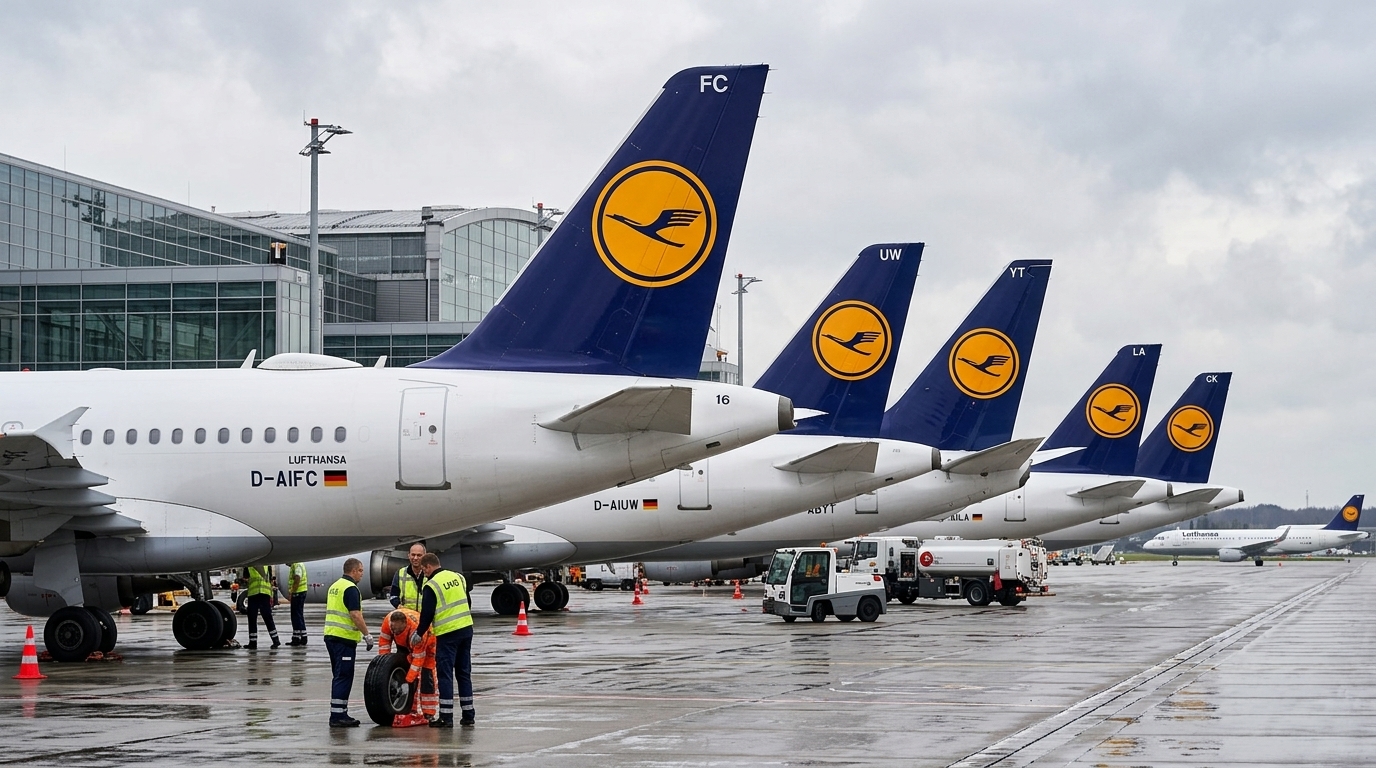
In a move that is sending shockwaves through the European travel market, the Lufthansa Group has announced a drastic reduction in its flight schedule, canceling approximately 20,000 short and medium-haul routes through the end of the summer season. This decision is not merely an operational adjustment; it is a clear symptom of the structural challenges facing aviation in 2026, where energy costs and environmental pressures are colliding head-on with consumer demand.
The Fuel Crisis and the 'Green' Premium
The primary culprit behind this massive retreat is the volatile cocktail of fuel prices. Despite attempts to stabilize international markets, the price of kerosene remains at levels that render many secondary routes unprofitable. Furthermore, the tightening of European Union regulations regarding Sustainable Aviation Fuel (SAF) has added a significant 'green premium' to operating costs. Lufthansa, as the continent's largest carrier, finds itself at the forefront of this transition, forced to balance sustainability mandates with the cold reality of the balance sheet.
"We can no longer afford to subsidize routes that do not cover their marginal costs. The industry must accept that the era of hyper-cheap flights is behind us," a group executive noted during the quarterly earnings presentation.
Prioritizing Stability Over Volume
Beyond the financial aspect, Lufthansa is seeking to avoid the infrastructure chaos that plagued airports in previous years. Ground staff shortages and delays in aircraft deliveries from Boeing and Airbus have created a suffocating operational environment. By cutting 20,000 flights in advance, the airline is essentially 'buying' reliability. It prefers to operate a leaner schedule with absolute precision rather than risking last-minute cancellations that damage brand reputation and lead to massive passenger compensation claims.
The Consumer Impact: Rising Fares and Shrinking Connectivity
For the average European traveler, the news is bleak. The reduction in seat supply by hundreds of thousands inevitably leads to price hikes on the remaining routes. Analysts predict that fares for intra-European flights could rise by as much as 15-20% in the coming months. Moreover, the elimination of routes to regional airports harms the connectivity of smaller cities, forcing passengers to turn either to rail—which often lacks the necessary infrastructure for rapid transit—or to more expensive alternative carriers.
- Cancellation of 20,000 short-haul flights.
- Strategic focus on high-margin long-haul routes.
- Significant increase in average ticket prices.
- Pressure from EU environmental taxes and SAF mandates.
A Strategic Pivot Toward Premium Travel?
There is a growing sense that Lufthansa, like other legacy carriers, is strategically shifting toward a model that favors high-income passengers. By focusing on intercontinental flights and premium cabins (Business and First Class), the group is attempting to insulate itself from the volatility of the short-haul market, where competition from Low-Cost Carriers (LCCs) is relentless. This move perhaps signals the beginning of a period where air travel becomes a privilege of the few once again, reversing decades of the democratization of the skies.