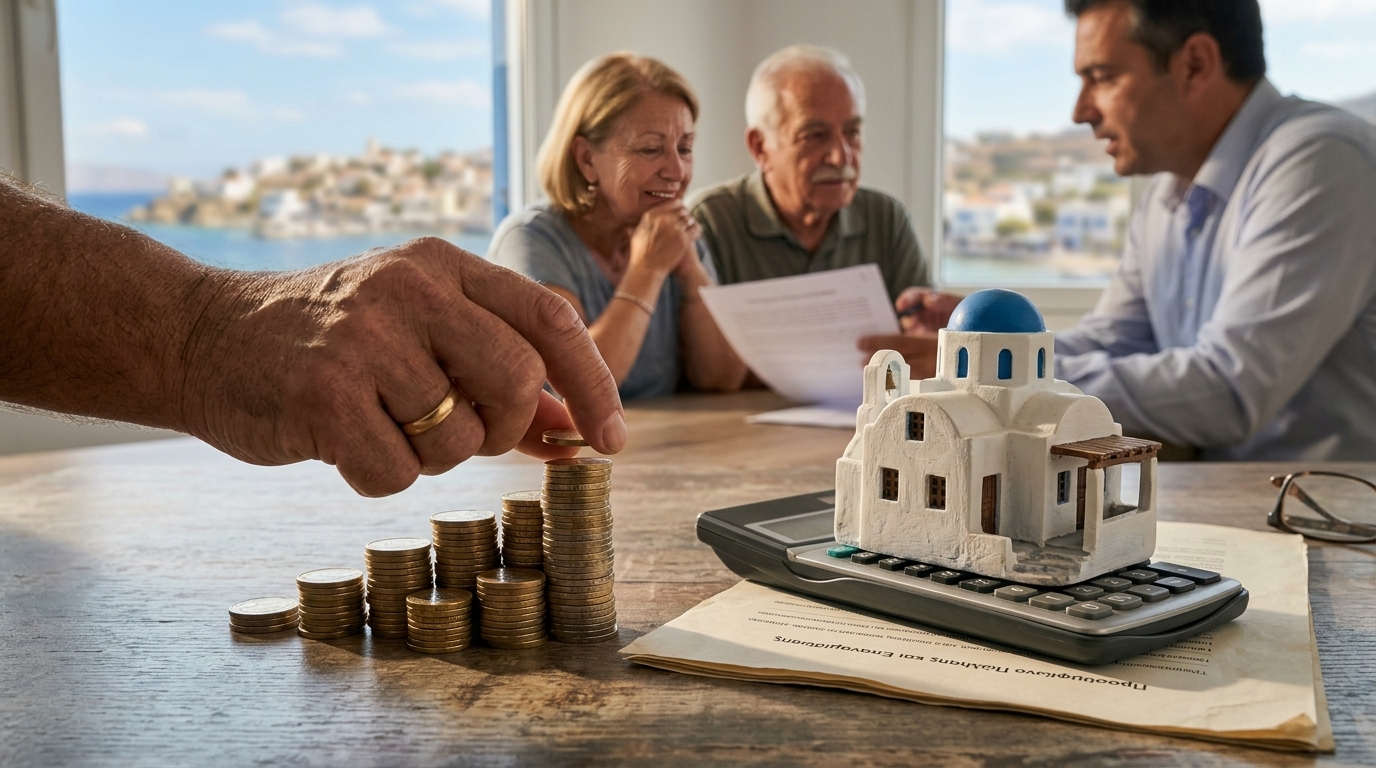
Greek society, deeply rooted in the concept of home ownership as a cornerstone of family security, stands at a historic crossroads. The activation of the Sale and Leaseback Organization (the "Foreas") is not merely a technical detail of the new Insolvency Code; it represents a radical shift in the social contract between the state, banks, and citizens. For thousands of households buckling under the weight of debt, the choice has become dramatically simple: the final loss of their home or becoming tenants in their own living rooms.
This mechanism, designed to be the "last resort" before eviction, aims to protect the truly vulnerable. However, the transition from owner to tenant status carries with it a series of economic and psychological implications that are reshaping the domestic real estate landscape. The state, through a private entity operating under a strict framework, undertakes to purchase the property at market value and lease it back to the debtor for a period of twelve years.
The "Second Chance" Mechanism
The process begins when a borrower is declared bankrupt or when a foreclosure is initiated against their primary residence. Provided they meet the strict criteria for being "vulnerable"—based on income, assets, and household composition—the Organization is obliged to acquire the property. The acquisition price equals the current market value, as determined by a certified appraiser, reduced by a percentage that serves as a safety margin for the Organization.
For the next 12 years, the citizen remains in the house paying a monthly rent. The state, recognizing the financial hardship of these households, provides a housing subsidy that can cover a significant portion of the rent, easing the burden. It is important to note that during this twelve-year period, the tenant is responsible for the maintenance of the property and other obligations (such as ENFIA property tax, which is incorporated into the rent), while losing all ownership rights until the potential buyback.
The Right to Buy Back: A Distant Hope?
The most critical point of the program is the buyback right. At the end of the 12-year period, or earlier under specific conditions, the debtor has the exclusive right to purchase their home back. The buyback price is predetermined, based on a mathematical formula that considers the acquisition price, capital expenditures, and a set return for the Organization. However, a risk lurks here: if real estate prices continue their upward trend, the buyback may prove financially impossible for a household that has already experienced bankruptcy.
- The lease duration is strictly 12 years.
- Termination of the lease agreement (e.g., due to non-payment of three months' rent) leads to the permanent loss of the buyback right.
- The Organization is private, but its operation is governed by public interest and the supervision of the Ministry of Finance.
- The buyback right is transferable to heirs, ensuring a form of family continuity.
Social and Economic Challenges
The delay in implementing the Organization was largely due to the reluctance of private capital to take on a scheme with low returns and high social risk. Banks and servicers, on the other hand, pushed for the activation of the mechanism to "clean up" their balance sheets from non-performing loans (NPLs) involving primary residences without triggering a social explosion through mass evictions.
"The Organization is not a panacea; it is a safety net. Its success will be judged by how many people actually manage to get their keys back as owners, rather than just prolonging their stay as tenants," market analysts note.
At a time when the housing crisis in Greece is intensifying, with rents rising disproportionately to wages, the Organization is called upon to balance banking discipline with social welfare. The success of the venture will depend on the transparency of the procedures and the ability of citizens to recover financially within the decade to exercise their buyback right. Otherwise, the program risks becoming a slow process of alienation from property, formalizing the transition of the Greek middle class to a model of permanent renting.