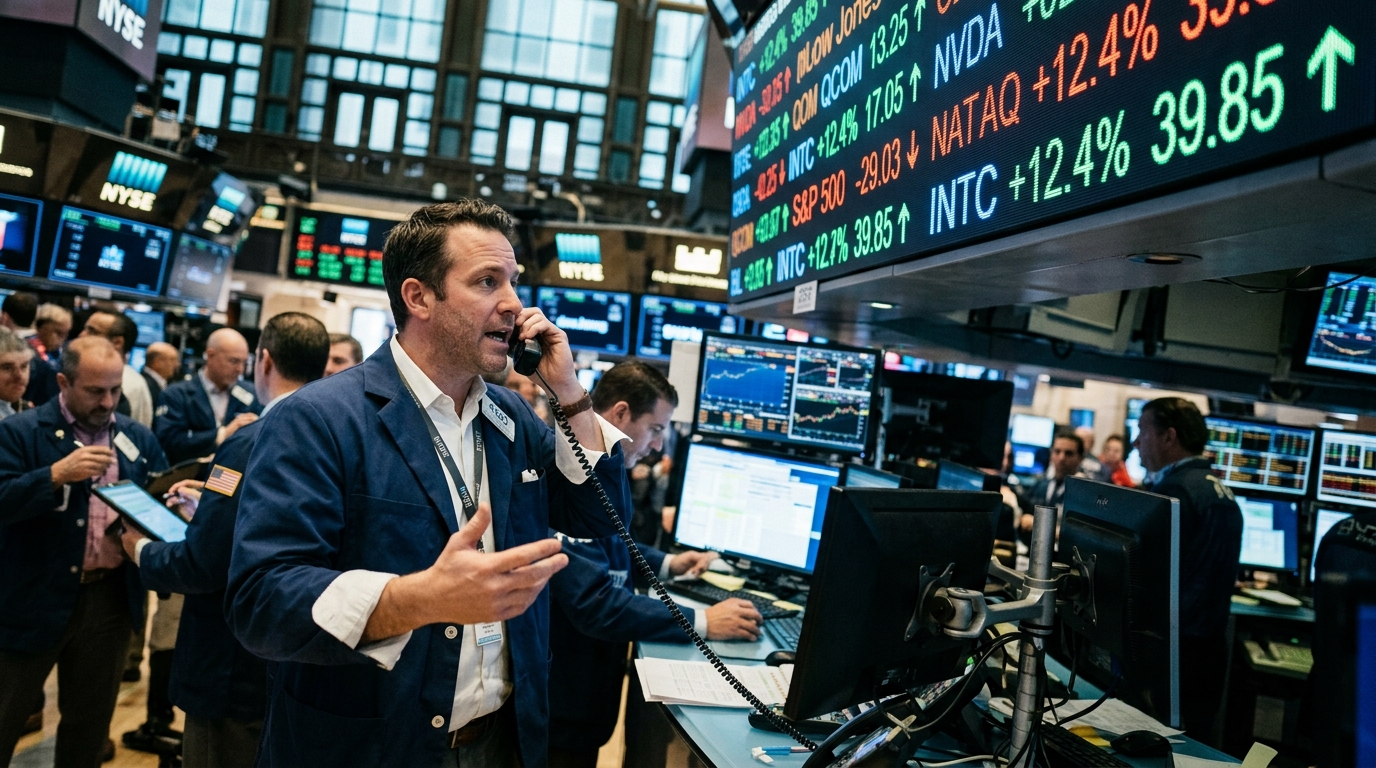
Intel, the American titan that once held an undisputed monopoly over the computing world, appears to be regaining its stride. According to the latest financial disclosures, the company has reported a significant surge in revenue, outperforming analyst expectations and sending a clear signal to the market: Intel is no longer a "sleeping giant" but an active protagonist in the Artificial Intelligence (AI) era. This growth is not accidental; it is the culmination of a multi-year turnaround strategy led by CEO Pat Gelsinger, focused on reclaiming process leadership and expanding into the third-party foundry business.
The AI PC Revolution and Consumer Demand
A primary driver of Intel’s recent growth has been the emergence of "AI PCs." As enterprises and consumers seek computers capable of running complex AI models locally—without relying solely on the cloud—Intel’s Core Ultra processors, equipped with dedicated Neural Processing Units (NPUs), have seen massive adoption. This new category of devices has revitalized a PC market that had remained stagnant for years. Intel has strategically positioned itself by offering hardware that blends traditional compute power with the demands of modern, AI-driven creative and professional workflows.
This success is reflected in the revenues of the Client Computing Group, which saw sales spike as the market responded to the promise of greater privacy and lower latency offered by on-device AI processing. Furthermore, Intel has maintained robust relationships with major Original Equipment Manufacturers (OEMs), ensuring its technology remains the default choice for the majority of new laptop and desktop models hitting the market in 2026.
Intel Foundry: The $100 Billion Bet
Beyond the PC market, Intel’s most significant strategic shift is its transformation into a global semiconductor manufacturer (Foundry) serving external customers, directly competing with TSMC. The Intel Foundry unit has begun to show signs of financial maturity, attracting contracts from companies eager to diversify their supply chains away from a heavy reliance on East Asia. Geopolitical instability and the push for "Sovereign AI" have prompted Western governments and corporations to support Intel’s efforts to build advanced fabrication plants in the US and Europe.
Funding from the US CHIPS Act has played a pivotal role in this trajectory. With billions of dollars in subsidies and loans, Intel is investing heavily in new facilities in Ohio and Arizona, utilizing the most advanced Extreme Ultraviolet (EUV) lithography technology. While the Foundry division still requires massive capital expenditure, the revenue growth suggests that the market believes in the long-term vision of becoming the world’s second-largest foundry by 2030.
Challenges and Competition: The Shadow of Nvidia
Despite the current euphoria, Intel still faces monumental challenges. In the Data Center sector, Nvidia remains the undisputed leader, with its GPUs serving as the gold standard for training Large Language Models (LLMs). Intel is attempting to counter this with its Gaudi 3 accelerators, which offer a more cost-effective alternative for AI inference. While orders for Gaudi chips are increasing, Intel must prove it can provide a comprehensive software ecosystem that can truly rival Nvidia’s CUDA platform.
Moreover, pressure from AMD remains intense in both the server and mobile markets. The battle for efficiency and power-per-watt is fiercer than ever. Intel, however, is betting on its vertical integration. While its competitors design chips but depend on others for manufacturing, Intel controls the entire process. This advantage, if executed correctly, could allow it to innovate faster and better manage the supply chain disruptions that have plagued the industry in recent years.
The Future of the "Siliconomy"
Pat Gelsinger frequently uses the term "Siliconomy" to describe a global economy now driven by silicon and AI. Intel’s recent revenue surge confirms that the company is now inextricably linked to this new reality. Its ability to combine traditional CPU dominance with new AI capabilities and manufacturing excellence will define its path for the next decade. For investors, Intel is no longer a company in decline, but a high-stakes bet on the reclamation of Western technological sovereignty.