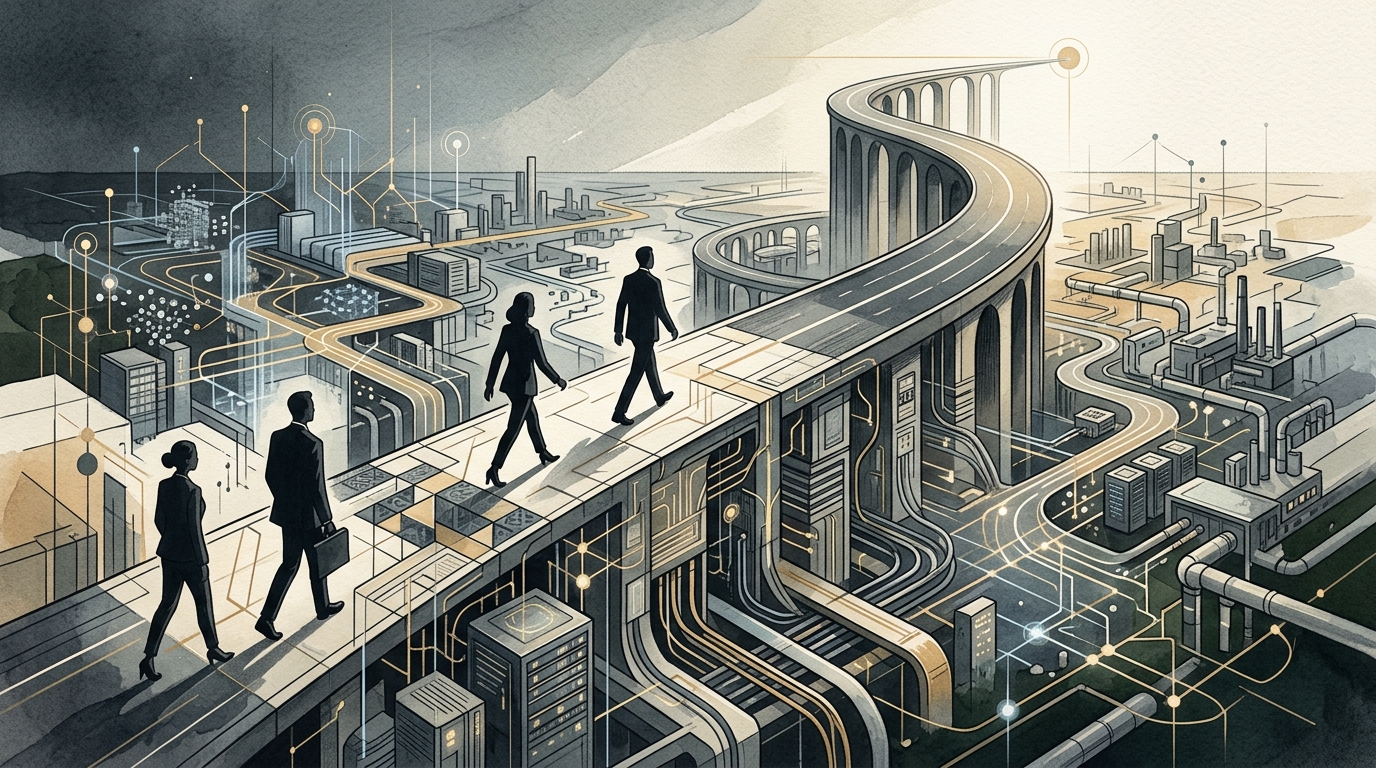
The history of the technology industry in the 21st century was, until recently, a story of "asset-light" dominance. Companies like Google, Microsoft, and Amazon commanded markets based on code and intellectual property, maintaining balance sheets that were the envy of any industrialist of the past. However, the advent of Generative AI has fundamentally rewritten the rules. Today, Silicon Valley is transforming into a capital-intensive heavy industry, and this metamorphosis is sending seismic shocks through the global financial system.
According to recent data, the so-called "Hyperscalers"—the giants providing cloud services and computational power—have embarked on an unprecedented race to issue debt. The goal is clear: to fund gargantuan data centers and purchase the millions of Nvidia chips required to train the next generation of AI models. This flood of corporate bonds, however, presents Wall Street banks with a paradoxical problem: excessive concentration of risk in a few, albeit highly reliable, borrowers.
The Credit Derivatives Strategy
To continue lending to these behemoths without violating internal and regulatory exposure limits, major investment banks are turning en masse to the credit derivatives market. Credit Default Swaps (CDS) and other forms of synthetic risk transfer have become indispensable tools for managing this "debt flood." When a bank like JPMorgan or Goldman Sachs lends ten billion dollars to a Big Tech firm, it often purchases protection through derivatives from insurance companies or hedge funds. In this way, the bank "cleanses" its balance sheet of default risk, allowing it to lend even more to the same company the following week.
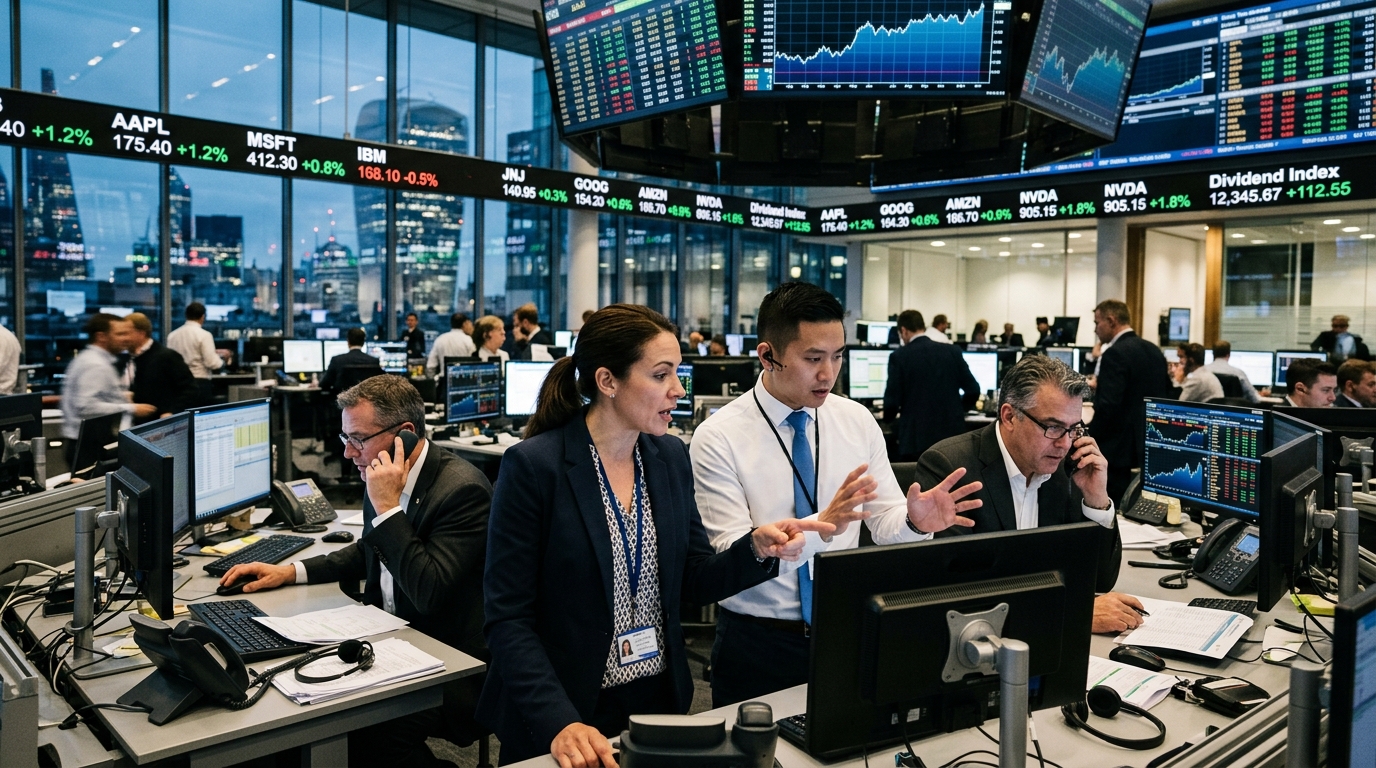
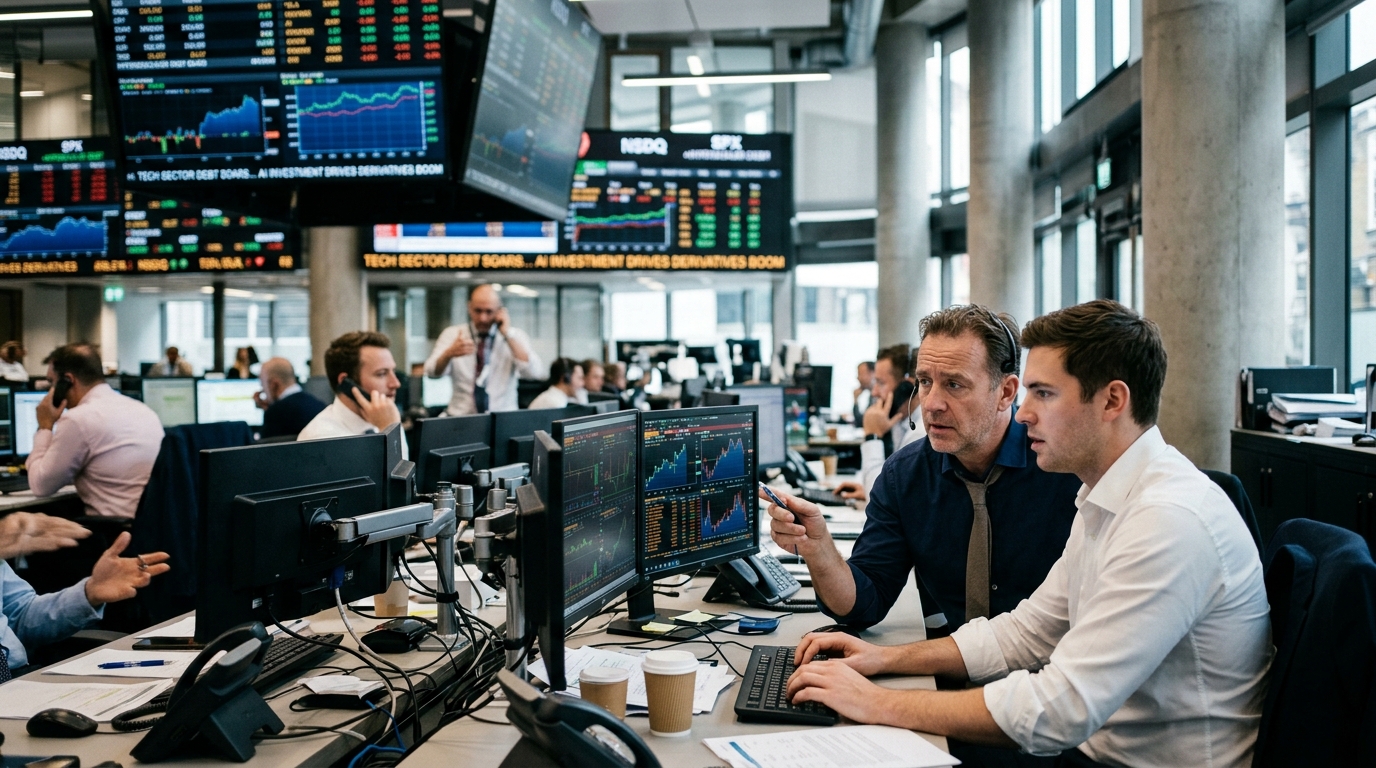
This practice has created a "golden age" for bank trading desks. The volume of credit derivative trades related to the tech sector has surged to levels not seen since the pre-2008 era, though with a crucial difference: this time, the underlying debt is considered some of the safest in the world. Hyperscalers possess massive cash reserves, making their bonds nearly equivalent to government treasuries in terms of reliability.
Transformation into Heavy Industry
The need for continuous borrowing stems from the fact that AI is no longer just software. It is concrete, steel, electricity, and silicon. A modern AI data center can cost over $10 billion, while projections for the total capital expenditure (Capex) of the big four (Microsoft, Alphabet, Amazon, Meta) for 2026 exceed $300 billion. These figures are unthinkable for any other sector of the economy.
Analysts point out that this reliance on debt marks the end of the era of "free cash flow" primarily used for share buybacks and dividends. Now, every dollar earned—and many more borrowed—is reinvested into infrastructure. This shift has created a new dynamic in fixed-income markets, where tech companies have replaced traditional industries and utilities as the largest debt issuers.
Risks and Systemic Stability
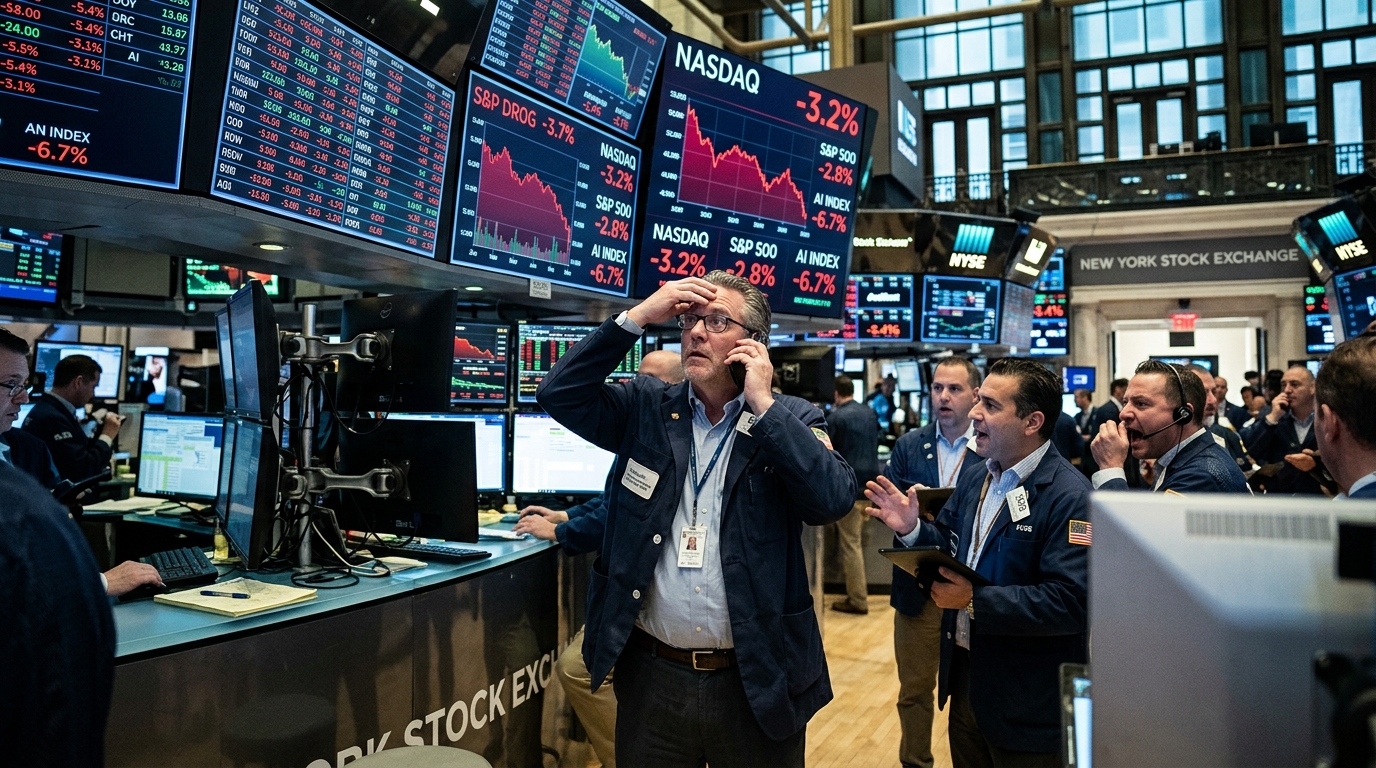
Despite the high creditworthiness of Hyperscalers, the concentration of such vast amounts of debt and the parallel growth of the derivatives market causes concern in some circles. If the promise of AI to increase profitability does not materialize to the expected degree, the ability of these companies to service their debt could be questioned. Furthermore, the complexity of derivatives means that risk often ends up in the shadow banking sector, where oversight is limited.
However, for now, Wall Street is celebrating. The symbiosis between Silicon Valley, which needs capital to build the future of intelligence, and New York, which invents new ways to package and sell that risk, is more complete than ever. The derivatives "bonanza" is the direct consequence of a technological revolution that requires physical substance and immense financial power.
Conclusion: A New Financial Paradigm
As we move deeper into 2026, the lines between technology and finance continue to blur. The AI revolution is being built on a foundation of sophisticated financial engineering. While the immediate outlook remains bullish, the long-term stability of this model will depend on whether the physical infrastructure being built today can generate the massive returns required to sustain the debt that financed it.
- Big Tech is shifting from asset-light software models to capital-intensive infrastructure.
- Banks are utilizing credit derivatives to offload concentration risk and maintain lending capacity.
- AI-related Capex is projected to reach unprecedented levels, driven by data center construction.
- The financial system is becoming increasingly interconnected with the success of AI.