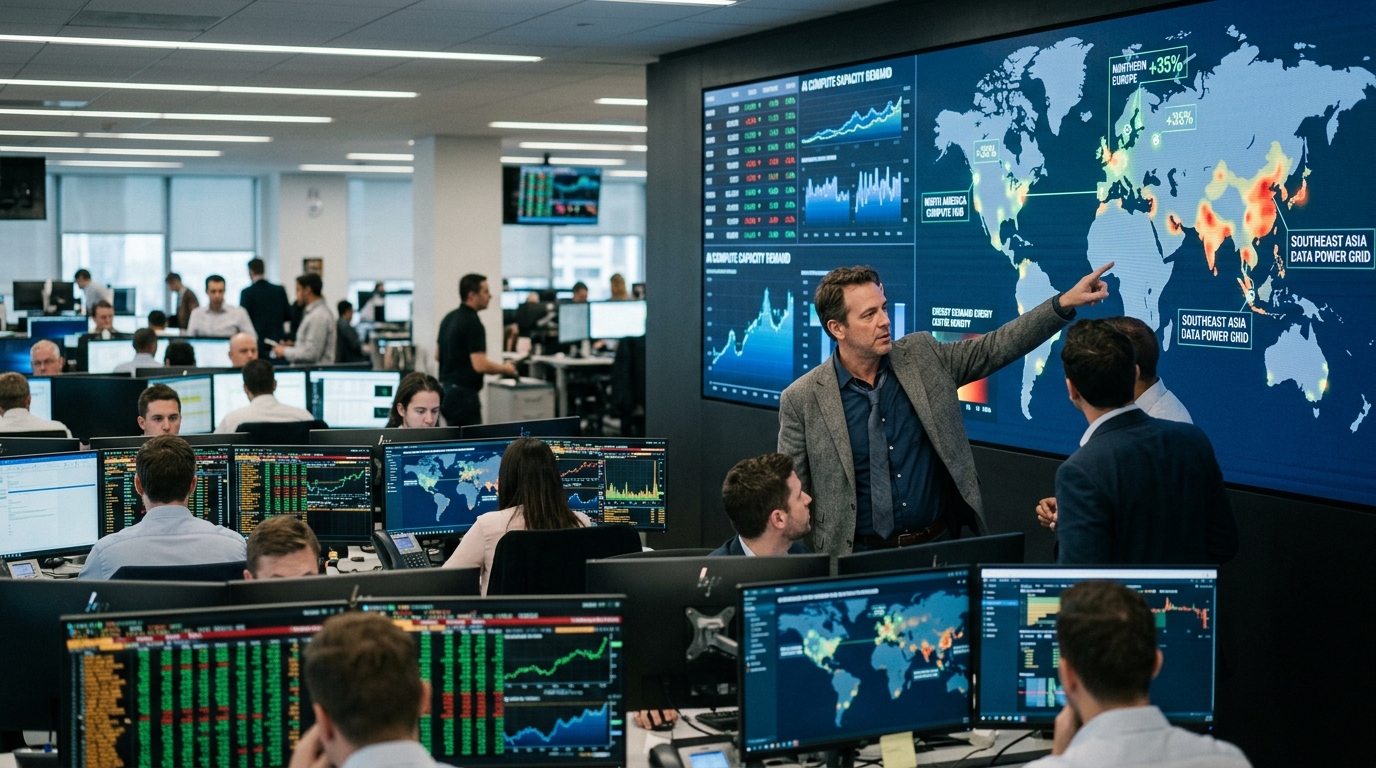
As we navigate the first half of 2026, the global economy is witnessing a structural shift unlike anything seen since the Industrial Revolution. Artificial Intelligence is no longer merely software running in the cloud; it is a physical entity requiring vast tracts of land, unimaginable amounts of electricity, and a new generation of hardware that pushes the boundaries of physics. The recent surge in demand for servers specifically designed for AI data centers has ignited a global competition that is reshaping geopolitical balances.
The Physicality of Intelligence
For years, the narrative surrounding technology focused on the "intangible." However, the reality of 2026 is starkly material. The new data centers being constructed across the US, Europe, and Asia bear no resemblance to the facilities of the previous decade. Training models with trillions of parameters requires servers equipped with the latest Graphics Processing Units (GPUs) and, crucially, High Bandwidth Memory (HBM). South Korea, through giants like SK Hynix and Samsung, has become the gatekeeper of this market, as HBM3e and the forthcoming HBM4 serve as the "blood" flowing through the veins of AI systems.
This demand is not limited to the interior of the servers. Thermal management has emerged as a critical factor. Traditional air-cooling methods are proving inadequate for racks consuming upwards of 100kW each. Consequently, we are seeing a massive shift toward liquid cooling, creating a new secondary market worth billions of dollars. Companies manufacturing this infrastructure are seeing their stocks soar as data centers evolve from mere data warehouses into sophisticated factories for digital intelligence.
The Energy Bottleneck and the Geopolitics of Power
The greatest hurdle to this growth is no longer a shortage of chips, but a shortage of power. In many regions, electrical grids are struggling to meet the demands of new AI clusters. This has led to an improbable alliance between Big Tech and nuclear energy. Companies like Microsoft and Amazon are now investing directly in Small Modular Reactors (SMRs) to ensure their energy autonomy. A nation's ability to provide stable and cheap energy has become the new comparative advantage in attracting investment.
Simultaneously, the concept of "Sovereign AI" is gaining traction. Nations such as Saudi Arabia, the UAE, and Japan are investing billions to build their own domestic data centers, using their own resources and data. They no longer wish to be dependent on the American cloud. This trend is creating a fragmented market where the server supply chain must navigate strict export controls and national security strategies. The "silicon curtain," which began with US sanctions against China, has now expanded to the entire data center infrastructure.
Economic Implications and the Risk of a Bubble
From an economic perspective, the question dominating boardrooms is ROI (Return on Investment). Capital Expenditures (CapEx) for Hyperscalers have reached record levels. While the demand for AI servers is undeniable, the ability of enterprises to convert this compute power into profitable products remains under scrutiny. However, most analysts agree that the current phase is an "arms race"; the cost of participation is immense, but the cost of absence could be total extinction from the business map.
- The AI server market is expected to grow at an annual rate exceeding 30% through the end of the decade.
- Demand for specialized hardware is driving component prices to historic highs, impacting tech-sector inflation.
- Local communities are increasingly resisting the construction of giant data centers due to water and energy consumption.
In conclusion, the rise of AI data centers is not just a technological evolution but a reorganization of global power. The country or company that controls the servers will control the future of productivity. As 2026 progresses, the battle for "silicon and power" will determine the winners of the next decade.