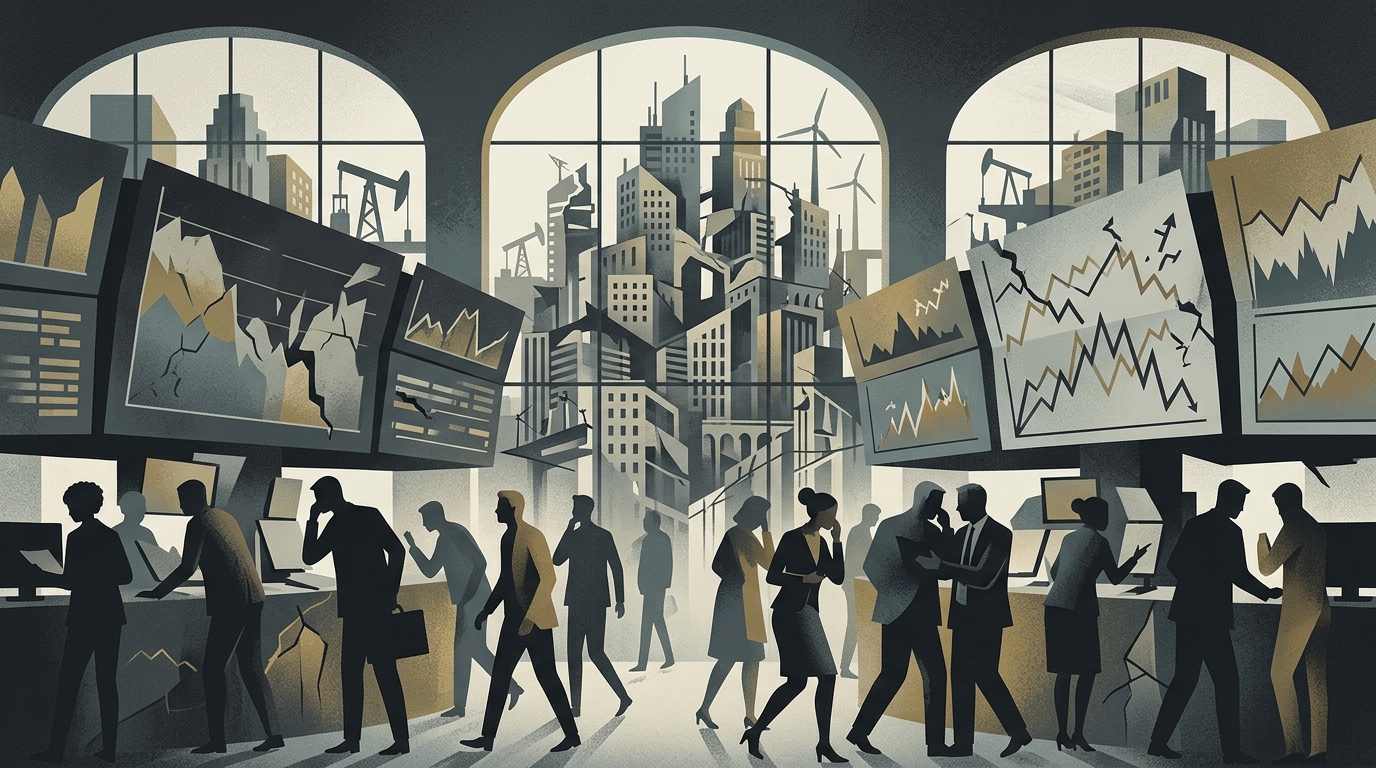
In an era where the global geopolitical chessboard resembles shifting sands, the warnings of Fatih Birol, Executive Director of the International Energy Agency (IEA), resonate with particular weight. His recent assertion that "even if the Strait of Hormuz remains open, there will be no return to the previous normalcy" is not merely a risk assessment, but a definitive diagnosis of the end of an era. The age of cheap, abundant, and geopolitically safe energy has passed irrevocably, giving way to an environment of structural uncertainty and radical transformation.
The Strait of Hormuz: A Symptom, Not the Cause
The Strait of Hormuz remains the most critical artery of the global energy system, with approximately 20% of the world's daily oil consumption and a quarter of liquefied natural gas (LNG) passing through it. However, for Birol, focusing exclusively on this geographical chokepoint is misleading. The crisis we are experiencing is not a transient episode that will be resolved by a diplomatic de-escalation in the Middle East. Instead, it is the result of a deep "tectonic" shift that began with Russia's invasion of Ukraine and has been accelerated by US-China competition.
Europe, in particular, is undergoing a painful awakening. Strategic dependence on Russian gas proved to be a historical fallacy, and replacing it is not a simple matter of changing suppliers. The new reality requires a complete reassessment of supply chains, storage infrastructure, and, most importantly, the energy mix. Birol emphasizes that the "normalcy" of the past was built on an illusion of stability that has now collapsed.
The First Truly Global Energy Crisis
Unlike the oil crises of the 1970s, the current situation is characterized by Birol as the "first truly global energy crisis." It simultaneously affects oil, natural gas, electricity, and the critical raw materials needed for the green transition. This multi-layered complexity makes its management extremely difficult for governments, which are called upon to balance three often conflicting priorities: energy security, economic affordability, and climate sustainability.
- Energy Security: The need to diversify sources is leading to a race for new LNG deals and infrastructure, often at a high cost.
- Economic Affordability: High energy prices are fueling inflation and threatening the competitiveness of European industry.
- Climate Sustainability: The pressure to move away from fossil fuels remains urgent, but the transition requires massive investment in a high-interest-rate environment.
The IEA chief points out that the solution lies not in returning to the past, but in accelerating toward the future. Renewable energy sources, nuclear power, and energy efficiency are no longer just environmental choices but "tools of national security."
China and the New Geopolitics of Clean Energy
Another critical parameter analyzed by Birol is the dominant role of China. While the West attempts to decouple from fossil fuels, it finds that the clean energy supply chain—from solar panels to electric vehicle batteries—is largely controlled by Beijing. This creates a new form of dependency, which worries policymakers in Washington and Brussels alike.
"The history of energy is now being written with new rules. Anyone who believes that prices will return to 2019 levels is simply turning a blind eye to the structural changes taking place," Birol notes.
According to the IEA, global demand for fossil fuels is expected to peak before the end of this decade. This does not mean their use will stop immediately, but rather that the market dynamics are changing. Investors are now turning to projects with a lower carbon footprint, not just for ESG reasons, but because that is where long-term profitability and security lie.
Implications for the Global Economy
The implications of this "new normal" are profound. We are seeing a move away from globalized, just-in-time energy markets toward more fragmented, security-oriented systems. This shift is likely to maintain upward pressure on energy costs for years to come, necessitating a focus on efficiency and domestic production. For emerging economies, the challenge is even greater, as they must secure the energy needed for development while navigating a more volatile and expensive market.
In conclusion, Fatih Birol's warning is a call for realism. The "new normal" is a state of constant vigilance. Security is no longer a given but something that must be earned daily through strategic autonomy, innovation, and international cooperation on new terms. The Strait of Hormuz may remain open, but the world of energy has already moved into a new, uncharted territory.