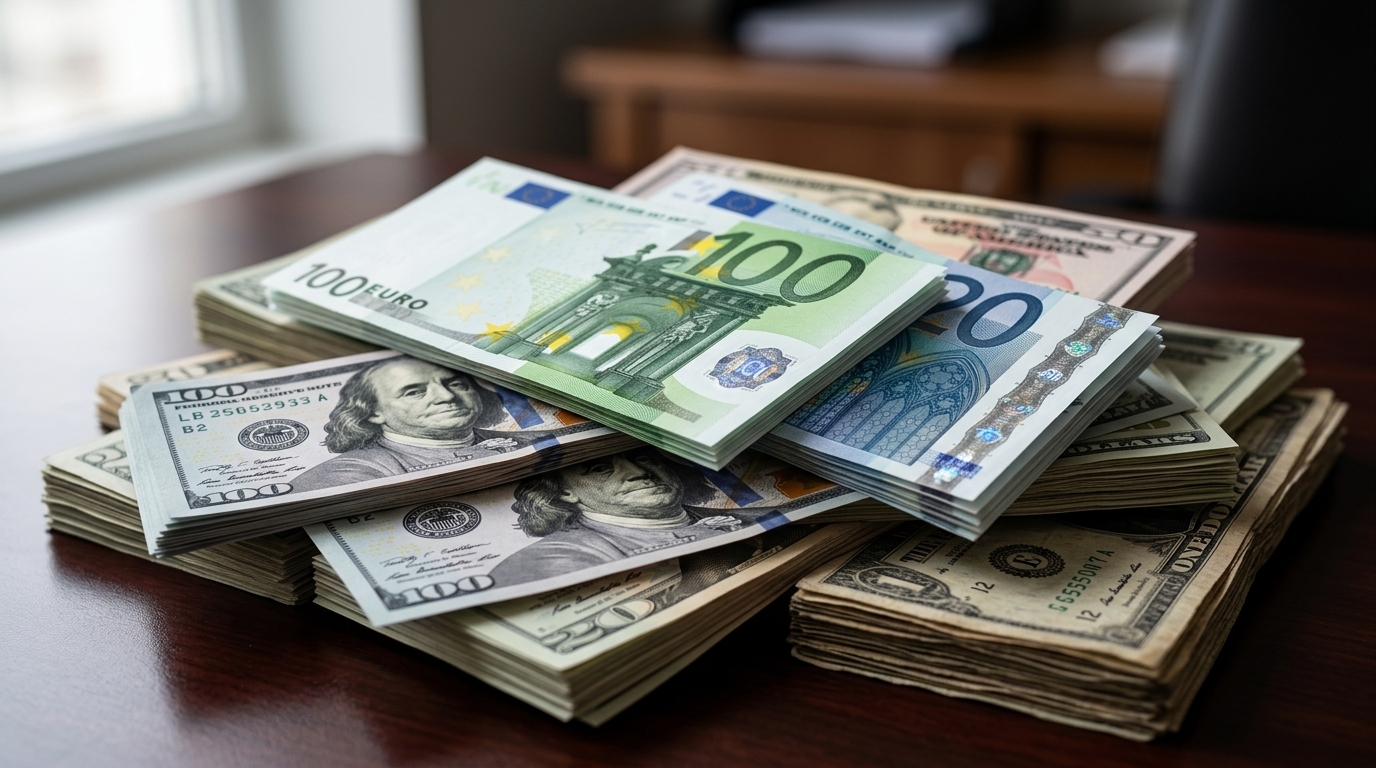
In the heart of 2026, the global financial architecture stands at a critical juncture, with the European Central Bank (ECB) releasing its annual report on the international role of the euro. The findings are both encouraging and grounding: while the euro is gaining ground, particularly in international bond markets and cross-border payments, the U.S. dollar continues to hold the scepter of undisputed hegemon. The approximately 20% increase in euro usage in specific sectors highlights a trend toward diversification, but the distance to be covered to truly challenge dollar primacy remains vast.
The Surge in International Euro-Denominated Bonds
One of the most striking elements of the ECB report is the historic rise in the issuance of international bonds denominated in euros. Europe has managed to become the global leader in the market for "green" and sustainable bonds, a sector attracting an increasing number of investors seeking safety and ethical alignment. Market confidence in the euro as a funding currency reflects the relative stability of the Eurozone, despite the geopolitical turbulence of recent years.
- Euro-denominated bond issuance reached record levels, exceeding analyst expectations.
- The euro is increasingly used for pricing services and goods outside EU borders.
- The digitalization of payments through the TARGET2 system has enhanced transaction speed and security.
However, the ECB warns that this rise should not be interpreted as a retreat of the dollar, but rather as an expansion of the overall market where the euro is claiming a more proportional share of the global economic pie.
The Geopolitics of De-dollarization
The debate over "de-dollarization" has intensified, primarily due to the use of the financial system as a tool for sanctions. Many emerging economies, observing the freezing of Russian assets, have begun seeking alternatives. The euro, while a political ally of the dollar, offers a technical alternative perceived as less "aggressive" in certain jurisdictions.
"The euro remains the second most used currency globally, providing a critical safety valve for the global system, yet it still lacks the depth of liquidity offered by the U.S. Treasury market," the report notes.
Europe's strategic autonomy depends directly on strengthening its currency. As long as the euro remains strong, the EU can exert greater influence over international standards and protect its businesses from exchange rate fluctuations dictated by Washington.
The Digital Euro Gambit
Looking toward the future, the ECB is betting heavily on the Digital Euro. With pilot implementation at an advanced stage in 2026, the ambition is to create a currency that combines central bank security with the flexibility of modern fintech applications. If the Digital Euro succeeds in mass adoption for international retail payments, it could shift the balance, offering an alternative to Visa and Mastercard systems, which are dominated by American interests.
In conclusion, the euro's trajectory is an exercise in patience. Dollar dominance was not built in a day and will not collapse anytime soon. However, the steady rise of the euro indicates that the world is moving toward a multipolar monetary system, where Europe has the potential to play the role of the balancer.