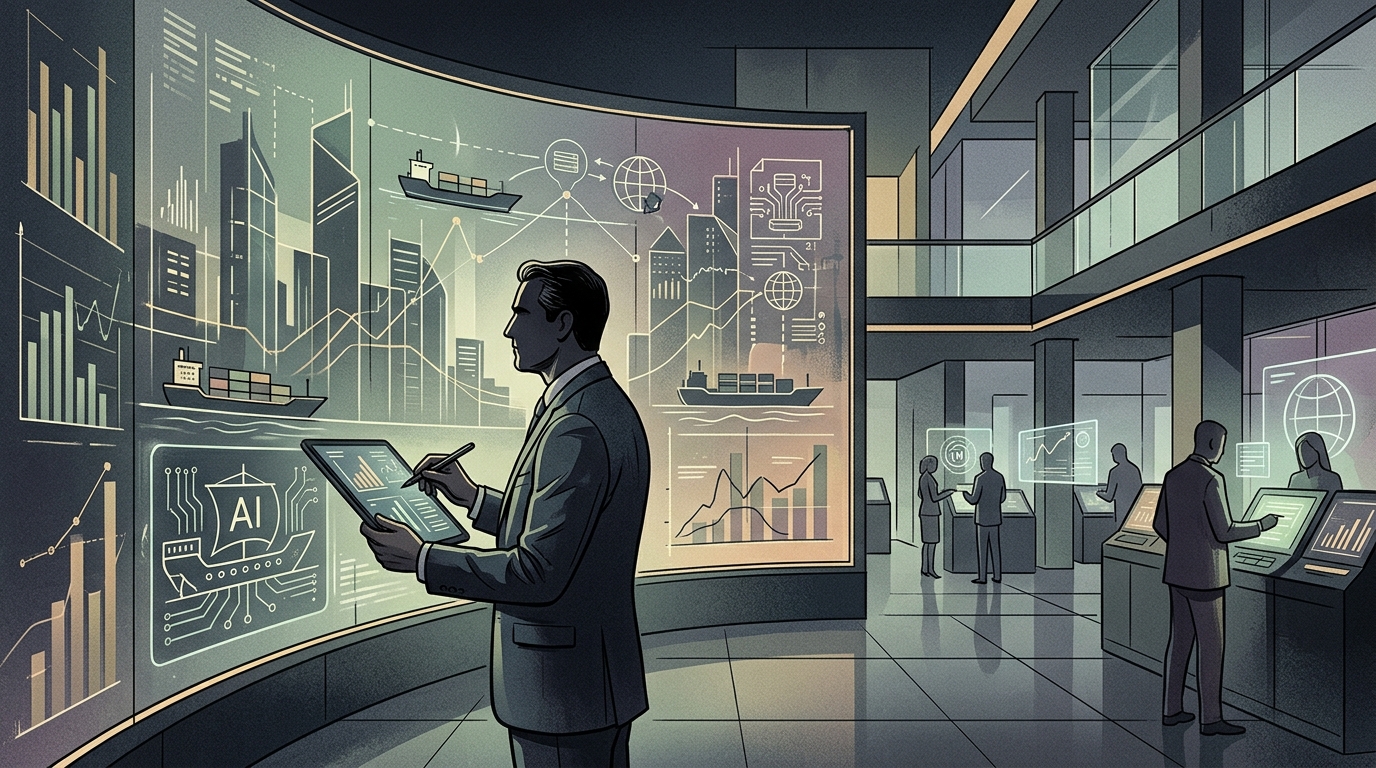
As we navigate the first days of June 2026, the question dominating international markets remains the same one that haunted investors two years ago: Is Artificial Intelligence (AI) a sustainable "golden age" of productivity or the largest financial bubble in human history? The recent performance of the "Magnificent Seven" tech stocks and the explosive rise in capital expenditures (Capex) for data centers have brought the global economy to a critical crossroads.
The Investment Dilemma: From Hype to Reality
The history of technological revolutions typically follows a predictable path. First comes the excitement, then the over-investment, and finally the "trough of disillusionment" before full maturity. Today, giants like Microsoft, Google, and Meta are spending hundreds of billions of dollars annually on processors and infrastructure. The central argument of skeptics is that the revenue directly derived from AI has not yet justified this level of spending. However, proponents of the "new era" argue that AI is not a mere product but a General Purpose Technology, like electricity or the internet, which requires time to be fully integrated into production processes.
According to recent analyses by Goldman Sachs and Morgan Stanley, the profitability of companies adopting AI is beginning to show the first signs of substantial improvement. The automation of complex tasks in law, medical diagnosis, and programming has reduced operating costs by an average of 15-20% in selected sectors. Nevertheless, the market remains jittery, as a "bubble" is always a possibility when valuations are based on future expectations rather than current cash flows.
The Transition to the Agentic Economy
2026 marks the transition from simple chatbots to "autonomous agent systems" (AI Agents). These systems do not just answer questions; they perform complex tasks without human intervention: from managing supply chains to conducting scientific research. This evolution is the key to the transition to the "golden age." If agents can deliver real value in the daily operation of businesses, then infrastructure investments will prove wise.
- End-to-end process automation: Reducing the need for human supervision in routine tasks.
- Personalization at scale: The ability for businesses to offer unique experiences to millions of customers simultaneously.
- Acceleration of innovation: The use of AI to discover new materials and drugs, leading to new growth cycles.
"We are not in a bubble, but in a period of restructuring capitalism. AI is the operating system of the future economy," states a leading Wall Street analyst.
Infrastructure Challenges and the Energy Equation
One of the factors that could "burst" the bubble is not economic, but physical. The energy demand from data centers has reached alarm levels. Many countries are facing challenges in the stability of their grids. The "golden age" requires a parallel revolution in green energy and nuclear fusion; otherwise, the cost of operating AI will become prohibitive, leading to a sharp market correction.
In conclusion, the answer to the "bubble or golden age" question lies somewhere in the middle. We are likely to see a significant correction in tech valuations in the near future, similar to the 2000 crash. However, just as the internet remained and changed the world back then, AI will be the foundation of the economy for decades to come. The challenge for investors and policymakers is to distinguish the noise from the actual value.