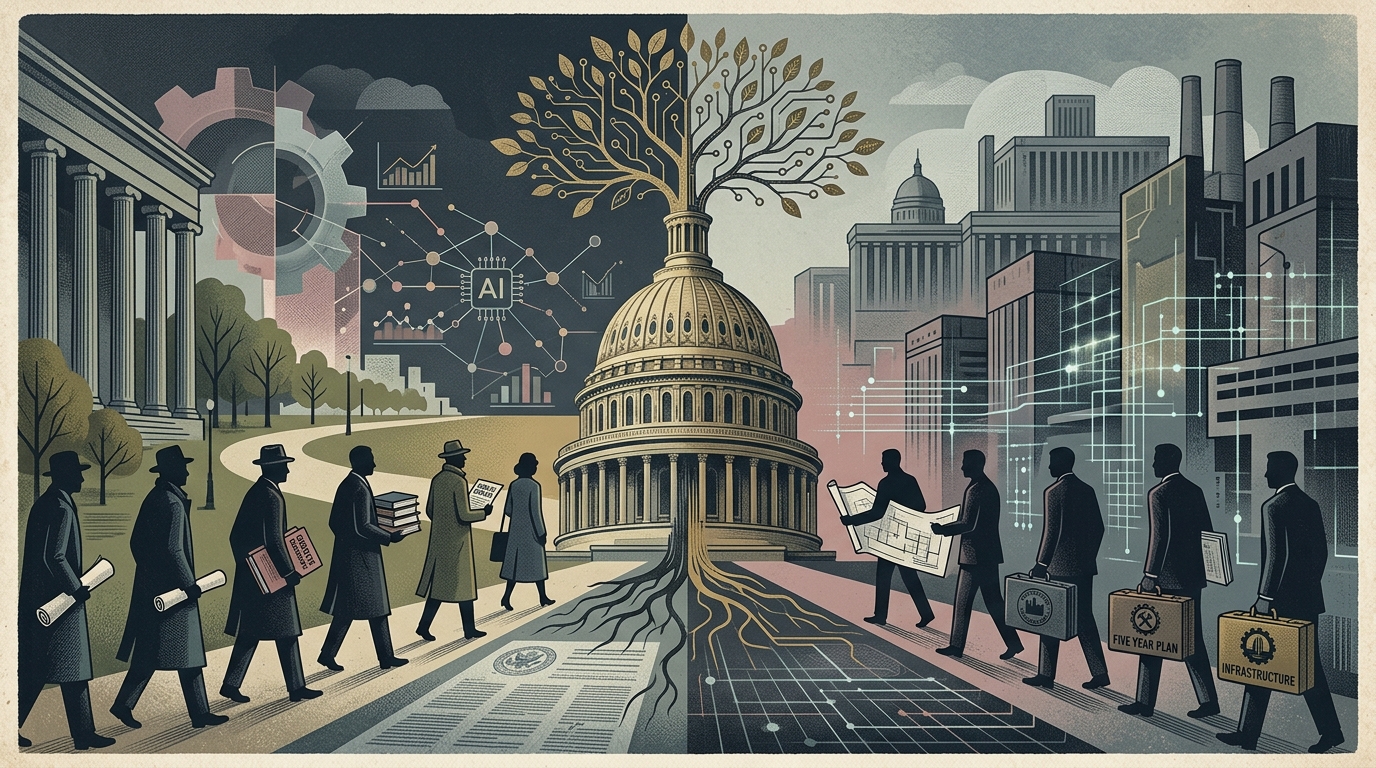
The dawn of the Artificial Intelligence (AI) era is no longer being treated as a distant promise of productivity, but as an immediate catalyst for the radical restructuring of the global workforce. According to recent data that has come to light, a staggering 99% of Chief Executive Officers (CEOs) expect that the integration of AI will lead to layoffs within the next two years. This statistic is not merely a forecast; it is a statement of intent marking the end of the 'experimentation' phase and the beginning of the 'optimization' era.
The Shift from Augmentation to Replacement
For years, the narrative from tech giants was reassuring: AI would be a 'copilot,' a tool that would liberate workers from mundane tasks, allowing them to focus on creative and strategic endeavors. However, the market reality of 2026 points in a different direction. CEOs, pressured by shareholders for ever-increasing profit margins, see AI as a way to reduce the most expensive item on their balance sheets: human capital.
This shift is particularly evident in the services and white-collar sectors. Professions once considered safe—such as data analysis, copywriting, entry-level programming, and customer service—are now on the front lines of replacement. The ability of Large Language Models (LLMs) to process information at speeds and costs that no human can compete with makes the decision for leaders almost a foregone conclusion.
Economic Efficiency vs. Social Cohesion
The dilemma facing modern societies is profoundly political and economic. On one hand, companies that aggressively adopt AI gain a massive competitive advantage by lowering operational costs and increasing production speed. On the other hand, the mass displacement of workers threatens to destabilize the middle class and widen the inequality gap.
- Market Pressure: Wall Street rewards companies that announce AI-first strategies, often equating 'efficiency' with headcount reduction.
- The Reskilling Gap: Despite promises of 'reskilling,' the pace of technological evolution is outstripping the ability of educational systems to adapt.
- The New Work Ethic: The concept of permanent employment is giving way to a fragmented labor market where only the 'AI orchestrators' will enjoy stability.
In the context of the global economy, the challenge is systemic. As AI systems become more autonomous, the traditional link between economic growth and job creation is decoupling. We are entering an era of 'jobless growth' that could redefine the social contract between capital and labor.
The Workforce Response and the Road Ahead
We are already seeing the first organized responses. Unions worldwide are demanding 'AI clauses' in collective bargaining agreements, seeking to ensure that technology is used to improve working conditions rather than eliminate them. However, when 99% of CEOs have already charted the course, these negotiations often feel like a rearguard action.
"This is not a simple technological upgrade. It is a redefinition of the value of human labor in the production process," says a labor relations analyst in London.
The question that remains unanswered is not whether layoffs will occur, but how states will respond. The debate over Universal Basic Income (UBI) or the taxation of robots is no longer theoretical; it is an urgent necessity to prevent a social explosion that could undermine democracy itself. As we move closer to 2028, the focus will shift from how to use AI to how to survive its economic consequences.